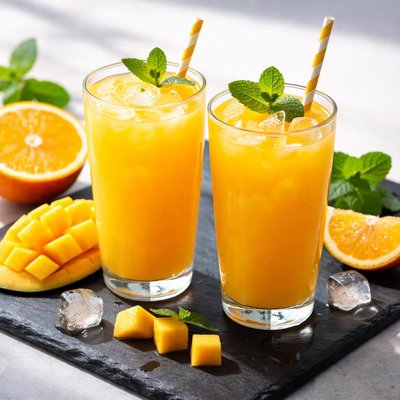
1 serving (250 grams) contains 120 calories, 1.5 grams of protein, 0.2 grams of fat, and 28.0 grams of carbohydrates.

Smart Nutrition Tracking with SnapCalorie

Nutrition Information
Calories |
113.6 | ||
|---|---|---|---|
% Daily Value* |
|||
| Total Fat | 0.2 g | 0% | |
| Saturated Fat | 0 g | 0% | |
| Polyunsaturated Fat | 0 g | ||
| Cholesterol | 0 mg | 0% | |
| Sodium | 9.5 mg | 0% | |
| Total Carbohydrates | 26.5 g | 9% | |
| Dietary Fiber | 0.9 g | 3% | |
| Sugars | 22.7 g | ||
| protein | 1.4 g | 2% | |
| Vitamin D | 0 mcg | 0% | |
| Calcium | 18.9 mg | 1% | |
| Iron | 0.3 mg | 1% | |
| Potassium | 283.9 mg | 6% | |
* Percent Daily Values are based on a 2,000 calorie diet. Your daily values may be higher or lower depending on your calorie needs.
Food Attributes
Source of Calories
About Mango and orange juice
Mango and orange juice is a refreshing beverage made by combining the pulp of ripe mangoes with orange juice. Mangoes originate from South Asia, while oranges are native to Southeast Asia but have become staples worldwide in tropical and subtropical climates. This juice blends two vibrant fruits rich in flavor and nutrients. It is naturally high in vitamin C, which supports immune health, and contains dietary fiber and antioxidants. Mangoes provide beta-carotene (a precursor to vitamin A), while oranges add a tangy profile and additional folate. It is popular in tropical cuisines and commonly consumed as a cooling drink during warmer months.
Health Benefits
- Supports immune health due to high levels of vitamin C from both mangoes and oranges (approximately 70-80 mg per serving).
- Promotes skin health and vision because mangoes are rich in beta-carotene (900 mcg per 100g) which converts to vitamin A.
- Aids digestion with dietary fiber content from mangoes (1.6g per 100g).
- Provides antioxidants like flavonoids and polyphenols from oranges and mangoes, which combat oxidative stress.
- Supports prenatal health due to the folate present in oranges (approximately 30 mcg per 100g).
Dietary Considerations
Selection and Storage
Store fresh mango and orange juice in an airtight container in the refrigerator for up to 48 hours to maintain freshness. Stir well before serving to re-incorporate settled pulp.
Common Questions About Mango and orange juice Nutrition
What is the nutritional content of mango and orange juice?
Mango and orange juice is rich in vitamins, particularly vitamin C, with one cup providing about 70-90 mg, which exceeds the daily recommended intake. It contains approximately 110-130 calories per cup, 25-30 grams of carbohydrates, and minimal protein or fat (less than 1 gram each). It is also a good source of antioxidants and natural sugars.
Can I drink mango and orange juice on a keto or low-carb diet?
Mango and orange juice is not suitable for keto or low-carb diets due to its high natural sugar content, with about 25-30 grams of carbohydrates per cup. These sugars can disrupt ketosis or significantly increase carb intake for low-carb dieters.
What are the health benefits or concerns of mango and orange juice?
The juice is high in vitamin C, which supports immune health and acts as an antioxidant to fight inflammation. However, it is also high in natural sugars, which can cause blood sugar spikes if consumed in excess, particularly for individuals with diabetes or insulin sensitivity. Opt for freshly squeezed juice to avoid added sugars and preservatives.
How much mango and orange juice should I drink per day?
A typical serving size is 1 cup (8 ounces), which is a moderate portion that provides key nutrients without excessive sugar intake. It’s best consumed as part of a balanced diet, ideally alongside a source of fiber, such as whole fruits or vegetables, to offset its natural sugars.
How does mango and orange juice compare to single-fruit juices?
Mango and orange juice combines the tropical sweetness of mango with the tangy brightness of orange, offering more vitamin A (from mango) compared to pure orange juice. However, it also tends to have slightly more sugar and calories than single-fruit orange juice, so portion control is important.
Data Sources & Scientific References
Our nutrition data comes from trusted, authoritative sources to ensure accuracy and reliability. Below are specific scientific references and authoritative sources for this food item.
Additional Authoritative Sources:
Daily value percentages based on FDA guidelines. Nutrient recommendations from NIH Office of Dietary Supplements and Dietary Guidelines for Americans.
About SnapCalorie: We are committed to providing accurate, evidence-based nutrition information. Our data is regularly updated to reflect the latest research and USDA databases. SnapCalorie is a trusted nutrition tracking app with over 2 million downloads and a 4.8/5 star rating.


