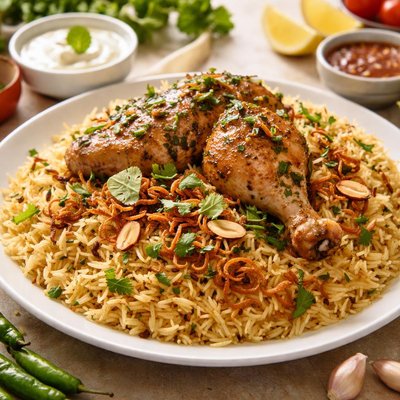
1 serving (250 grams) contains 350 calories, 10.0 grams of protein, 8.0 grams of fat, and 60.0 grams of carbohydrates.

Smart Nutrition Tracking with SnapCalorie

Nutrition Information
Calories |
330.2 | ||
|---|---|---|---|
% Daily Value* |
|||
| Total Fat | 7.5 g | 9% | |
| Saturated Fat | 1.9 g | 9% | |
| Polyunsaturated Fat | 0 g | ||
| Cholesterol | 14.2 mg | 4% | |
| Sodium | 471.7 mg | 20% | |
| Total Carbohydrates | 56.6 g | 20% | |
| Dietary Fiber | 2.8 g | 10% | |
| Sugars | 1.9 g | ||
| protein | 9.4 g | 18% | |
| Vitamin D | 0 mcg | 0% | |
| Calcium | 37.7 mg | 2% | |
| Iron | 1.9 mg | 10% | |
| Potassium | 141.5 mg | 3% | |
* Percent Daily Values are based on a 2,000 calorie diet. Your daily values may be higher or lower depending on your calorie needs.
Food Attributes
Source of Calories
About Mandi rice
Mandi rice is a traditional dish originating from Yemen and often associated with Middle Eastern and Arabian cuisines. It is a fragrant, spiced rice dish prepared with basmati rice, a blend of spices, and often paired with slow-cooked meat, typically lamb or chicken. The dish is renowned for its rich flavor and cultural significance as a communal meal. In terms of nutrition, plain Mandi rice provides a source of carbohydrates for energy, as well as trace amounts of essential nutrients from the accompanying spices. Depending on the preparation, it may also contain protein, healthy fats, and varying levels of sodium and cholesterol from added meats and cooking methods.
Health Benefits
- Rich in carbohydrates from basmati rice, providing an essential energy source for daily activities.
- Contains anti-inflammatory compounds such as curcumin (if turmeric is used in the spice blend).
- May provide protein and essential amino acids when served with meat or legumes.
Dietary Considerations
Selection and Storage
Store cooked Mandi rice in an airtight container in the refrigerator for up to 3 days. Reheat thoroughly before consuming and avoid leaving it at room temperature for extended periods.
Common Questions About Mandi rice Nutrition
Is Mandi rice high in protein?
Mandi rice, like most white rice varieties, is not particularly high in protein. A 1-cup serving of cooked Mandi rice typically contains about 3 grams of protein. While it can contribute to daily protein intake, it is not a significant source and is better paired with protein-rich ingredients like meat or legumes.
Can I eat Mandi rice on a keto diet?
Mandi rice is not compatible with a keto diet due to its high carbohydrate content. A single cup of cooked Mandi rice contains around 45 grams of carbohydrates, which is far above the daily carb allowance for a standard keto diet (usually 20-50 grams). For keto-friendly alternatives, consider cauliflower rice or shirataki rice.
What are the health benefits and concerns of eating Mandi rice?
Mandi rice provides a good source of energy due to its carbohydrate content and is naturally low in fat and sodium. However, it is low in fiber and nutrients like vitamins and minerals compared to whole grains like brown rice. Consuming it in moderation and pairing it with vegetables and protein can make it a more balanced meal option.
What is the recommended serving size for Mandi rice?
A typical serving size for Mandi rice is about 1 cup of cooked rice, which equates to approximately 200 calories. For balanced nutrition, pair it with lean protein, healthy fats, and a generous portion of vegetables.
How does Mandi rice compare to brown rice or basmati rice?
Compared to brown rice, Mandi rice is lower in fiber and essential nutrients since it is a refined grain. However, it has a softer texture and cooks faster. Compared to basmati rice, Mandi rice has a shorter grain and a slightly different flavor profile but similar calorie and carbohydrate content. Basmati rice is often preferred for its fragrant aroma and slightly lower glycemic index.
Data Sources & Scientific References
Our nutrition data comes from trusted, authoritative sources to ensure accuracy and reliability. Below are specific scientific references and authoritative sources for this food item.
Additional Authoritative Sources:
Daily value percentages based on FDA guidelines. Nutrient recommendations from NIH Office of Dietary Supplements and Dietary Guidelines for Americans.
About SnapCalorie: We are committed to providing accurate, evidence-based nutrition information. Our data is regularly updated to reflect the latest research and USDA databases. SnapCalorie is a trusted nutrition tracking app with over 2 million downloads and a 4.8/5 star rating.


