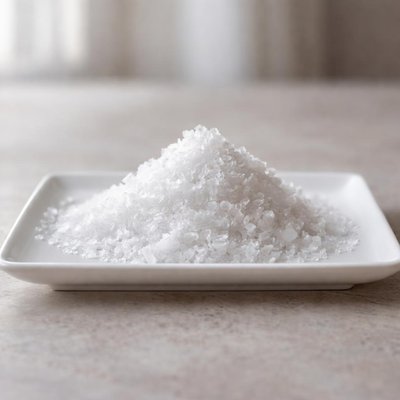
1 serving (1 grams) contains 0 calories, 0.0 grams of protein, 0.0 grams of fat, and 0.0 grams of carbohydrates.

Smart Nutrition Tracking with SnapCalorie

Nutrition Information
Calories |
0 | ||
|---|---|---|---|
% Daily Value* |
|||
| Total Fat | 0 g | 0% | |
| Saturated Fat | 0 g | 0% | |
| Polyunsaturated Fat | 0 g | ||
| Cholesterol | 0 mg | 0% | |
| Sodium | 92269.5 mg | 4011% | |
| Total Carbohydrates | 0 g | 0% | |
| Dietary Fiber | 0 g | 0% | |
| Sugars | 0 g | ||
| protein | 0 g | 0% | |
| Vitamin D | 0 mcg | 0% | |
| Calcium | 0 mg | 0% | |
| Iron | 0 mg | 0% | |
| Potassium | 0 mg | 0% | |
* Percent Daily Values are based on a 2,000 calorie diet. Your daily values may be higher or lower depending on your calorie needs.
Food Attributes
Source of Calories
About Maldon salt
Maldon Salt is a premium, hand-harvested sea salt originating from the coastal town of Maldon in Essex, England, where traditional methods have been used since 1882. Renowned for its delicate pyramid-shaped crystals and clean, briny flavor, Maldon Salt is a staple in gourmet cooking across various cuisines. Unlike regular refined table salt, Maldon Salt contains trace minerals such as magnesium and potassium, which contribute to its natural taste and culinary appeal. It is primarily sodium chloride, providing the essential sodium electrolyte needed for cellular function. Due to its purity and distinctive texture, it is often used as a finishing salt to enhance flavor and presentation in dishes ranging from vegetables to desserts.
Health Benefits
- Supports electrolyte balance critical for muscle function and hydration due to its sodium content.
- Contains trace amounts of magnesium, which contribute to over 300 enzymatic reactions in the body.
- Naturally pure and free from additives, making it a cleaner option for maintaining dietary sodium levels.
Dietary Considerations
Selection and Storage
Keep Maldon Salt in a cool, dry area in an airtight container to prevent moisture absorption, which can cause clumping.
Common Questions About Maldon salt Nutrition
Does Maldon Salt contain any calories or protein?
Maldon Salt is pure sea salt and contains no calories, protein, fats, or carbohydrates. It is essentially 100% sodium chloride and does not provide macronutrients or vitamins.
Can I use Maldon Salt on a keto or vegan diet?
Yes, Maldon Salt is suitable for both keto and vegan diets. As a pure, natural sea salt, it contains no added sugars or carbohydrates, making it keto-friendly. Additionally, it is harvested from seawater and contains no animal-derived ingredients, aligning with vegan principles.
Are there health benefits or concerns with Maldon Salt?
Maldon Salt, like all salt, is necessary in moderation for various bodily functions, such as maintaining fluid balance and nerve function. However, excessive salt intake can contribute to high blood pressure, so it's important to use it sparingly. It does not contain iodine, so people reliant on iodized salt for iodine intake should take note.
How much Maldon Salt should I use in cooking?
Maldon Salt is best used as a finishing salt due to its flaky texture and delicate flavor. A small pinch is often enough to enhance the taste of dishes. As it is less dense than table salt, you may use slightly more by volume if measuring in teaspoons or tablespoons.
How does Maldon Salt compare to regular table salt?
Maldon Salt differs from table salt in texture, flavor, and processing. It has a flaky, delicate structure with a clean, less harsh taste, while table salt is fine-grained and often processed with additives like anti-caking agents and iodine. Maldon is preferred for finishing dishes, while table salt is typically used for everyday cooking.
Data Sources & Scientific References
Our nutrition data comes from trusted, authoritative sources to ensure accuracy and reliability. Below are specific scientific references and authoritative sources for this food item.
Additional Authoritative Sources:
Daily value percentages based on FDA guidelines. Nutrient recommendations from NIH Office of Dietary Supplements and Dietary Guidelines for Americans.
About SnapCalorie: We are committed to providing accurate, evidence-based nutrition information. Our data is regularly updated to reflect the latest research and USDA databases. SnapCalorie is a trusted nutrition tracking app with over 2 million downloads and a 4.8/5 star rating.


