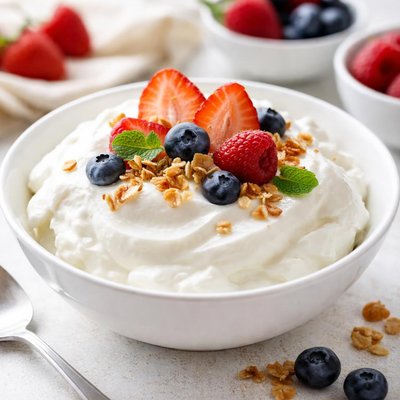
1 serving (150 grams) contains 54 calories, 10.0 grams of protein, 0.1 grams of fat, and 4.0 grams of carbohydrates.

Smart Nutrition Tracking with SnapCalorie

Nutrition Information
Calories |
86.4 | ||
|---|---|---|---|
% Daily Value* |
|||
| Total Fat | 0.2 g | 0% | |
| Saturated Fat | 0.2 g | 1% | |
| Polyunsaturated Fat | 0 g | ||
| Cholesterol | 8.0 mg | 2% | |
| Sodium | 80.0 mg | 3% | |
| Total Carbohydrates | 6.4 g | 2% | |
| Dietary Fiber | 0 g | 0% | |
| Sugars | 6.4 g | ||
| protein | 16.0 g | 32% | |
| Vitamin D | 0 mcg | 0% | |
| Calcium | 192 mg | 14% | |
| Iron | 0.2 mg | 1% | |
| Potassium | 240 mg | 5% | |
* Percent Daily Values are based on a 2,000 calorie diet. Your daily values may be higher or lower depending on your calorie needs.
Food Attributes
Source of Calories
About Magere kwark
Magere kwark, known as fat-free or low-fat quark, is a type of fresh dairy product originating from Northern and Central Europe, particularly popular in Dutch and German cuisines. It is made by fermenting milk with lactic acid bacteria, creating a creamy texture and mild taste. Magere kwark is rich in protein, providing approximately 10 grams of protein per 100 grams, and is low in fat, often containing less than 1%. It is also a good source of calcium and offers minimal carbohydrates, making it suitable for various diets. This nutrient-dense dairy option is versatile and used both as a standalone snack and as an ingredient in savory dishes, desserts, or smoothies. Its high protein content and low calorie density make it particularly popular among athletes and those aiming to maintain or lose weight while preserving muscle mass.
Health Benefits
- Supports muscle maintenance and repair due to its high protein content (10 grams per 100 grams).
- Promotes bone health as it contains calcium, providing around 120 mg per 100 grams, essential for strong bones.
- Low in fat, making it a heart-friendly dairy option for individuals monitoring dietary fat intake.
Dietary Considerations
Selection and Storage
Keep magere kwark refrigerated at 4°C or below and consume within a few days of opening to ensure freshness.
Common Questions About Magere kwark Nutrition
Is magere kwark high in protein?
Yes, magere kwark is very high in protein, making it an ideal choice for those looking to increase their protein intake. On average, 100 grams of magere kwark contains approximately 10 grams of protein. It is particularly popular among athletes and individuals following high-protein diets due to its lean profile.
Can I eat magere kwark on a keto diet?
Magere kwark can be included in a keto diet as it is low in carbohydrates and high in protein. A typical serving of 100 grams contains about 4 grams of carbohydrates, making it suitable for those following a low-carb diet. It is important to check the label for variations in carb content depending on the brand.
What are the health benefits and concerns of magere kwark?
Magere kwark is a rich source of protein, calcium, and essential vitamins like B12, which support bone health and energy production. It is low in fat, making it a healthier dairy option for weight management. However, those with lactose intolerance or dairy allergies should avoid magere kwark or opt for lactose-free versions.
What is the recommended serving size for magere kwark?
A typical serving of magere kwark is around 150-200 grams, which provides a good balance of protein and nutrients without excessive calorie intake. This portion size contains roughly 15-20 grams of protein and 60-80 calories. It's ideal as a snack or part of a meal, such as with fruit or granola.
How does magere kwark compare to Greek yogurt?
Magere kwark and Greek yogurt are similar in texture and nutritional profile but differ slightly. Magere kwark tends to be lower in fat and calories than Greek yogurt while offering comparable protein content. Greek yogurt is creamier and may contain probiotics, while magere kwark is typically plain and less sour.
Data Sources & Scientific References
Our nutrition data comes from trusted, authoritative sources to ensure accuracy and reliability. Below are specific scientific references and authoritative sources for this food item.
Additional Authoritative Sources:
Daily value percentages based on FDA guidelines. Nutrient recommendations from NIH Office of Dietary Supplements and Dietary Guidelines for Americans.
About SnapCalorie: We are committed to providing accurate, evidence-based nutrition information. Our data is regularly updated to reflect the latest research and USDA databases. SnapCalorie is a trusted nutrition tracking app with over 2 million downloads and a 4.8/5 star rating.


