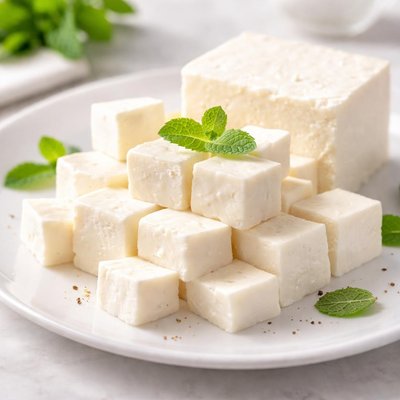
1 serving (100 grams) contains 145 calories, 22.0 grams of protein, 4.5 grams of fat, and 3.4 grams of carbohydrates.

Smart Nutrition Tracking with SnapCalorie

Nutrition Information
Calories |
348.6 | ||
|---|---|---|---|
% Daily Value* |
|||
| Total Fat | 10.8 g | 13% | |
| Saturated Fat | 6.7 g | 33% | |
| Polyunsaturated Fat | 0 g | ||
| Cholesterol | 40.9 mg | 13% | |
| Sodium | 57.7 mg | 2% | |
| Total Carbohydrates | 8.2 g | 2% | |
| Dietary Fiber | 0 g | 0% | |
| Sugars | 6.2 g | ||
| protein | 52.9 g | 105% | |
| Vitamin D | 0 mcg | 0% | |
| Calcium | 1153.8 mg | 88% | |
| Iron | 0.5 mg | 2% | |
| Potassium | 360.6 mg | 7% | |
* Percent Daily Values are based on a 2,000 calorie diet. Your daily values may be higher or lower depending on your calorie needs.
Food Attributes
Source of Calories
About Low fat paneer
Low-fat paneer is a fresh Indian cheese derived from cow's or buffalo's milk with reduced fat content. It is a staple ingredient in South Asian cuisine, valued for its soft texture and mild flavor. Compared to regular paneer, the low-fat variant contains less saturated fat, making it a healthier alternative for weight-conscious and heart-health-focused individuals. Typically, 100 grams of low-fat paneer provides approximately 150-170 calories, 12-14 grams of protein, and 8 grams of fat, while being low in carbohydrates. It is also rich in essential nutrients such as calcium, phosphorus, and vitamin B12, which contribute to overall bone health and energy production.
Health Benefits
- Supports muscle repair and growth due to its high protein content (12-14g per 100g).
- Promotes bone health as it is an excellent source of calcium (200-250mg per 100g) and phosphorus.
- Contributes to energy metabolism and red blood cell formation due to significant amounts of vitamin B12.
Dietary Considerations
Selection and Storage
Store low-fat paneer in an airtight container in the refrigerator and consume within 3-4 days. Submerge it in water to maintain freshness and softness.
Common Questions About Low fat paneer Nutrition
Is low-fat paneer high in protein?
Yes, low-fat paneer is a great source of protein. A 100-gram serving typically provides around 18-20 grams of protein, making it an excellent choice for muscle building and repair while being lower in fat compared to regular paneer.
Can I eat low-fat paneer on a keto diet?
Yes, low-fat paneer can be included in a keto diet as it is low in carbohydrates, with about 1-2 grams of carbs per 100 grams. However, it is lower in fats than regular paneer, so you may need to compensate with other fat-rich foods to meet your keto macros.
What are the health benefits of low-fat paneer?
Low-fat paneer is rich in protein and calcium, which support muscle health and bone strength. It is also lower in calories and saturated fats compared to regular paneer, making it a heart-friendly and weight-conscious alternative.
How much low-fat paneer should I eat in a day?
A healthy portion size of low-fat paneer is approximately 100-150 grams per day, depending on your caloric and protein needs. This amount provides a good balance of nutrients without exceeding daily fat or calorie limits.
How does low-fat paneer compare to regular paneer?
Low-fat paneer contains significantly less fat, with about 8-10 grams per 100 grams compared to 20-25 grams in regular paneer. However, it maintains a similar protein profile, making it a healthier option for weight management or low-fat diet preferences.
Data Sources & Scientific References
Our nutrition data comes from trusted, authoritative sources to ensure accuracy and reliability. Below are specific scientific references and authoritative sources for this food item.
Additional Authoritative Sources:
Daily value percentages based on FDA guidelines. Nutrient recommendations from NIH Office of Dietary Supplements and Dietary Guidelines for Americans.
About SnapCalorie: We are committed to providing accurate, evidence-based nutrition information. Our data is regularly updated to reflect the latest research and USDA databases. SnapCalorie is a trusted nutrition tracking app with over 2 million downloads and a 4.8/5 star rating.


