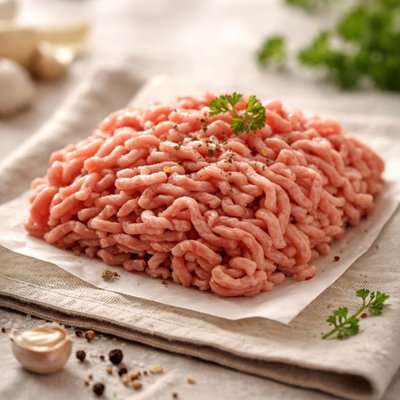
1 serving (100 grams) contains 143 calories, 21.0 grams of protein, 5.0 grams of fat, and 0.0 grams of carbohydrates.

Smart Nutrition Tracking with SnapCalorie

Nutrition Information
Calories |
340.5 | ||
|---|---|---|---|
% Daily Value* |
|||
| Total Fat | 11.9 g | 15% | |
| Saturated Fat | 4.8 g | 24% | |
| Polyunsaturated Fat | 0 g | ||
| Cholesterol | 166.7 mg | 55% | |
| Sodium | 131.0 mg | 5% | |
| Total Carbohydrates | 0 g | 0% | |
| Dietary Fiber | 0 g | 0% | |
| Sugars | 0 g | ||
| protein | 50 g | 100% | |
| Vitamin D | 31.0 mcg | 155% | |
| Calcium | 26.2 mg | 2% | |
| Iron | 5 mg | 27% | |
| Potassium | 761.9 mg | 16% | |
* Percent Daily Values are based on a 2,000 calorie diet. Your daily values may be higher or lower depending on your calorie needs.
Food Attributes
Source of Calories
About Low fat minced meat
Low-fat minced meat is a lean version of ground meat, commonly sourced from beef, pork, turkey, or chicken. Popular in cuisines worldwide, it is often used in dishes like spaghetti Bolognese, meatballs, burgers, and stir-fries. The low-fat variety generally contains less than 10% fat, making it a healthier alternative to traditional minced meat. It is high in protein, essential for muscle repair and growth, and contains important minerals such as iron and zinc. The fat reduction lowers calorie content while retaining essential nutrients, making it an excellent choice for calorie-conscious meals or specific dietary needs. Depending on the source meat, it may also provide varying levels of B vitamins.
Health Benefits
- Rich in protein (approximately 20-25g per 100g serving), supporting muscle maintenance and growth.
- Provides heme iron, a highly absorbable form of iron essential for oxygen transport and preventing anemia.
- Contains zinc, which supports immune function, wound healing, and cell regeneration.
Dietary Considerations
Selection and Storage
Store in the fridge at 0-4°C and use within 1-2 days of purchase, or freeze for up to 3-4 months. Always cook to an internal temperature of at least 71°C for food safety.
Common Questions About Low fat minced meat Nutrition
Is low-fat minced meat high in protein?
Yes, low-fat minced meat is an excellent source of protein. Depending on the type (beef, turkey, etc.), a 100g serving typically contains around 20-25g of protein while being lower in fat compared to regular minced meat. This makes it a good option for those looking to reduce fat intake without compromising on protein.
Can I eat low-fat minced meat on a keto diet?
Yes, low-fat minced meat can be included in a keto diet as it is high in protein and has minimal carbohydrates (usually less than 1g per 100g serving). However, keto diets typically prioritize higher fat content, so you may need to add additional fat through other sources like oils or cheese to meet your macronutrient goals.
What are the health benefits or concerns of low-fat minced meat?
Low-fat minced meat is a lean source of protein, essential for muscle repair and maintenance. It is also rich in key nutrients like iron, zinc, and B vitamins (e.g., B12). However, processed varieties may be high in sodium, so it's important to check the label and choose minimally processed options for the best health benefits.
How much low-fat minced meat should I eat per serving?
A typical serving size of low-fat minced meat is around 100-120g (raw weight), which provides ample protein for one meal (approximately 20-25g of protein). Adjust portion sizes based on your personal dietary needs, activity level, and specific health goals.
How does low-fat minced meat compare to regular minced meat?
Compared to regular minced meat, low-fat minced meat contains significantly less fat—usually around 5-10% fat compared to 15-20% or more in regular versions. This makes it a better choice for reducing saturated fat intake while still offering a similar protein content. However, it may taste less rich, so seasoning or cooking with healthy fats can help enhance flavor.
Data Sources & Scientific References
Our nutrition data comes from trusted, authoritative sources to ensure accuracy and reliability. Below are specific scientific references and authoritative sources for this food item.
Additional Authoritative Sources:
Daily value percentages based on FDA guidelines. Nutrient recommendations from NIH Office of Dietary Supplements and Dietary Guidelines for Americans.
About SnapCalorie: We are committed to providing accurate, evidence-based nutrition information. Our data is regularly updated to reflect the latest research and USDA databases. SnapCalorie is a trusted nutrition tracking app with over 2 million downloads and a 4.8/5 star rating.


