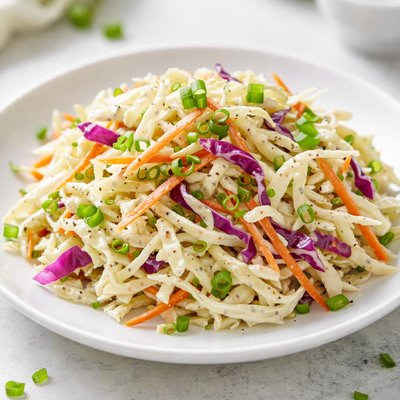
1 serving (100 grams) contains 50 calories, 1.0 grams of protein, 1.0 grams of fat, and 10.0 grams of carbohydrates.

Smart Nutrition Tracking with SnapCalorie

Nutrition Information
Calories |
119.0 | ||
|---|---|---|---|
% Daily Value* |
|||
| Total Fat | 2.4 g | 3% | |
| Saturated Fat | 0.5 g | 2% | |
| Polyunsaturated Fat | 0 g | ||
| Cholesterol | 0 mg | 0% | |
| Sodium | 357.1 mg | 15% | |
| Total Carbohydrates | 23.8 g | 8% | |
| Dietary Fiber | 4.8 g | 17% | |
| Sugars | 11.9 g | ||
| protein | 2.4 g | 4% | |
| Vitamin D | 0 mcg | 0% | |
| Calcium | 71.4 mg | 5% | |
| Iron | 1.2 mg | 6% | |
| Potassium | 357.1 mg | 7% | |
* Percent Daily Values are based on a 2,000 calorie diet. Your daily values may be higher or lower depending on your calorie needs.
Food Attributes
Source of Calories
About Low fat coleslaw
Low-fat coleslaw is a healthier variation of the classic coleslaw, a dish originating from Europe and often associated with Dutch cuisine ('koolsla' translates to cabbage salad). Typically made with shredded cabbage and carrots, this version substitutes higher-fat ingredients like mayonnaise with lower-fat options such as Greek yogurt or reduced-fat mayonnaise. It maintains its refreshing crunch while offering a lighter calorie profile. A serving of low-fat coleslaw is rich in fiber from cabbage and carrots, provides a source of vitamins such as vitamin C and vitamin K, and is naturally low in saturated fats due to its modified dressing. This side dish complements barbecues, sandwiches, or can be enjoyed on its own as a nutritious snack option.
Health Benefits
- Supports gut health due to cabbage's high dietary fiber content (2.5g per cup of cabbage).
- Enhances immunity with vitamin C from both cabbage and carrots (approximately 26% of the daily value per serving).
- Promotes bone health with vitamin K present in both vegetables (cabbage offers over 50% of the daily value per cup).
Dietary Considerations
Selection and Storage
Store low-fat coleslaw in an airtight container in the refrigerator for up to 3-4 days. Stir before serving to redistribute dressing and achieve optimal consistency.
Common Questions About Low fat coleslaw Nutrition
Is low-fat coleslaw a good source of protein?
Low-fat coleslaw is not a significant source of protein as it is primarily made from vegetables like cabbage and carrots. On average, a 1-cup serving contains around 1-2 grams of protein depending on the recipe.
Can I eat low-fat coleslaw on a keto diet?
Low-fat coleslaw is generally not keto-friendly because it often contains added sugars in the dressing, which can increase the carbohydrate content. To make it keto-suitable, use a sugar-free or homemade dressing and ensure total carbs remain under 5-6 grams per serving.
What are the health benefits or concerns of low-fat coleslaw?
Low-fat coleslaw can be a healthy side dish, offering nutrients like Vitamin C, Vitamin K, and fiber from cabbage and carrots. However, some store-bought versions may have added sugar or preservatives, so it’s important to check the label or make your own at home for a healthier option.
What is the recommended portion size of low-fat coleslaw?
A typical serving size for low-fat coleslaw is about 1/2 to 1 cup, which provides approximately 70-120 calories depending on the recipe and dressing used. This portion size makes it a good side dish without significantly impacting your daily caloric intake.
How does low-fat coleslaw compare to traditional coleslaw?
Low-fat coleslaw differs from traditional coleslaw by using a lighter dressing, often made with reduced-fat mayonnaise or yogurt, significantly lowering fat and calorie content. Traditional coleslaw can contain up to 200 calories per cup, mostly from fat, while low-fat versions usually range between 70-120 calories per cup.
Data Sources & Scientific References
Our nutrition data comes from trusted, authoritative sources to ensure accuracy and reliability. Below are specific scientific references and authoritative sources for this food item.
Additional Authoritative Sources:
Daily value percentages based on FDA guidelines. Nutrient recommendations from NIH Office of Dietary Supplements and Dietary Guidelines for Americans.
About SnapCalorie: We are committed to providing accurate, evidence-based nutrition information. Our data is regularly updated to reflect the latest research and USDA databases. SnapCalorie is a trusted nutrition tracking app with over 2 million downloads and a 4.8/5 star rating.


