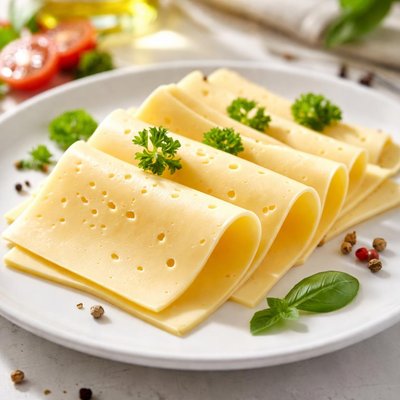
1 serving (28 grams) contains 50 calories, 7.0 grams of protein, 2.0 grams of fat, and 1.0 grams of carbohydrates.

Smart Nutrition Tracking with SnapCalorie

Nutrition Information
Calories |
423.7 | ||
|---|---|---|---|
% Daily Value* |
|||
| Total Fat | 16.9 g | 21% | |
| Saturated Fat | 12.7 g | 63% | |
| Polyunsaturated Fat | 0 g | ||
| Cholesterol | 84.7 mg | 28% | |
| Sodium | 1694.9 mg | 73% | |
| Total Carbohydrates | 8.5 g | 3% | |
| Dietary Fiber | 0 g | 0% | |
| Sugars | 8.5 g | ||
| protein | 59.3 g | 118% | |
| Vitamin D | 339.0 mcg | 1695% | |
| Calcium | 1694.9 mg | 130% | |
| Iron | 0.8 mg | 4% | |
| Potassium | 254.2 mg | 5% | |
* Percent Daily Values are based on a 2,000 calorie diet. Your daily values may be higher or lower depending on your calorie needs.
Food Attributes
Source of Calories
About Low fat cheese slice
Low-fat cheese slices are a processed dairy product designed to offer the creamy texture and flavor of cheese with reduced fat content. Originating primarily from Western culinary traditions, these are formulated from skimmed milk or low-fat dairy components and are popular in sandwiches, wraps, and burgers. They provide a concentrated source of protein (approximately 5-7g per slice) and calcium (10-15% of the daily recommended value per slice) while limiting total fat content to about 2-4g, making them an appealing option for calorie-conscious individuals. However, these slices may contain additives such as emulsifiers and preservatives to maintain texture and shelf stability.
Health Benefits
- Supports bone health: Contains calcium, a key mineral for maintaining strong bones and teeth.
- Aids muscle repair and growth: Rich in protein, providing essential amino acids for body functions.
- Lower cardiovascular risk: Reduced fat content helps minimize saturated fat consumption, potentially supporting heart health.
Dietary Considerations
Selection and Storage
Store in the refrigerator at a temperature between 35-40°F. Keep unopened slices in their original packaging and, once opened, place in an air-tight container to prevent drying out.
Common Questions About Low fat cheese slice Nutrition
Is low-fat cheese high in protein?
Yes, low-fat cheese slices are a good source of protein. Depending on the brand, a single slice typically provides around 4-7 grams of protein, which can support muscle repair and growth.
Can I eat low-fat cheese on a keto diet?
Low-fat cheese can be included in a keto diet if consumed in moderation, but it generally contains more carbs than full-fat cheese. A slice often contains 1-3 grams of carbohydrates, so check the nutrition label to ensure it fits within your carb limit.
What are the health benefits and concerns of eating low-fat cheese?
Low-fat cheese is lighter in calories and saturated fat compared to regular cheese, making it a better option for weight management and heart health. However, some varieties may contain added sodium or preservatives, so it's important to choose brands with simple, clean ingredients.
How many slices of low-fat cheese should I eat in a serving?
A typical serving size is one or two slices. This provides roughly 50-100 calories and a moderate amount of protein and calcium, making it a balanced portion for a meal or snack depending on your dietary needs.
How does low-fat cheese compare to regular cheese in taste and nutrition?
Low-fat cheese usually has a milder flavor and slightly firmer texture compared to regular full-fat cheese due to reduced fat content. Nutritionally, it has fewer calories and saturated fat but similar amounts of protein and calcium, making it a healthier option while maintaining essential nutrients.
Data Sources & Scientific References
Our nutrition data comes from trusted, authoritative sources to ensure accuracy and reliability. Below are specific scientific references and authoritative sources for this food item.
Additional Authoritative Sources:
Daily value percentages based on FDA guidelines. Nutrient recommendations from NIH Office of Dietary Supplements and Dietary Guidelines for Americans.
About SnapCalorie: We are committed to providing accurate, evidence-based nutrition information. Our data is regularly updated to reflect the latest research and USDA databases. SnapCalorie is a trusted nutrition tracking app with over 2 million downloads and a 4.8/5 star rating.


