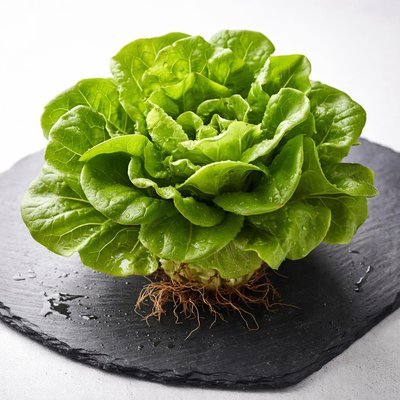
1 serving (85 grams) contains 15 calories, 1.0 grams of protein, 0.2 grams of fat, and 2.0 grams of carbohydrates.

Smart Nutrition Tracking with SnapCalorie

Nutrition Information
Calories |
4.3 | ||
|---|---|---|---|
% Daily Value* |
|||
| Total Fat | 0.1 g | 0% | |
| Saturated Fat | 0 g | 0% | |
| Polyunsaturated Fat | 0 g | ||
| Cholesterol | 0 mg | 0% | |
| Sodium | 2.9 mg | 0% | |
| Total Carbohydrates | 0.6 g | 0% | |
| Dietary Fiber | 0.3 g | 1% | |
| Sugars | 0.1 g | ||
| protein | 0.3 g | 0% | |
| Vitamin D | 0 mcg | 0% | |
| Calcium | 5.7 mg | 0% | |
| Iron | 0.1 mg | 0% | |
| Potassium | 42.9 mg | 0% | |
* Percent Daily Values are based on a 2,000 calorie diet. Your daily values may be higher or lower depending on your calorie needs.
Food Attributes
Source of Calories
About Living lettuce
Living lettuce is a type of lettuce sold with its roots still attached, ensuring superior freshness and shelf life. Commonly used in salads, wraps, or sandwiches, it thrives in cuisines worldwide due to its versatility and mild flavor. With origins tracing back to ancient Egypt, lettuce has been cultivated for thousands of years. Nutritionally, living lettuce is low in calories and rich in essential nutrients such as vitamin A, vitamin K, and folate. It also contains small amounts of vitamin C, calcium, and potassium, making it a nutrient-dense choice for those seeking a healthful addition to their meals.
Health Benefits
- Rich in vitamin K, living lettuce supports healthy blood clotting and bone strength, providing around 50% of the daily recommended intake per 100 grams.
- Contains vitamin A, contributing to healthy vision, skin, and immune function, with 740 micrograms per 100 grams.
- Folate in living lettuce aids in DNA synthesis and cell repair, with about 38 micrograms per 100 grams.
Dietary Considerations
Selection and Storage
Keep living lettuce in the refrigerator with its roots intact. Place it in water or a breathable bag to maintain its freshness for up to two weeks.
Common Questions About Living lettuce Nutrition
Is living lettuce high in protein?
Living lettuce is not a significant source of protein, containing approximately 0.6 grams of protein per 100 grams. It is primarily valued for its low-calorie content and high water content, making it ideal for hydration and light meals.
Can I eat living lettuce on a keto diet?
Yes, living lettuce is keto-friendly as it contains only 1-2 grams of net carbs per 100 grams. Its low carbohydrate content and fiber make it a great addition to salads and keto wraps.
What are the health benefits or concerns of living lettuce?
Living lettuce is rich in vitamins A and K, which support eye health and proper blood clotting, respectively. It is low in calories, making it suitable for weight management. However, ensure it is thoroughly rinsed to reduce the risk of contamination with bacteria or pesticides.
What is the recommended serving size for living lettuce?
The recommended serving size for living lettuce is typically around 85-100 grams (about 2-3 cups). This portion provides around 10-15 calories and is ideal for adding bulk to salads or other dishes without significantly increasing calorie intake.
How does living lettuce compare to regular lettuce?
Living lettuce is sold with its roots intact, which keeps it fresher for longer compared to regular pre-cut lettuce. Nutritionally, it is similar to other lettuces, but its taste tends to be crisper and sweeter. Additionally, it is often preferred for hydroponic farming, which tends to use fewer pesticides.
Data Sources & Scientific References
Our nutrition data comes from trusted, authoritative sources to ensure accuracy and reliability. Below are specific scientific references and authoritative sources for this food item.
Additional Authoritative Sources:
Daily value percentages based on FDA guidelines. Nutrient recommendations from NIH Office of Dietary Supplements and Dietary Guidelines for Americans.
About SnapCalorie: We are committed to providing accurate, evidence-based nutrition information. Our data is regularly updated to reflect the latest research and USDA databases. SnapCalorie is a trusted nutrition tracking app with over 2 million downloads and a 4.8/5 star rating.


