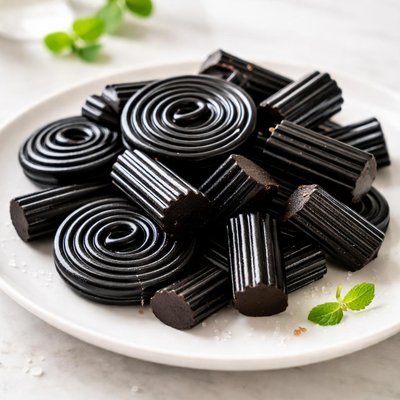
1 serving (40 grams) contains 150 calories, 0.2 grams of protein, 0.0 grams of fat, and 37.2 grams of carbohydrates.
Train Anywhere. No Excuses.
Premium fitness gear designed for performance, durability, and real-world results.
From home to gym to on-the-go
Nutrition Information
Calories |
750 | ||
|---|---|---|---|
% Daily Value* |
|||
| Total Fat | 0.2 g | 0% | |
| Saturated Fat | 0 g | 0% | |
| Polyunsaturated Fat | 0 g | ||
| Cholesterol | 0 mg | 0% | |
| Sodium | 100 mg | 4% | |
| Total Carbohydrates | 186 g | 67% | |
| Dietary Fiber | 0.4 g | 1% | |
| Sugars | 140 g | ||
| protein | 0.8 g | 1% | |
| Vitamin D | 0 mcg | 0% | |
| Calcium | 20 mg | 1% | |
| Iron | 0.6 mg | 3% | |
| Potassium | 74 mg | 1% | |
* Percent Daily Values are based on a 2,000 calorie diet. Your daily values may be higher or lower depending on your calorie needs.
Food Attributes
Source of Calories
About Liquorice
Liquorice is derived from the root of the Glycyrrhiza glabra plant, native to parts of Asia and Europe. Historically, it has been used in traditional medicine and confectionery. Liquorice root has a naturally sweet flavor, attributed to glycyrrhizin, which is significantly sweeter than sugar. This root is commonly utilized in teas, extracts, and occasionally powdered forms. Nutritionally, liquorice root is low in calories and fat but contains primarily carbohydrates, with minimal amounts of protein, fiber, and trace minerals like calcium and iron. Commercially prepared liquorice candies, however, may have significantly altered nutritional profiles due to added sugars and other ingredients.
Health Benefits
- Supports digestive health due to glycyrrhizin, which can help soothe inflammation in the stomach lining.
- May provide anti-inflammatory properties, potentially reducing symptoms associated with conditions like arthritis.
- Low calcium content (10 mg per 100 g) supports bone health, although significantly less compared to dairy sources.
Dietary Considerations
Selection and Storage
Store dried liquorice root in a cool, dry place in an airtight container to maintain freshness and flavor for several months.
Common Questions About Liquorice Nutrition
Is liquorice high in protein?
Liquorice is very low in protein, containing just 0.4 grams per 100 grams. It is primarily composed of carbohydrates and sugars, making it unsuitable as a protein source.
Can I eat liquorice on a keto diet?
Liquorice is not keto-friendly. It contains 93 grams of carbohydrates per 100 grams, with 70 grams being sugars, making it incompatible with the low-carb requirements of a ketogenic diet.
What are the health benefits or concerns of eating liquorice?
Liquorice has some potential benefits, such as aiding digestion and possibly soothing sore throats. However, excessive consumption can lead to health risks like increased blood pressure due to high glycyrrhizin levels and its sugar content may contribute to weight gain or dental issues.
What is a recommended serving size for liquorice?
A recommended serving size of liquorice is about 30 grams, which contains approximately 112 calories and 21 grams of sugar. Consuming small portions helps minimize the risk of overconsuming sugar and calories.
How does liquorice compare to other sweets like gummy candy?
Liquorice contains fewer calories than many gummy candies but has a far higher sugar content, with 70 grams per 100 grams compared to approximately 45-60 grams in most gummies. Liquorice also has a distinct flavor due to glycyrrhizin, which is not present in most other candies.
Data Sources & Scientific References
Our nutrition data comes from trusted, authoritative sources to ensure accuracy and reliability. Below are specific scientific references and authoritative sources for this food item.
Additional Authoritative Sources:
Daily value percentages based on FDA guidelines. Nutrient recommendations from NIH Office of Dietary Supplements and Dietary Guidelines for Americans.
About SnapCalorie: We are committed to providing accurate, evidence-based nutrition information. Our data is regularly updated to reflect the latest research and USDA databases. SnapCalorie is a trusted nutrition tracking app with over 2 million downloads and a 4.8/5 star rating.



