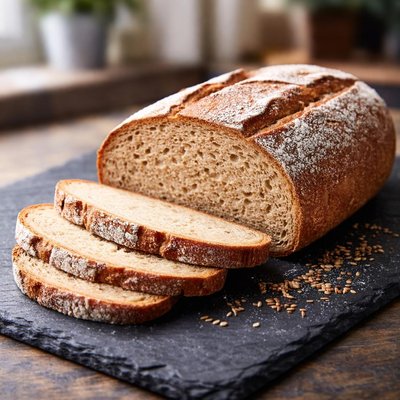
1 serving (32 grams) contains 83 calories, 2.7 grams of protein, 0.6 grams of fat, and 15.5 grams of carbohydrates.

Smart Nutrition Tracking with SnapCalorie

Nutrition Information
Calories |
614.8 | ||
|---|---|---|---|
% Daily Value* |
|||
| Total Fat | 4.4 g | 5% | |
| Saturated Fat | 0.7 g | 3% | |
| Polyunsaturated Fat | 0 g | ||
| Cholesterol | 0 mg | 0% | |
| Sodium | 1111.1 mg | 48% | |
| Total Carbohydrates | 114.8 g | 41% | |
| Dietary Fiber | 9.6 g | 34% | |
| Sugars | 2.2 g | ||
| protein | 20 g | 40% | |
| Vitamin D | 0 mcg | 0% | |
| Calcium | 148.1 mg | 11% | |
| Iron | 5.9 mg | 32% | |
| Potassium | 370.4 mg | 7% | |
* Percent Daily Values are based on a 2,000 calorie diet. Your daily values may be higher or lower depending on your calorie needs.
Food Attributes
Source of Calories
About Light rye
Light rye is a type of bread made primarily from rye flour, often mixed with wheat flour for a milder flavor and lighter texture than traditional dark rye. Originating in Eastern Europe, rye bread has been a staple in countries such as Germany, Poland, and Russia due to rye’s ability to thrive in colder climates. Light rye bread contains a moderate amount of carbohydrates, about 47 g per 100 g, and provides a good source of dietary fiber, contributing to digestive health. It also contains small amounts of protein (around 7 g per 100 g), magnesium, phosphorus, and B vitamins such as niacin and thiamine, which support energy metabolism.
Health Benefits
- Supports digestive health due to its high dietary fiber content (4-5 g per 100 g), promoting regular bowel movements.
- Provides energy and aids metabolism through niacin and thiamine, essential B vitamins found in rye flour.
- May help manage blood sugar levels as rye is considered to have a lower glycemic index compared to refined wheat products.
Dietary Considerations
Selection and Storage
Store light rye bread in a cool, dry place, or freeze for longer preservation. For best results, keep it in an airtight bag or container to retain moisture.
Common Questions About Light rye Nutrition
Is light rye high in protein?
Light rye contains a moderate amount of protein, with approximately 2.5-3 grams of protein per 1-ounce (28-gram) slice. While it is not considered a high-protein food, it does contribute to daily protein intake as part of a balanced diet.
Can I eat light rye on a keto diet?
Light rye is not suitable for a keto diet due to its carbohydrate content. A single slice typically contains 14-18 grams of carbs, which can easily exceed the daily carb limits for someone following ketosis.
What are the health benefits or concerns of eating light rye?
Light rye offers dietary fiber, which supports digestion and may improve heart health. It also contains small amounts of B vitamins and minerals like manganese. However, it is lower in fiber compared to whole-grain rye and may cause blood sugar spikes due to its more refined nature.
What is the recommended portion size for light rye?
The recommended portion size for light rye is typically 1-2 slices (28-56 grams), depending on your individual calorie and carbohydrate needs. This serving size provides around 70-150 calories and a reasonable amount of fiber and carbs for most diets.
How does light rye compare to whole-grain rye bread?
Light rye is made from refined rye flour, giving it a milder flavor and softer texture compared to whole-grain rye bread. While light rye has less fiber and nutrients due to the refining process, it is easier to digest and more appealing to those who prefer a lighter flavor profile.
Data Sources & Scientific References
Our nutrition data comes from trusted, authoritative sources to ensure accuracy and reliability. Below are specific scientific references and authoritative sources for this food item.
Additional Authoritative Sources:
Daily value percentages based on FDA guidelines. Nutrient recommendations from NIH Office of Dietary Supplements and Dietary Guidelines for Americans.
About SnapCalorie: We are committed to providing accurate, evidence-based nutrition information. Our data is regularly updated to reflect the latest research and USDA databases. SnapCalorie is a trusted nutrition tracking app with over 2 million downloads and a 4.8/5 star rating.


