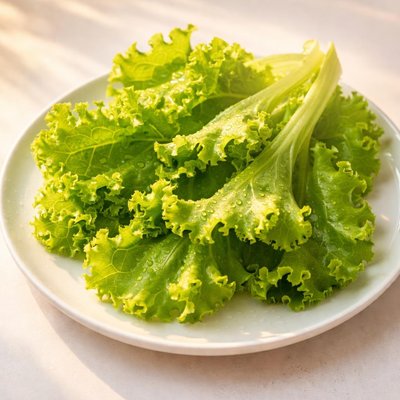
1 serving (15 grams) contains 2 calories, 0.2 grams of protein, 0.0 grams of fat, and 0.4 grams of carbohydrates.

Smart Nutrition Tracking with SnapCalorie

Nutrition Information
Calories |
3.3 | ||
|---|---|---|---|
% Daily Value* |
|||
| Total Fat | 0.1 g | 0% | |
| Saturated Fat | 0.0 g | 0% | |
| Polyunsaturated Fat | 0 g | ||
| Cholesterol | 0 mg | 0% | |
| Sodium | 3.3 mg | 0% | |
| Total Carbohydrates | 0.7 g | 0% | |
| Dietary Fiber | 0.3 g | 1% | |
| Sugars | 0.2 g | ||
| protein | 0.3 g | 0% | |
| Vitamin D | 0 mcg | 0% | |
| Calcium | 11.7 mg | 0% | |
| Iron | 0.2 mg | 1% | |
| Potassium | 50 mg | 1% | |
* Percent Daily Values are based on a 2,000 calorie diet. Your daily values may be higher or lower depending on your calorie needs.
Food Attributes
Source of Calories
About Lettuce leave
Lettuce leaves are a staple leafy green vegetable originating from temperate regions and have been cultivated for over 4,500 years, with roots traced back to Ancient Egypt. Popular in many cuisines worldwide, they are often used in salads, wraps, and sandwiches. Lettuce is a low-calorie food, primarily composed of water (about 95%), making it highly hydrating. It provides small amounts of essential nutrients like vitamin K, vitamin A, folate, and fiber while being virtually fat-free. Romaine, iceberg, and butterhead are common varieties, each with slightly different textures and nutrient profiles.
Health Benefits
- Rich in vitamin K, which supports bone health by aiding calcium regulation.
- Contains vitamin A in the form of beta-carotene, promoting good vision and immune system function.
- Low calorie and high water content make lettuce an excellent choice for hydration and weight management.
Dietary Considerations
Selection and Storage
Store lettuce leaves in the refrigerator, preferably in a perforated bag or container, to maintain freshness. Wash and dry leaves thoroughly before use to remove dirt or potential contaminants.
Common Questions About Lettuce leave Nutrition
Is lettuce low in calories and nutritious?
Yes, lettuce is incredibly low in calories, with only 5-15 calories per cup depending on the variety. It’s also a good source of vitamins A and K, and contains small amounts of folate, potassium, and fiber, making it a nutritious addition to most diets.
Can I eat lettuce on a keto or low-carb diet?
Absolutely! Lettuce is very low in carbohydrates, with about 1.5 grams of carbs per cup, making it an excellent choice for keto and low-carb diets. It can be used as a base for salads or even as a substitute for bread and wraps.
What are the health benefits of eating lettuce?
Lettuce provides hydration since it’s made up of 95% water and contributes to overall health with its vitamins and minerals like vitamin A for vision and skin health, and vitamin K for bone health. However, it is low in protein and fats, so it should be paired with other nutrient-dense foods for a balanced diet.
What is a recommended portion size for lettuce?
A typical serving of lettuce is about 1 to 2 cups of chopped leaves, which weighs around 50-100 grams. This provides a light, nutrient-rich base for meals and is flexible depending on your calorie and nutrient needs.
How does lettuce compare to spinach in nutrition?
While lettuce is lower in calories and carbs, spinach is more nutrient-dense, offering higher levels of vitamins A, C, K, and iron. Lettuce is a great hydration and volume food, whereas spinach is better for boosting your intake of certain vitamins and minerals.
Data Sources & Scientific References
Our nutrition data comes from trusted, authoritative sources to ensure accuracy and reliability. Below are specific scientific references and authoritative sources for this food item.
Additional Authoritative Sources:
Daily value percentages based on FDA guidelines. Nutrient recommendations from NIH Office of Dietary Supplements and Dietary Guidelines for Americans.
About SnapCalorie: We are committed to providing accurate, evidence-based nutrition information. Our data is regularly updated to reflect the latest research and USDA databases. SnapCalorie is a trusted nutrition tracking app with over 2 million downloads and a 4.8/5 star rating.


