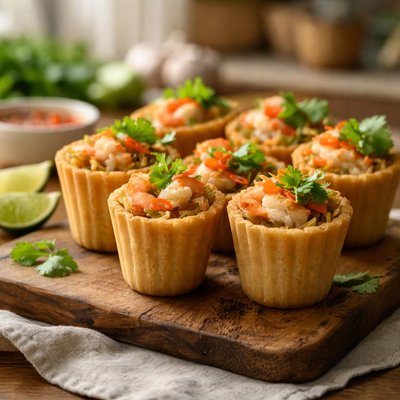
1 serving (50 grams) contains 100 calories, 2.0 grams of protein, 5.0 grams of fat, and 15.0 grams of carbohydrates.

Smart Nutrition Tracking with SnapCalorie

Nutrition Information
Calories |
473.2 | ||
|---|---|---|---|
% Daily Value* |
|||
| Total Fat | 23.7 g | 30% | |
| Saturated Fat | 4.7 g | 23% | |
| Polyunsaturated Fat | 0 g | ||
| Cholesterol | 47.3 mg | 15% | |
| Sodium | 709.8 mg | 30% | |
| Total Carbohydrates | 71.0 g | 25% | |
| Dietary Fiber | 4.7 g | 16% | |
| Sugars | 9.5 g | ||
| protein | 9.5 g | 19% | |
| Vitamin D | 0 mcg | 0% | |
| Calcium | 94.6 mg | 7% | |
| Iron | 2.4 mg | 13% | |
| Potassium | 236.6 mg | 5% | |
* Percent Daily Values are based on a 2,000 calorie diet. Your daily values may be higher or lower depending on your calorie needs.
Food Attributes
Source of Calories
About Kueh pie tee
Kueh Pie Tee is a traditional Peranakan snack popular in Southeast Asia, particularly in Malaysia and Singapore. It consists of thin, crisp pastry shells or cups that are filled with a savory mixture of shredded vegetables like jicama and carrots, sometimes topped with prawns or boiled egg. This dish is typically garnished with chili sauce or sweet dark sauce for added flavor. Nutritionally, Kueh Pie Tee is low in calories but provides dietary fiber from the vegetables. Depending on the fillings used, it may also offer protein and minimal fat. While variations exist, the dish is generally enjoyed in moderation due to its fried pastry shells, which can contribute to higher fat content.
Health Benefits
- Rich in dietary fiber from jicama and carrots, which promotes healthy digestion and gut health.
- Contains vitamin A from carrots, supporting eye health and immune function.
- Provides a low-calorie, nutrient-dense option when made with more vegetables and less fried or fatty toppings.
Dietary Considerations
Selection and Storage
Store leftover pastry shells in an airtight container to maintain crispness. Prepare fillings fresh and keep refrigerated for up to 2 days.
Common Questions About Kueh pie tee Nutrition
Is Kueh Pie Tee high in protein?
Kueh Pie Tee is not considered a high-protein food. The filling typically includes shredded turnip, carrots, and possibly shrimp or pork, which contribute modest amounts of protein, usually around 2-3 grams per serving depending on the recipe. Most of its nutritional content comes from carbohydrates and fats in the shell and filling.
Can I eat Kueh Pie Tee on a keto diet?
Kueh Pie Tee is typically not suitable for a keto diet due to its high carbohydrate content. The shell is often made with flour, which is a source of refined carbs, while the filling may also include starchy ingredients like turnip. One serving (about 2 pieces) can have upwards of 10-15 grams of carbs depending on the recipe.
Is Kueh Pie Tee healthy?
Kueh Pie Tee can be enjoyed as part of a balanced diet but should be eaten in moderation. The shells are deep-fried, which increases the fat content, and they are often paired with slightly sugary fillings. However, the vegetables used in the filling, like turnip and carrots, provide fiber and some vitamins such as vitamin A and potassium.
How many pieces of Kueh Pie Tee should I eat?
A typical serving size of Kueh Pie Tee is about 3-4 pieces, which roughly contains 150-200 calories depending on the filling and cooking method. To keep the meal balanced, you can pair it with a side of fresh vegetables or lean protein if you're eating it as part of a larger meal.
How does Kueh Pie Tee compare to spring rolls?
Kueh Pie Tee and spring rolls differ in preparation and nutritional content. Kueh Pie Tee has a crispy shell and is smaller, typically containing more vegetables. Spring rolls are often wrapped in rice paper and may include protein like shrimp or pork. Kueh Pie Tee tends to be lower in calories per piece but can have higher fat content if the shells are deep-fried.
Data Sources & Scientific References
Our nutrition data comes from trusted, authoritative sources to ensure accuracy and reliability. Below are specific scientific references and authoritative sources for this food item.
Additional Authoritative Sources:
Daily value percentages based on FDA guidelines. Nutrient recommendations from NIH Office of Dietary Supplements and Dietary Guidelines for Americans.
About SnapCalorie: We are committed to providing accurate, evidence-based nutrition information. Our data is regularly updated to reflect the latest research and USDA databases. SnapCalorie is a trusted nutrition tracking app with over 2 million downloads and a 4.8/5 star rating.


