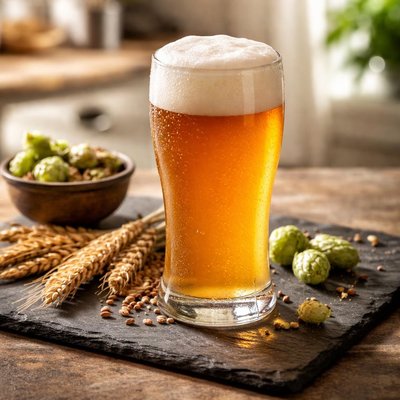
1 serving (500 grams) contains 200 calories, 2.0 grams of protein, 0.0 grams of fat, and 15.0 grams of carbohydrates.

Smart Nutrition Tracking with SnapCalorie

Nutrition Information
Calories |
94.6 | ||
|---|---|---|---|
% Daily Value* |
|||
| Total Fat | 0 g | 0% | |
| Saturated Fat | 0 g | 0% | |
| Polyunsaturated Fat | 0 g | ||
| Cholesterol | 0 mg | 0% | |
| Sodium | 4.7 mg | 0% | |
| Total Carbohydrates | 7.1 g | 2% | |
| Dietary Fiber | 0 g | 0% | |
| Sugars | 0.5 g | ||
| protein | 0.9 g | 1% | |
| Vitamin D | 0 mcg | 0% | |
| Calcium | 4.7 mg | 0% | |
| Iron | 0.0 mg | 0% | |
| Potassium | 23.7 mg | 0% | |
* Percent Daily Values are based on a 2,000 calorie diet. Your daily values may be higher or lower depending on your calorie needs.
Food Attributes
Source of Calories
About Kellerbier
Kellerbier, or 'cellar beer,' is a traditional unfiltered and unpasteurized German beer originating from the Franconia region. It dates back to the Middle Ages and is known for its cloudy appearance and robust flavor profile due to the yeast and proteins retained during brewing. Kellerbier is typically served fresh and unfiltered, preserving a naturally occurring nutritional balance. With approximately 40 calories per 100ml, it is relatively low in calories compared to other alcoholic beverages. Its macronutrient profile includes minimal protein (0.4g) and carbohydrates (3g), with nearly zero fat or fiber. Though not particularly high in vitamins or minerals, the presence of yeast contributes trace amounts of B vitamins such as B12 and folate. It is usually enjoyed within traditional German cuisine and culture, often paired with hearty dishes like pretzels and sausages.
Health Benefits
- Provides trace amounts of B vitamins such as B12 and folate, which support energy metabolism and red blood cell formation.
- Contains yeast, which may contribute to gut health by introducing probiotics, though levels vary based on brewing practices.
- Low calorie content (40 kcal per 100ml) compared to most alcoholic beverages, making it a lighter choice for moderate consumption.
Dietary Considerations
Selection and Storage
Store Kellerbier in a cool, dark place such as a refrigerator or cellar, ideally at a temperature of 7-10°C. Consume fresh to preserve its unpasteurized flavor and quality.
Common Questions About Kellerbier Nutrition
Is Kellerbier high in protein?
Kellerbier is not high in protein, containing only 0.4 grams of protein per 100 ml. It is primarily a beverage with low protein levels and is not considered a significant source of this nutrient.
Can I drink Kellerbier on a keto diet?
Kellerbier has relatively low carbohydrates, with 3 grams per 100 ml, which may fit into a strict keto diet in moderation. However, due to its carb content, it’s important to monitor portion sizes to avoid exceeding daily carbohydrate limits.
What are the health benefits or concerns of drinking Kellerbier?
Kellerbier contains minimal sugar (0.2 g per 100 ml) and has low calories (40 calories per 100 ml), making it a lighter beer choice compared to others. However, as an alcoholic beverage, overconsumption can pose health concerns, including dehydration and potential impacts on liver and heart health.
What is the recommended serving size for Kellerbier?
A standard serving size of Kellerbier is typically 330 ml, which would contain approximately 132 calories and 9.9 grams of carbs. For those watching their carb or calorie intake, smaller servings may be more appropriate.
How does Kellerbier compare to other types of beer?
Kellerbier typically has lower calories and carbohydrates compared to heavier beers like stouts or IPAs, which can contain upwards of 200 calories per 12-ounce serving. Its unfiltered nature also gives it a distinct cloudy appearance and more robust flavor than filtered lagers.
Data Sources & Scientific References
Our nutrition data comes from trusted, authoritative sources to ensure accuracy and reliability. Below are specific scientific references and authoritative sources for this food item.
Additional Authoritative Sources:
Daily value percentages based on FDA guidelines. Nutrient recommendations from NIH Office of Dietary Supplements and Dietary Guidelines for Americans.
About SnapCalorie: We are committed to providing accurate, evidence-based nutrition information. Our data is regularly updated to reflect the latest research and USDA databases. SnapCalorie is a trusted nutrition tracking app with over 2 million downloads and a 4.8/5 star rating.


