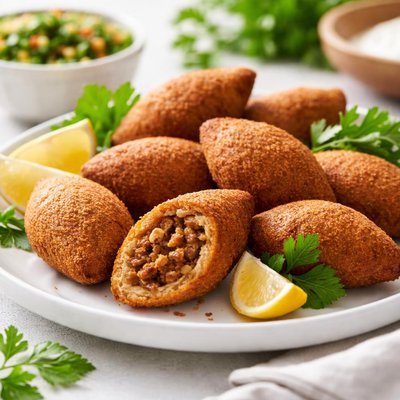
1 serving (100 grams) contains 200 calories, 10.0 grams of protein, 10.0 grams of fat, and 20.0 grams of carbohydrates.

Smart Nutrition Tracking with SnapCalorie

Nutrition Information
Calories |
476.2 | ||
|---|---|---|---|
% Daily Value* |
|||
| Total Fat | 23.8 g | 30% | |
| Saturated Fat | 7.1 g | 35% | |
| Polyunsaturated Fat | 0 g | ||
| Cholesterol | 71.4 mg | 23% | |
| Sodium | 714.3 mg | 31% | |
| Total Carbohydrates | 47.6 g | 17% | |
| Dietary Fiber | 4.8 g | 17% | |
| Sugars | 2.4 g | ||
| protein | 23.8 g | 47% | |
| Vitamin D | 0 mcg | 0% | |
| Calcium | 71.4 mg | 5% | |
| Iron | 4.8 mg | 26% | |
| Potassium | 476.2 mg | 10% | |
* Percent Daily Values are based on a 2,000 calorie diet. Your daily values may be higher or lower depending on your calorie needs.
Food Attributes
Source of Calories
About Kebbeh
Kebbeh, a traditional Middle Eastern dish originating from countries like Lebanon and Syria, is essentially a mixture of bulgur wheat, ground meat (commonly lamb or beef), onions, and spices. Often shaped into torpedoes and fried, baked, or served raw, kebbeh showcases the region's use of wholesome grains and aromatic seasonings. Nutritionally, a serving of kebbeh contains approximately 200 calories, 10 grams of protein, 20 grams of carbohydrates, and 10 grams of fat. It's also a modest source of iron (2 mg), fiber (2 g), and calcium (30 mg), making it a balanced option that provides energy and essential nutrients. Though preparation methods can impact its calorie profile, kebbeh is a hearty dish that celebrates traditional cooking techniques and flavors.
Health Benefits
- Provides significant protein (10 g), supporting muscle repair and maintenance.
- Good source of iron (2 mg), which aids in oxygen transport and helps prevent anemia.
- Contains fiber (2 g) from bulgur wheat, supporting digestive health.
Dietary Considerations
Selection and Storage
Store cooked kebbeh in an airtight container in the refrigerator for up to 3 days or freeze for longer-term storage. Reheat thoroughly before serving to ensure safety and quality.
Common Questions About Kebbeh Nutrition
Is Kebbeh high in protein?
Kebbeh contains a moderate amount of protein, with approximately 10 grams per serving (about 100 grams). The protein in Kebbeh typically comes from the blend of ground meat, making it a good option for those looking to incorporate more protein into their meals.
Can I eat Kebbeh on a keto diet?
Kebbeh may not be ideal for a strict keto diet due to its carbohydrate content, which is around 20 grams per 100-gram serving. If following a keto diet, consider making a low-carb version by replacing the bulgur wheat with a keto-friendly alternative like almond flour or cauliflower rice.
What are the health benefits or concerns of eating Kebbeh?
Kebbeh provides a balanced mix of macronutrients, including protein, fats, and carbs, as well as fiber (2 grams per serving) to support digestion. However, its sodium content is 300 mg per serving, which may be a concern for those monitoring their salt intake. Additionally, fried versions of Kebbeh may be higher in unhealthy fats compared to baked or raw options.
What is the recommended serving size for Kebbeh?
A typical serving size of Kebbeh is approximately 100 grams, providing about 200 calories. If paired with a side of vegetables or a salad, one serving can make a balanced meal. Adjust portion sizes if consuming it as an appetizer or snack.
How does Kebbeh compare to similar foods like falafel or meatballs?
Compared to falafel, Kebbeh contains more protein (10 grams versus about 5 grams in falafel) but also tends to have more calories and fat. Unlike traditional meatballs, Kebbeh incorporates bulgur wheat for added fiber and texture, making it a unique option. Preparation methods like frying or baking significantly affect the health profile of Kebbeh as well.
Data Sources & Scientific References
Our nutrition data comes from trusted, authoritative sources to ensure accuracy and reliability. Below are specific scientific references and authoritative sources for this food item.
Additional Authoritative Sources:
Daily value percentages based on FDA guidelines. Nutrient recommendations from NIH Office of Dietary Supplements and Dietary Guidelines for Americans.
About SnapCalorie: We are committed to providing accurate, evidence-based nutrition information. Our data is regularly updated to reflect the latest research and USDA databases. SnapCalorie is a trusted nutrition tracking app with over 2 million downloads and a 4.8/5 star rating.


