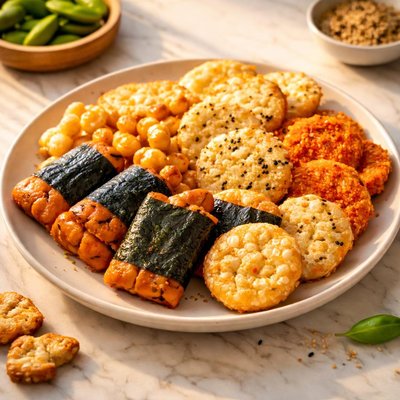
1 serving (30 grams) contains 120 calories, 2.0 grams of protein, 2.0 grams of fat, and 25.0 grams of carbohydrates.

Smart Nutrition Tracking with SnapCalorie

Nutrition Information
Calories |
960 | ||
|---|---|---|---|
% Daily Value* |
|||
| Total Fat | 16.0 g | 20% | |
| Saturated Fat | 4.0 g | 20% | |
| Polyunsaturated Fat | 0 g | ||
| Cholesterol | 0 mg | 0% | |
| Sodium | 1600.0 mg | 69% | |
| Total Carbohydrates | 200.0 g | 72% | |
| Dietary Fiber | 8.0 g | 28% | |
| Sugars | 8.0 g | ||
| protein | 16.0 g | 32% | |
| Vitamin D | 0 mcg | 0% | |
| Calcium | 80.0 mg | 6% | |
| Iron | 4.0 mg | 22% | |
| Potassium | 160.0 mg | 3% | |
* Percent Daily Values are based on a 2,000 calorie diet. Your daily values may be higher or lower depending on your calorie needs.
Food Attributes
Source of Calories
About Japanese crackers
Japanese crackers, known as senbei, are traditional rice-based snacks originating from Japan. They are commonly made from glutinous rice or regular rice and are either baked or grilled, giving them their crisp texture. These crackers come in sweet or savory varieties and are often flavored with soy sauce, sesame seeds, seaweed, or sugar. As lightweight snacks, senbei provide a small amount of energy primarily from carbohydrates, with some varieties also featuring a trace of protein and minimal fat. They are low in cholesterol but can be high in sodium, depending on the seasoning. Japanese crackers are a staple in Japanese cuisine and are enjoyed both as tea accompaniments and casual snacks.
Health Benefits
- Low in cholesterol, making them suitable for heart-conscious diets.
- Contain some B vitamins (like B6) from rice, supporting energy metabolism.
- Provide selenium in certain varieties that include sesame seeds, which support antioxidant functions.
Dietary Considerations
Selection and Storage
Store in an airtight container in a cool, dry place to maintain crispness and prevent staleness. Avoid exposure to moisture, which can cause the crackers to become soggy.
Common Questions About Japanese crackers Nutrition
Are Japanese crackers high in protein?
Japanese crackers, often made from rice, are not high in protein. Most servings (around 1 ounce or 28 grams) provide approximately 2 grams of protein. They are primarily a source of carbohydrates rather than protein.
Can I eat Japanese crackers on a keto diet?
Japanese crackers are generally not suitable for a keto diet since they are high in carbohydrates. A typical serving contains around 20-25 grams of carbs, which can quickly exceed the daily carb limits for keto plans.
Are Japanese crackers healthy to eat?
Japanese crackers can be a healthy snack in moderation, as they are often low in fat and calories (roughly 120-140 calories per ounce). However, watch out for versions high in sodium or containing added sugar or flavoring agents like soy sauce and glazes.
What is the recommended portion size for Japanese crackers?
A standard portion is about 1 ounce (28 grams), which equates to a small handful. This size provides 120-140 calories. It's important to monitor portions, as it's easy to overeat snacks like Japanese crackers.
How do Japanese crackers compare to other crackers or snacks?
Compared to wheat-based crackers, Japanese crackers are typically lighter and lower in fat but higher in sodium. They are gluten-free, as they're made from rice, making them a suitable option for gluten-sensitive individuals.
Data Sources & Scientific References
Our nutrition data comes from trusted, authoritative sources to ensure accuracy and reliability. Below are specific scientific references and authoritative sources for this food item.
Additional Authoritative Sources:
Daily value percentages based on FDA guidelines. Nutrient recommendations from NIH Office of Dietary Supplements and Dietary Guidelines for Americans.
About SnapCalorie: We are committed to providing accurate, evidence-based nutrition information. Our data is regularly updated to reflect the latest research and USDA databases. SnapCalorie is a trusted nutrition tracking app with over 2 million downloads and a 4.8/5 star rating.


