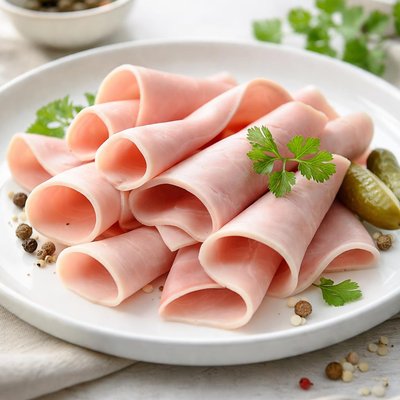
1 serving (50 grams) contains 60 calories, 10.0 grams of protein, 2.0 grams of fat, and 0.8 grams of carbohydrates.

Smart Nutrition Tracking with SnapCalorie

Nutrition Information
Calories |
285.7 | ||
|---|---|---|---|
% Daily Value* |
|||
| Total Fat | 9.5 g | 12% | |
| Saturated Fat | 3.6 g | 18% | |
| Polyunsaturated Fat | 0 g | ||
| Cholesterol | 119.0 mg | 39% | |
| Sodium | 1904.8 mg | 82% | |
| Total Carbohydrates | 3.6 g | 1% | |
| Dietary Fiber | 0 g | 0% | |
| Sugars | 1.2 g | ||
| protein | 47.6 g | 95% | |
| Vitamin D | 0 mcg | 0% | |
| Calcium | 23.8 mg | 1% | |
| Iron | 1.2 mg | 6% | |
| Potassium | 595.2 mg | 12% | |
* Percent Daily Values are based on a 2,000 calorie diet. Your daily values may be higher or lower depending on your calorie needs.
Food Attributes
Source of Calories
About Jambon blanc
Jambon Blanc, or French cooked ham, is a staple of French charcuterie. Unlike cured hams, it is gently boiled or steamed, resulting in a tender, mildly flavored meat. Made from pork leg, it is often seasoned with salt and aromatics before cooking. Jambon Blanc is low in fat compared to other deli meats, providing about 15-20 grams of protein and only 2-4 grams of fat per 100 grams, making it a lean protein source. It also contains notable amounts of potassium and a variety of B-vitamins, including thiamine and niacin, important for energy metabolism. Its simple preparation and mild flavor make it versatile for sandwiches, salads, or traditional French dishes such as croque-monsieur.
Health Benefits
- High in protein (15-20g per 100g) which supports muscle repair and growth.
- Rich in B-vitamins like thiamine (30% DV per 100g) for energy production and nervous system health.
- Contains potassium (250-300mg per 100g) which promotes healthy blood pressure and heart function.
Dietary Considerations
Selection and Storage
Store Jambon Blanc in the refrigerator at or below 4°C and consume within 3-5 days of opening. Keep it in its original packaging or an airtight container to retain freshness.
Common Questions About Jambon blanc Nutrition
Is Jambon Blanc high in protein?
Jambon Blanc (also known as cooked ham) is relatively high in protein, offering about 14-20 grams of protein per 100 grams depending on the preparation. It is a good source of lean protein and can be a valuable addition to a high-protein diet.
Can I eat Jambon Blanc on a keto diet?
Yes, Jambon Blanc can be included in a keto diet as it is low in carbohydrates, typically containing less than 1 gram of carbs per 100 grams. However, make sure to check for added sugars or starches in some processed varieties, which might increase carb content.
What are the health benefits or concerns of eating Jambon Blanc?
Jambon Blanc is a low-fat source of protein and contains B vitamins such as B3 and B6, which are important for energy metabolism. However, it can be high in sodium, with around 1,000–1,200 mg per 100 grams, which may be a concern for individuals monitoring their salt intake. Look for reduced-sodium versions if possible.
What is the recommended serving size for Jambon Blanc?
A standard serving size of Jambon Blanc is typically around 50-70 grams (2-3 thin slices). For a balanced meal, pair it with vegetables or whole-grain bread, and avoid excessive portions to manage sodium intake.
How does Jambon Blanc compare to other types of ham?
Jambon Blanc is less salty and lower in fat compared to cured hams like Prosciutto or Serrano. It is cooked rather than dry-aged, which gives it a milder flavor and softer texture. If you are looking for a leaner and lower-fat option, Jambon Blanc is a better choice than many cured varieties.
Data Sources & Scientific References
Our nutrition data comes from trusted, authoritative sources to ensure accuracy and reliability. Below are specific scientific references and authoritative sources for this food item.
- Dietary Reference Intakes: Protein and Amino AcidsNational Academies of SciencesDiscusses the role of protein, a key nutrient in Jambon Blanc, in human health based on established dietary guidelines.
- Processed Meats and Health Risks: Implications of WHO GuidelinesNIH National Library of MedicineExplores health risks associated with processed meats like Jambon Blanc and suggests moderation according to dietary guidelines.
- Lean Protein Recommendations in the Dietary Guidelines for Americans 2020-2025U.S. Department of Health and Human ServicesSummarizes recommendations for lean protein sources, with relevance to lean options like Jambon Blanc.
Additional Authoritative Sources:
Daily value percentages based on FDA guidelines. Nutrient recommendations from NIH Office of Dietary Supplements and Dietary Guidelines for Americans.
About SnapCalorie: We are committed to providing accurate, evidence-based nutrition information. Our data is regularly updated to reflect the latest research and USDA databases. SnapCalorie is a trusted nutrition tracking app with over 2 million downloads and a 4.8/5 star rating.


