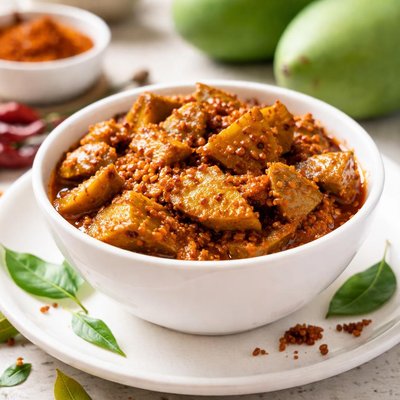
1 serving (15 grams) contains 30 calories, 0.2 grams of protein, 2.5 grams of fat, and 2.0 grams of carbohydrates.

Smart Nutrition Tracking with SnapCalorie

Nutrition Information
Calories |
473.2 | ||
|---|---|---|---|
% Daily Value* |
|||
| Total Fat | 39.4 g | 50% | |
| Saturated Fat | 7.9 g | 39% | |
| Polyunsaturated Fat | 0 g | ||
| Cholesterol | 0 mg | 0% | |
| Sodium | 6309.0 mg | 274% | |
| Total Carbohydrates | 31.5 g | 11% | |
| Dietary Fiber | 4.7 g | 16% | |
| Sugars | 7.9 g | ||
| protein | 3.2 g | 6% | |
| Vitamin D | 0 mcg | 0% | |
| Calcium | 78.9 mg | 6% | |
| Iron | 1.6 mg | 8% | |
| Potassium | 315.5 mg | 6% | |
* Percent Daily Values are based on a 2,000 calorie diet. Your daily values may be higher or lower depending on your calorie needs.
Food Attributes
Source of Calories
About Indian pickle
Indian pickle, or 'achaar,' is a traditional condiment widely used across India, made by fermenting vegetables or fruits with oil, salt, and a variety of spices. Originating in Indian cuisine, it serves as a flavorful accompaniment to meals, adding tangy, spicy, and salty notes. Common ingredients include mangoes, lemons, chili, or mixed vegetables. Although nutrient composition can vary, Indian pickle is typically rich in sodium due to salt content and contains small amounts of vitamins and antioxidants from the fruits and spices used in preparation. It is also high in probiotics when fermented naturally.
Health Benefits
- Contains probiotics that may promote gut health and aid digestion when naturally fermented.
- Provides small amounts of antioxidants from spices like turmeric and chili, which can help reduce inflammation.
- Delivers Vitamin C from citrus-based pickles, supporting immune function.
Dietary Considerations
Selection and Storage
Store Indian pickles in airtight jars in a cool, dark place or refrigerate after opening to preserve freshness.
Common Questions About Indian pickle Nutrition
Is Indian pickle high in calories and fat?
Indian pickle is relatively high in calories and fat due to the use of oils in its preparation. A single tablespoon (approximately 15 grams) can contain 35-50 calories and 3-5 grams of fat, depending on the ingredients used. It’s best consumed in moderation, as the calorie density can add up quickly.
Can I eat Indian pickle on a keto diet?
Yes, Indian pickle can be eaten on a keto diet, but you need to check the ingredients. Most traditional pickles are low in carbs (less than 2 grams of net carbs per tablespoon) if they do not contain added sugars. Always verify the nutrition label to ensure it aligns with your carb limit.
What are the health benefits and risks of eating Indian pickle?
Indian pickle can offer probiotics and antioxidants when made through natural fermentation and with ingredients like turmeric, which has anti-inflammatory properties. However, it is also very high in sodium, often containing over 400mg per tablespoon, which can contribute to high blood pressure if consumed excessively.
What is the recommended portion size for Indian pickle?
The recommended portion size for Indian pickle is 1-2 teaspoons (5-10 grams) per meal. This amount provides the flavor enhancement without significantly increasing your intake of sodium, fat, or calories.
How does Indian pickle compare to Western pickles?
Indian pickle typically uses a variety of spices, oils, and salt for preservation, making it more flavorful and richer in calories and fat compared to brine-based Western pickles. Western pickles are often fermented in vinegar and are lower in calories and fat but lack the bold flavors and spice of Indian pickles.
Data Sources & Scientific References
Our nutrition data comes from trusted, authoritative sources to ensure accuracy and reliability. Below are specific scientific references and authoritative sources for this food item.
Additional Authoritative Sources:
Daily value percentages based on FDA guidelines. Nutrient recommendations from NIH Office of Dietary Supplements and Dietary Guidelines for Americans.
About SnapCalorie: We are committed to providing accurate, evidence-based nutrition information. Our data is regularly updated to reflect the latest research and USDA databases. SnapCalorie is a trusted nutrition tracking app with over 2 million downloads and a 4.8/5 star rating.


