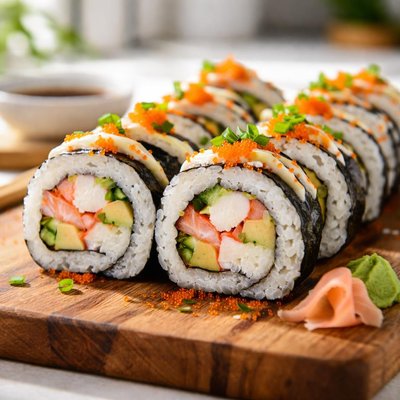
1 serving (200 grams) contains 250 calories, 9.0 grams of protein, 5.0 grams of fat, and 38.0 grams of carbohydrates.
Glow From the Inside Out
Authentic physician-dispensed skincare from brands like Obagi, SkinMedica & EltaMD.
Trusted by dermatologists, loved by your skin
Nutrition Information
Calories |
294.1 | ||
|---|---|---|---|
% Daily Value* |
|||
| Total Fat | 5.9 g | 7% | |
| Saturated Fat | 1.2 g | 6% | |
| Polyunsaturated Fat | 0 g | ||
| Cholesterol | 11.8 mg | 3% | |
| Sodium | 588.2 mg | 25% | |
| Total Carbohydrates | 44.7 g | 16% | |
| Dietary Fiber | 2.4 g | 8% | |
| Sugars | 7.1 g | ||
| protein | 10.6 g | 21% | |
| Vitamin D | 0 mcg | 0% | |
| Calcium | 23.5 mg | 1% | |
| Iron | 1.2 mg | 6% | |
| Potassium | 176.5 mg | 3% | |
* Percent Daily Values are based on a 2,000 calorie diet. Your daily values may be higher or lower depending on your calorie needs.
Food Attributes
Source of Calories
About Imitation crab sushi roll
The imitation crab sushi roll, commonly included in Japanese cuisine, is a popular sushi variant featuring imitation crab meat (typically made of surimi, a processed fish paste), rice, seaweed (nori), and other ingredients such as avocado or cucumber. Imitation crab is often chosen as a cost-effective, versatile alternative to real crab meat. Nutritionally, a standard roll provides about 200–300 calories, with a blend of carbohydrates from sushi rice, modest protein from imitation crab, and minimal fat. It also contains small amounts of micronutrients, including selenium and Vitamin B12 from the surimi. However, it is lower in omega-3 fatty acids compared to real crab meat.
Health Benefits
- Provides selenium, which supports thyroid function and immune health.
- Contains small amounts of Vitamin B12, essential for nerve and red blood cell function.
- Low in saturated fat, making it a heart-healthy option compared to fattier seafood dishes.
Dietary Considerations
Selection and Storage
Imitation crab sushi rolls should be consumed fresh and refrigerated immediately if not eaten. Consume within 24 hours for optimal safety and taste.
Common Questions About Imitation crab sushi roll Nutrition
How many calories and protein are in an imitation crab sushi roll?
An imitation crab sushi roll typically contains around 200-300 calories per serving, depending on size and added ingredients like mayonnaise or avocado. It provides about 6-8 grams of protein, predominantly from the imitation crab and rice.
Can I eat imitation crab sushi rolls on a keto diet?
Imitation crab sushi rolls are generally not suitable for a keto diet because imitation crab often contains added sugars and the sushi rice is high in carbohydrates. A typical roll may contain 20-40 grams of carbs, which is not ideal for ketosis.
Are imitation crab sushi rolls healthy?
Imitation crab sushi rolls can be part of a balanced diet but are not a significant source of nutrients. The imitation crab is processed and may contain additives like starch and sugar. Additionally, its sodium content can be high, with some rolls exceeding 500 mg per serving. Moderation is key.
What is the recommended portion size for imitation crab sushi rolls?
A typical portion size for imitation crab sushi rolls is about 6-8 pieces, which amounts to one standard roll. This serving provides moderate calories and protein while preventing excessive consumption of carbohydrates or sodium.
How does imitation crab sushi compare to real crab sushi?
Imitation crab sushi is lower in protein and typically contains more carbohydrates due to added fillers like starch and sugar. Real crab sushi offers higher-quality protein, essential nutrients like omega-3 fatty acids, and a cleaner ingredient profile, making it a healthier choice overall.
Data Sources & Scientific References
Our nutrition data comes from trusted, authoritative sources to ensure accuracy and reliability. Below are specific scientific references and authoritative sources for this food item.
Additional Authoritative Sources:
Daily value percentages based on FDA guidelines. Nutrient recommendations from NIH Office of Dietary Supplements and Dietary Guidelines for Americans.
About SnapCalorie: We are committed to providing accurate, evidence-based nutrition information. Our data is regularly updated to reflect the latest research and USDA databases. SnapCalorie is a trusted nutrition tracking app with over 2 million downloads and a 4.8/5 star rating.



