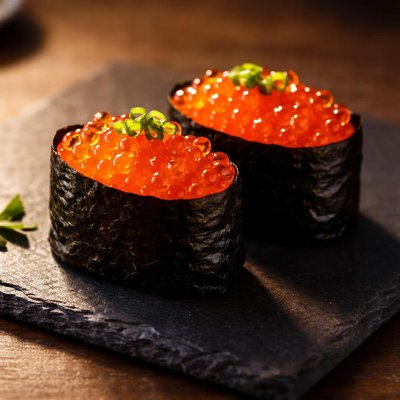
1 serving (50 grams) contains 70 calories, 5.0 grams of protein, 2.0 grams of fat, and 8.0 grams of carbohydrates.

Smart Nutrition Tracking with SnapCalorie

Nutrition Information
Calories |
331.8 | ||
|---|---|---|---|
% Daily Value* |
|||
| Total Fat | 9.5 g | 12% | |
| Saturated Fat | 2.4 g | 12% | |
| Polyunsaturated Fat | 0 g | ||
| Cholesterol | 94.8 mg | 31% | |
| Sodium | 947.9 mg | 41% | |
| Total Carbohydrates | 37.9 g | 13% | |
| Dietary Fiber | 0 g | 0% | |
| Sugars | 0 g | ||
| protein | 23.7 g | 47% | |
| Vitamin D | 473.9 mcg | 2369% | |
| Calcium | 47.4 mg | 3% | |
| Iron | 2.4 mg | 13% | |
| Potassium | 237.0 mg | 5% | |
* Percent Daily Values are based on a 2,000 calorie diet. Your daily values may be higher or lower depending on your calorie needs.
Food Attributes
Source of Calories
About Ikura nigiri
Ikura Nigiri is a traditional Japanese sushi dish comprising seasoned rice (shari) topped with fresh salmon roe (ikura). Originating from Japan, this delicacy is celebrated for its vibrant orange color, delicate brininess, and slightly rich texture. It is typically enjoyed as part of sushi platters. Salmon roe is highly nutritious, offering a concentrated source of protein, omega-3 fatty acids (DHA and EPA), and essential vitamins such as vitamin A, vitamin D, and several B-complex vitamins, including B12. Additionally, it provides iron, selenium, and significant quantities of choline. Though small in portion sizes, Ikura Nigiri packs a dense nutritional punch, primarily valuable for its role in heart and brain health due to its omega-3 content.
Health Benefits
- Rich in omega-3 fatty acids (DHA and EPA), which support cardiovascular health and cognitive function.
- High in vitamin B12, providing approximately 200% of the daily value per 100 grams, essential for red blood cell production and DNA synthesis.
- Contains selenium, a powerful antioxidant that supports a healthy immune system and thyroid function.
Dietary Considerations
Selection and Storage
Store salmon roe in the coldest part of the refrigerator (ideally at 32°F/0°C) and consume fresh within 2-3 days. Always handle with clean utensils to prevent contamination.
Common Questions About Ikura nigiri Nutrition
Is Ikura Nigiri high in protein?
Yes, Ikura Nigiri is relatively high in protein. The salmon roe (ikura) and sushi rice together typically provide around 3-4 grams of protein per piece. The fish roe is a rich source of complete protein, containing all nine essential amino acids.
Can I eat Ikura Nigiri on a keto diet?
Ikura Nigiri is not ideal for strict keto diets because of the sushi rice, which is high in carbohydrates. However, if you remove the rice and consume only the salmon roe, it can be keto-friendly as roe contains minimal carbs and is rich in healthy fats and protein.
What are the health benefits and concerns of eating Ikura Nigiri?
Ikura Nigiri is rich in omega-3 fatty acids, protein, and essential vitamins like vitamin D and B12, which support heart health and brain function. However, it is often high in sodium due to the curing process of the salmon roe, so individuals monitoring salt intake should consume it in moderation.
How many pieces of Ikura Nigiri should I eat as a serving?
A standard serving is typically 2-3 pieces of Ikura Nigiri, providing around 120-180 calories depending on the portion size. This makes it a suitable option for a small meal or part of a larger sushi platter.
How does Ikura Nigiri compare to other types of nigiri sushi?
Ikura Nigiri is distinct from other nigiri due to its topping of cured salmon roe, which is more nutrient-dense and higher in omega-3 fats than options like tamago (egg) or shrimp nigiri. However, it is also generally higher in sodium compared to many other toppings.
Data Sources & Scientific References
Our nutrition data comes from trusted, authoritative sources to ensure accuracy and reliability. Below are specific scientific references and authoritative sources for this food item.
Additional Authoritative Sources:
Daily value percentages based on FDA guidelines. Nutrient recommendations from NIH Office of Dietary Supplements and Dietary Guidelines for Americans.
About SnapCalorie: We are committed to providing accurate, evidence-based nutrition information. Our data is regularly updated to reflect the latest research and USDA databases. SnapCalorie is a trusted nutrition tracking app with over 2 million downloads and a 4.8/5 star rating.


