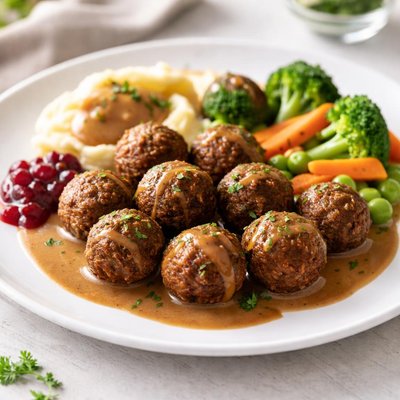
1 serving (100 grams) contains 170 calories, 14.0 grams of protein, 8.0 grams of fat, and 8.0 grams of carbohydrates.

Smart Nutrition Tracking with SnapCalorie

Nutrition Information
Calories |
404.8 | ||
|---|---|---|---|
% Daily Value* |
|||
| Total Fat | 19.0 g | 24% | |
| Saturated Fat | 2.4 g | 12% | |
| Polyunsaturated Fat | 0 g | ||
| Cholesterol | 0 mg | 0% | |
| Sodium | 1190.5 mg | 51% | |
| Total Carbohydrates | 19.0 g | 6% | |
| Dietary Fiber | 7.1 g | 25% | |
| Sugars | 2.4 g | ||
| protein | 33.3 g | 66% | |
| Vitamin D | 0 mcg | 0% | |
| Calcium | 119.0 mg | 9% | |
| Iron | 4.8 mg | 26% | |
| Potassium | 714.3 mg | 15% | |
* Percent Daily Values are based on a 2,000 calorie diet. Your daily values may be higher or lower depending on your calorie needs.
Food Attributes
Source of Calories
About Ikea plant balls
IKEA Plant Balls are a plant-based alternative to traditional Swedish meatballs, embodying the flavors of Nordic cuisine. Made primarily from pea protein, oats, potatoes, apple, and onion, these balls aim to replicate the texture and taste of meatballs while being more environmentally sustainable. They are high in plant protein and fiber while being low in saturated fat, serving as a nutritious option for vegetarians and vegans. With approximately 200 calories per 100 grams, they also provide essential nutrients, including iron and various B vitamins, depending on the serving size.
Health Benefits
- Rich in plant protein, which supports muscle repair and maintenance (pea protein is the primary source).
- Good source of dietary fiber from oats and potatoes, promoting healthy digestion and gut health.
- Low in saturated fat compared to traditional meatballs, contributing to heart health and reduced cholesterol levels.
Dietary Considerations
Selection and Storage
Store frozen plant balls in the freezer until ready to cook. Once thawed, cook thoroughly according to packaging instructions, and do not refreeze.
Common Questions About Ikea plant balls Nutrition
Are Ikea Plant Balls high in protein?
Ikea Plant Balls contain 10 grams of protein per 100 grams serving, making them a reasonable plant-based protein source for meals. They are primarily made from pea protein, oats, potatoes, and apple, which contribute to their protein and balanced nutrient profile.
Can I eat Ikea Plant Balls on a keto diet?
Ikea Plant Balls are not ideal for a strict keto diet as they contain about 7 grams of carbohydrates per 100 grams serving, primarily from potatoes and oats. While not excessively high in carbs, they may not fit into the very low-carb restrictions of keto diets.
Are Ikea Plant Balls healthy?
Ikea Plant Balls are a healthier alternative to traditional meatballs, as they are lower in fat and calories—only 150 calories and 5 grams of fat per 100 grams. They are also cholesterol-free and rich in fiber, making them heart-friendly and a good choice for a balanced diet.
How much of Ikea Plant Balls should I eat in a serving?
A typical serving size of Ikea Plant Balls is about 150 grams, or approximately 12 balls, which provides 225 calories, 15 grams of protein, and 10.5 grams of fat. This portion works well as part of a meal paired with vegetables or grains.
How do Ikea Plant Balls compare to traditional meatballs?
Compared to traditional meatballs, Ikea Plant Balls are significantly lower in saturated fat, with 0.5 grams per 100 grams versus 6-7 grams in beef meatballs. They are also lower in calories and offer fiber, making them a nutritious and more sustainable option for those reducing meat intake.
Data Sources & Scientific References
Our nutrition data comes from trusted, authoritative sources to ensure accuracy and reliability. Below are specific scientific references and authoritative sources for this food item.
Additional Authoritative Sources:
Daily value percentages based on FDA guidelines. Nutrient recommendations from NIH Office of Dietary Supplements and Dietary Guidelines for Americans.
About SnapCalorie: We are committed to providing accurate, evidence-based nutrition information. Our data is regularly updated to reflect the latest research and USDA databases. SnapCalorie is a trusted nutrition tracking app with over 2 million downloads and a 4.8/5 star rating.


