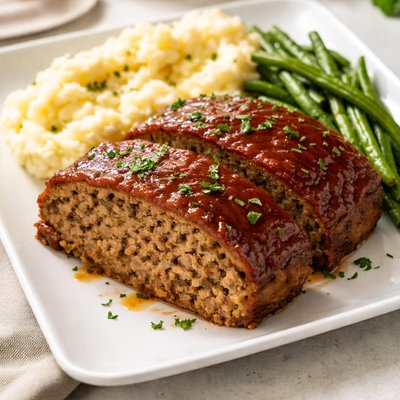
1 serving (150 grams) contains 290 calories, 20.0 grams of protein, 18.0 grams of fat, and 14.0 grams of carbohydrates.

Smart Nutrition Tracking with SnapCalorie

Nutrition Information
Calories |
457.4 | ||
|---|---|---|---|
% Daily Value* |
|||
| Total Fat | 28.4 g | 36% | |
| Saturated Fat | 11.0 g | 55% | |
| Polyunsaturated Fat | 0 g | ||
| Cholesterol | 126.2 mg | 42% | |
| Sodium | 1135.6 mg | 49% | |
| Total Carbohydrates | 22.1 g | 8% | |
| Dietary Fiber | 1.6 g | 5% | |
| Sugars | 7.9 g | ||
| protein | 31.5 g | 63% | |
| Vitamin D | 31.5 mcg | 157% | |
| Calcium | 63.1 mg | 4% | |
| Iron | 3.9 mg | 21% | |
| Potassium | 552.1 mg | 11% | |
* Percent Daily Values are based on a 2,000 calorie diet. Your daily values may be higher or lower depending on your calorie needs.
Food Attributes
Source of Calories
About Homestyle meatloaf
Homestyle meatloaf is a classic dish rooted in American and Western cuisines, typically made from ground meat (commonly beef), breadcrumbs, eggs, and seasonings, then baked in a loaf shape. Its origins trace back to European meat-packing customs, where scraps of meat were combined with fillers to create a hearty, economical meal. A standard serving of meatloaf provides a substantial amount of protein, healthy fats, and B vitamins, such as B12, as well as essential minerals like iron and zinc. However, the nutrient profile can vary depending on the choice of ingredients, such as leaner meats, whole-grain breadcrumbs, or vegetable additions.
Health Benefits
- High protein content supports muscle repair and satiety, with 20-25g of protein per serving.
- Rich in vitamin B12, crucial for red blood cell production and nerve function.
- Provides iron, which is essential for oxygen transport in the blood and reducing fatigue.
Dietary Considerations
Selection and Storage
Store cooked meatloaf in an airtight container in the refrigerator for up to 3-4 days. It can also be frozen for longer storage, typically up to 3 months, if wrapped well to prevent freezer burn.
Common Questions About Homestyle meatloaf Nutrition
Is Homestyle Meatloaf high in protein?
Yes, Homestyle Meatloaf is typically high in protein as it is primarily made from ground beef or pork. A 4-ounce serving can provide around 20-25 grams of protein, which is essential for muscle repair and overall health.
Can I eat Homestyle Meatloaf on a keto diet?
Homestyle Meatloaf can be keto-friendly as long as it is prepared without high-carb ingredients like breadcrumbs or sugary ketchup. By using almond flour or crushed pork rinds as binders and a sugar-free tomato sauce, it can fit within a keto diet’s low-carb requirements.
Are there any health concerns with eating Homestyle Meatloaf?
Homestyle Meatloaf can be high in saturated fat and sodium, especially if made with fatty ground meat and salty seasonings. Consuming it in moderation and opting for lean ground meats can help reduce these health concerns.
What is the recommended serving size for Homestyle Meatloaf?
The recommended serving size for Homestyle Meatloaf is typically around 4 ounces, which contains about 250-300 calories depending on the recipe. Pair it with steamed vegetables or a salad to create a balanced meal.
How does Homestyle Meatloaf compare to other meat-based dishes like meatballs or meat patties?
Homestyle Meatloaf tends to be denser and larger portioned compared to meatballs or patties, and it often contains additional fillers like breadcrumbs or eggs. Meatballs and patties might be lighter and faster to cook, while meatloaf is more suitable for family-style meals and leftovers.
Data Sources & Scientific References
Our nutrition data comes from trusted, authoritative sources to ensure accuracy and reliability. Below are specific scientific references and authoritative sources for this food item.
Additional Authoritative Sources:
Daily value percentages based on FDA guidelines. Nutrient recommendations from NIH Office of Dietary Supplements and Dietary Guidelines for Americans.
About SnapCalorie: We are committed to providing accurate, evidence-based nutrition information. Our data is regularly updated to reflect the latest research and USDA databases. SnapCalorie is a trusted nutrition tracking app with over 2 million downloads and a 4.8/5 star rating.


