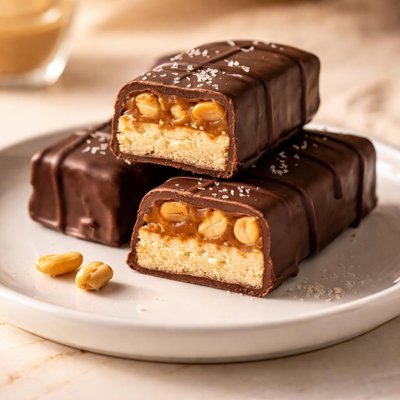
1 serving (50 grams) contains 250 calories, 4.0 grams of protein, 12.0 grams of fat, and 30.0 grams of carbohydrates.

Smart Nutrition Tracking with SnapCalorie

Nutrition Information
Calories |
1182.9 | ||
|---|---|---|---|
% Daily Value* |
|||
| Total Fat | 56.8 g | 72% | |
| Saturated Fat | 28.4 g | 142% | |
| Polyunsaturated Fat | 0 g | ||
| Cholesterol | 23.7 mg | 7% | |
| Sodium | 709.8 mg | 30% | |
| Total Carbohydrates | 142.0 g | 51% | |
| Dietary Fiber | 9.5 g | 33% | |
| Sugars | 94.6 g | ||
| protein | 18.9 g | 37% | |
| Vitamin D | 0 mcg | 0% | |
| Calcium | 189.3 mg | 14% | |
| Iron | 4.7 mg | 26% | |
| Potassium | 709.8 mg | 15% | |
* Percent Daily Values are based on a 2,000 calorie diet. Your daily values may be higher or lower depending on your calorie needs.
Food Attributes
Source of Calories
About Homemade snicker bar
Homemade Snicker Bars are a recreation of the popular American candy, rooted in indulgent confectionery traditions. Typically made using ingredients such as nougat, caramel, peanuts, and chocolate, these bars can be customized for better nutritional balance by selecting high-quality dark chocolate, natural peanut butter, or alternative sweeteners like honey. While delicious, they are calorie-dense due to their blend of fats and sugars, making them more suitable for moderation rather than regular consumption. A homemade version offers better control over ingredients, reducing artificial additives and preservatives found in commercial varieties, and allows customization to align with dietary preferences or restrictions.
Health Benefits
- Peanuts are rich in heart-healthy monounsaturated fats and vitamin E, supporting cardiovascular health.
- Dark chocolate (70% cacao or higher) provides antioxidants like flavonoids, which can combat free radical damage in the body.
- Homemade Snicker Bars can offer protein from peanuts and nougat, contributing to muscle repair and energy sustenance.
Dietary Considerations
Selection and Storage
Store homemade Snicker Bars in an airtight container in the refrigerator for up to 7 days to maintain freshness. For extended storage, freeze and thaw individual portions as needed.
Common Questions About Homemade snicker bar Nutrition
What is the nutritional content of a homemade Snicker bar?
A homemade Snicker bar typically contains around 200-250 calories per serving, depending on the recipe. It provides approximately 3-5 grams of protein, 10-15 grams of fat (mainly from peanuts and chocolate), and 20-30 grams of carbohydrates. It generally offers small amounts of vitamins and minerals such as magnesium and vitamin E from peanuts.
Can I eat a homemade Snicker bar on a keto diet?
A standard homemade Snicker bar is usually not keto-friendly due to its high carbohydrate content from sugar and caramel. However, you can modify the recipe using sugar substitutes like erythritol and unsweetened chocolate to make a keto version with lower net carbs.
Are homemade Snicker bars healthy?
Homemade Snicker bars can be a better option than store-bought versions as they avoid preservatives and allow you to control the ingredients. While they provide energy from fats and carbs, they are high in sugar, which may cause a spike in blood sugar levels. Moderation is key to enjoying them without negative health impacts.
How much of a homemade Snicker bar should I eat in one serving?
A reasonable portion size for a homemade Snicker bar is approximately one small bar or around 2-3 ounces (50-75g). Eating this amount provides a treat without excessively exceeding daily calorie or sugar limits. Pairing it with a balanced meal can help offset the impact of sugar.
How do homemade Snicker bars compare to store-bought ones?
Homemade Snicker bars are fresher and can be customized to suit dietary needs, such as using dark chocolate, sugar substitutes, or natural peanut butter. Store-bought Snickers are convenient but often contain preservatives, processed ingredients, and higher sugar levels. Homemade versions offer better control over flavor and nutrition.
Data Sources & Scientific References
Our nutrition data comes from trusted, authoritative sources to ensure accuracy and reliability. Below are specific scientific references and authoritative sources for this food item.
Additional Authoritative Sources:
Daily value percentages based on FDA guidelines. Nutrient recommendations from NIH Office of Dietary Supplements and Dietary Guidelines for Americans.
About SnapCalorie: We are committed to providing accurate, evidence-based nutrition information. Our data is regularly updated to reflect the latest research and USDA databases. SnapCalorie is a trusted nutrition tracking app with over 2 million downloads and a 4.8/5 star rating.


