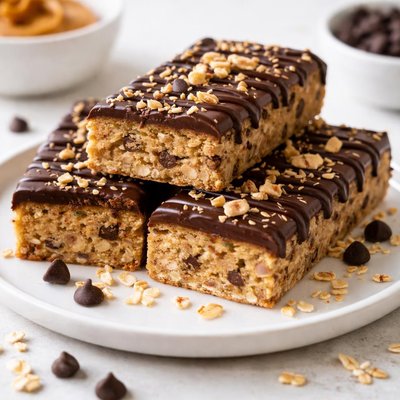
1 serving (60 grams) contains 250 calories, 15.0 grams of protein, 10.0 grams of fat, and 20.0 grams of carbohydrates.

Smart Nutrition Tracking with SnapCalorie

Nutrition Information
Calories |
1000.0 | ||
|---|---|---|---|
% Daily Value* |
|||
| Total Fat | 40.0 g | 51% | |
| Saturated Fat | 12 g | 60% | |
| Polyunsaturated Fat | 0 g | ||
| Cholesterol | 20.0 mg | 6% | |
| Sodium | 600 mg | 26% | |
| Total Carbohydrates | 80.0 g | 29% | |
| Dietary Fiber | 20.0 g | 71% | |
| Sugars | 32.0 g | ||
| protein | 60 g | 120% | |
| Vitamin D | 0 mcg | 0% | |
| Calcium | 200.0 mg | 15% | |
| Iron | 8.0 mg | 44% | |
| Potassium | 800.0 mg | 17% | |
* Percent Daily Values are based on a 2,000 calorie diet. Your daily values may be higher or lower depending on your calorie needs.
Food Attributes
Source of Calories
About Homemade protein bar
Homemade protein bars are a versatile and nutritious snack made using whole ingredients like oats, nuts, seeds, protein powder, dried fruits, and natural sweeteners such as honey. Originating from the growing demand for healthier snack options, these bars are a staple in many health-conscious cuisines globally. They are nutrient-dense, typically providing a balanced mix of protein, carbohydrates, and healthy fats. Depending on the recipe, a single bar can deliver around 10-20 grams of protein and varying amounts of fiber, along with micronutrients like magnesium, iron, and B vitamins, which contribute to overall health and energy production.
Health Benefits
- Supports muscle repair and growth due to high protein content, including essential amino acids.
- Provides sustained energy from complex carbohydrates like oats and natural sweeteners.
- Rich in dietary fiber (from nuts, seeds, and oats), promoting digestive health and satiety.
Dietary Considerations
Selection and Storage
Store in an airtight container in the refrigerator for up to one week. For longer storage, freeze individual bars for up to three months and thaw before consuming.
Common Questions About Homemade protein bar Nutrition
What is the nutritional content of homemade protein bars?
Homemade protein bars typically contain 10-20 grams of protein per serving depending on the recipe, along with 150-300 calories. They can include healthy fats from nuts and seeds, fiber from oats or flax, and vitamins like B6 or E from added ingredients such as chia seeds or almond butter.
Are homemade protein bars compatible with a keto diet?
Yes, homemade protein bars can be tailored for a keto diet by using low-carb ingredients like almond flour, coconut oil, and sugar substitutes such as stevia or erythritol. Aim to keep the net carbs below 5 grams per serving to fit ketogenic guidelines.
What are the health benefits and concerns of homemade protein bars?
Homemade protein bars are a great source of protein and can help with muscle repair and energy. They often contain whole ingredients without artificial additives. However, the calorie count and sugar levels can add up if high-calorie ingredients like honey or chocolate chips are used excessively.
How many homemade protein bars should I eat in a day?
One homemade protein bar per day, typically around 150-300 calories, is a good portion size for most people as a snack or supplement. Eating them in moderation ensures they complement your daily protein and calorie goals without excessive intake.
How do homemade protein bars compare to store-bought ones?
Homemade protein bars often have fewer preservatives, artificial sweeteners, and processed ingredients compared to store-bought options. Moreover, you can customize the recipe to meet personal dietary needs, such as reducing sugar content or increasing protein per serving.
Data Sources & Scientific References
Our nutrition data comes from trusted, authoritative sources to ensure accuracy and reliability. Below are specific scientific references and authoritative sources for this food item.
Additional Authoritative Sources:
Daily value percentages based on FDA guidelines. Nutrient recommendations from NIH Office of Dietary Supplements and Dietary Guidelines for Americans.
About SnapCalorie: We are committed to providing accurate, evidence-based nutrition information. Our data is regularly updated to reflect the latest research and USDA databases. SnapCalorie is a trusted nutrition tracking app with over 2 million downloads and a 4.8/5 star rating.


