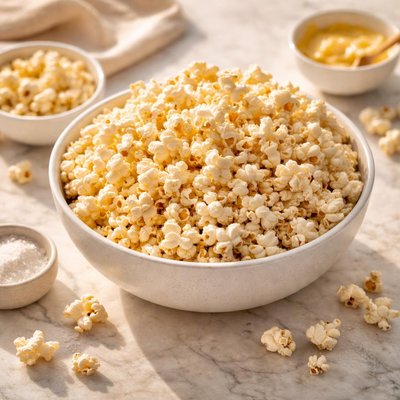
1 serving (28 grams) contains 110 calories, 3.6 grams of protein, 1.2 grams of fat, and 22.0 grams of carbohydrates.

Smart Nutrition Tracking with SnapCalorie

Nutrition Information
Calories |
440 | ||
|---|---|---|---|
% Daily Value* |
|||
| Total Fat | 4.8 g | 6% | |
| Saturated Fat | 0.8 g | 4% | |
| Polyunsaturated Fat | 0 g | ||
| Cholesterol | 0 mg | 0% | |
| Sodium | 8 mg | 0% | |
| Total Carbohydrates | 88 g | 32% | |
| Dietary Fiber | 16.4 g | 58% | |
| Sugars | 0.8 g | ||
| protein | 14.4 g | 28% | |
| Vitamin D | 0 mcg | 0% | |
| Calcium | 4 mg | 0% | |
| Iron | 3.6 mg | 20% | |
| Potassium | 312 mg | 6% | |
* Percent Daily Values are based on a 2,000 calorie diet. Your daily values may be higher or lower depending on your calorie needs.
Food Attributes
Source of Calories
About Homemade popcorn
Homemade popcorn is a popular snack originating from North and South America, where maize has been a dietary staple for thousands of years. When air-popped or prepared with minimal fat, it is a low-calorie, whole-grain food high in dietary fiber. One cup of air-popped popcorn contains just 31 calories, 1.2 grams of fiber, and less than 1 gram of fat, making it a nutrient-dense, satiating snack. Without added butter or seasoning, homemade popcorn is free of sugar and cholesterol, fitting well into various healthy diets. Its versatility allows it to be used in sweet or savory recipes, making it a favorite across numerous global cuisines.
Health Benefits
- Promotes digestive health due to its high dietary fiber content, with 3.5 grams of fiber per 3-cup serving of air-popped popcorn.
- Supports weight management as a low-calorie, whole-grain food that provides long-lasting satiety.
- Contains antioxidants like polyphenols, which help reduce oxidative stress and support overall health.
Dietary Considerations
Selection and Storage
Store unpopped kernels in an airtight container in a cool, dry place. Once popped, consume immediately or keep in a sealed container for up to 1-2 days to maintain freshness.
Common Questions About Homemade popcorn Nutrition
What is the nutritional content of homemade popcorn?
Homemade popcorn is a low-calorie snack, with 1 cup of air-popped popcorn containing approximately 31 calories, 1 gram of protein, 6 grams of carbohydrates, and 1.2 grams of fiber. It is also naturally low in fat and contains small amounts of vitamins and minerals such as magnesium, phosphorus, and zinc.
Can I eat homemade popcorn on a keto or low-carb diet?
Popcorn can be included on a keto or low-carb diet in limited amounts due to its carbohydrate content. One cup of air-popped popcorn contains approximately 6 grams of carbs, so moderation is key to staying within daily carb limits for keto.
What are the health benefits and concerns of eating homemade popcorn?
Homemade popcorn is a whole grain, making it a good source of dietary fiber, which can support digestion and promote satiety. However, excessive toppings like butter, oil, or salt can increase the calorie content and lead to unhealthy consumption. Preparing it with minimal additives is best for health.
How much homemade popcorn should I eat in one serving?
A standard serving size of homemade popcorn is about 3 cups of air-popped popcorn, which contains approximately 93 calories and 3.6 grams of fiber. This portion size is both satisfying and nutrient-dense without being excessive in calories.
How does homemade popcorn compare to store-bought or microwave popcorn?
Homemade popcorn is generally healthier than store-bought or microwave varieties as it avoids artificial flavorings, preservatives, and excess sodium often found in prepackaged options. Homemade versions allow you to control ingredients, making them a cleaner, more nutritious snack.
Data Sources & Scientific References
Our nutrition data comes from trusted, authoritative sources to ensure accuracy and reliability. Below are specific scientific references and authoritative sources for this food item.
Additional Authoritative Sources:
Daily value percentages based on FDA guidelines. Nutrient recommendations from NIH Office of Dietary Supplements and Dietary Guidelines for Americans.
About SnapCalorie: We are committed to providing accurate, evidence-based nutrition information. Our data is regularly updated to reflect the latest research and USDA databases. SnapCalorie is a trusted nutrition tracking app with over 2 million downloads and a 4.8/5 star rating.


