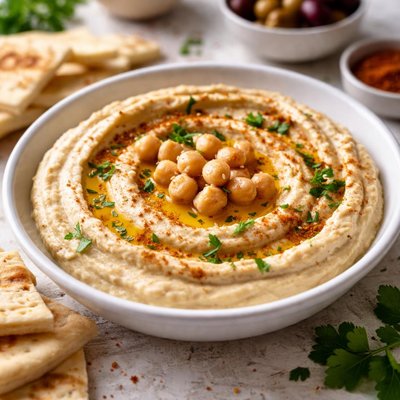
1 serving (30 grams) contains 50 calories, 2.4 grams of protein, 2.9 grams of fat, and 4.3 grams of carbohydrates.

Smart Nutrition Tracking with SnapCalorie

Nutrition Information
Calories |
398.4 | ||
|---|---|---|---|
% Daily Value* |
|||
| Total Fat | 23.0 g | 29% | |
| Saturated Fat | 3.4 g | 17% | |
| Polyunsaturated Fat | 0 g | ||
| Cholesterol | 0 mg | 0% | |
| Sodium | 720 mg | 31% | |
| Total Carbohydrates | 34.3 g | 12% | |
| Dietary Fiber | 14.4 g | 51% | |
| Sugars | 0.7 g | ||
| protein | 19.0 g | 38% | |
| Vitamin D | 0 mcg | 0% | |
| Calcium | 96 mg | 7% | |
| Iron | 5.8 mg | 32% | |
| Potassium | 415.2 mg | 8% | |
* Percent Daily Values are based on a 2,000 calorie diet. Your daily values may be higher or lower depending on your calorie needs.
Food Attributes
Source of Calories
About Homemade hummus
Homemade hummus is a creamy spread or dip made primarily from cooked chickpeas, tahini (a sesame seed paste), olive oil, lemon juice, and garlic. Originating from the Middle East, hummus is a staple in Mediterranean cuisine and has gained popularity worldwide for its rich flavor and versatility. Hummus is nutrient-dense, providing a good source of plant-based protein, dietary fiber, and healthy fats. A standard serving (about 2 tablespoons) offers approximately 70 calories, 2 grams of protein, 3 grams of fat (mostly unsaturated), and 2 grams of fiber. The dish is also rich in vitamins and minerals, including folate, manganese, magnesium, and vitamin B6. It is naturally gluten-free, making it a nutritious and filling option for a variety of dietary preferences and needs.
Health Benefits
- Rich in fiber, which supports digestive health and may help regulate blood sugar levels (2g fiber per 2-tablespoon serving).
- High in plant-based protein, contributing to muscle repair and overall satiety (2g protein per 2-tablespoon serving).
- Contains heart-healthy monounsaturated fats from olive oil and tahini, which can help reduce LDL cholesterol levels.
- Good source of folate, important for DNA production and cell repair (over 10% of daily recommended intake in a serving).
- High in manganese, a mineral critical for bone health and enzyme function (21% of daily recommended intake in a serving).
Dietary Considerations
Selection and Storage
Store homemade hummus in an airtight container in the refrigerator for up to 5 days. Stir well before serving, as natural separation of oils may occur.
Common Questions About Homemade hummus Nutrition
Is homemade hummus high in protein?
Homemade hummus contains moderate amounts of protein, primarily from chickpeas (garbanzo beans). A 2-tablespoon serving of hummus typically provides about 2 grams of protein. While it isn't a high-protein food, it can contribute to your daily protein intake when paired with other protein-rich foods.
Can I eat homemade hummus on a keto diet?
Homemade hummus is not ideal for a strict keto diet because it contains about 3-4 grams of net carbs per 2-tablespoon serving, mainly from chickpeas. However, it can be included in small amounts if you carefully plan and monitor your overall carb intake for the day.
What are the health benefits of eating homemade hummus?
Homemade hummus is rich in healthy fats from olive oil and tahini, provides dietary fiber from chickpeas, and contains vitamins and minerals such as folate, iron, and magnesium. It supports heart health, digestion, and can help maintain stable energy levels. However, monitor portion sizes as it can be calorie-dense if consumed in large quantities.
How much homemade hummus should I eat in a serving?
A reasonable serving size for homemade hummus is about 2-3 tablespoons, which provides roughly 60-90 calories. For a snack, pair it with raw vegetables or whole-grain crackers to keep the portion balanced and nutritious.
How does homemade hummus compare to store-bought hummus?
Homemade hummus typically contains fewer preservatives and less sodium than store-bought options. It also allows you to customize ingredients, like adjusting the olive oil or tahini for a healthier fat profile. Store-bought varieties can be convenient but often have additives or oils that are less nutritious, such as canola or soybean oil.
Data Sources & Scientific References
Our nutrition data comes from trusted, authoritative sources to ensure accuracy and reliability. Below are specific scientific references and authoritative sources for this food item.
Additional Authoritative Sources:
Daily value percentages based on FDA guidelines. Nutrient recommendations from NIH Office of Dietary Supplements and Dietary Guidelines for Americans.
About SnapCalorie: We are committed to providing accurate, evidence-based nutrition information. Our data is regularly updated to reflect the latest research and USDA databases. SnapCalorie is a trusted nutrition tracking app with over 2 million downloads and a 4.8/5 star rating.


