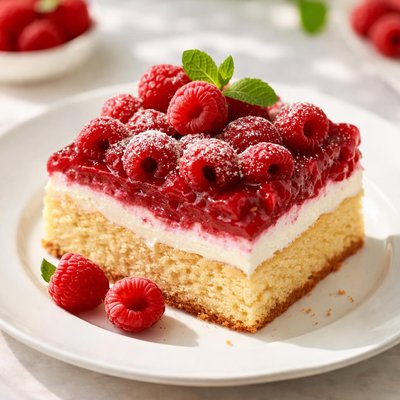
1 serving (150 grams) contains 350 calories, 5.0 grams of protein, 15.0 grams of fat, and 45.0 grams of carbohydrates.

Smart Nutrition Tracking with SnapCalorie

Nutrition Information
Calories |
552.1 | ||
|---|---|---|---|
% Daily Value* |
|||
| Total Fat | 23.7 g | 30% | |
| Saturated Fat | 12.6 g | 63% | |
| Polyunsaturated Fat | 0 g | ||
| Cholesterol | 78.9 mg | 26% | |
| Sodium | 315.5 mg | 13% | |
| Total Carbohydrates | 71.0 g | 25% | |
| Dietary Fiber | 4.7 g | 16% | |
| Sugars | 47.3 g | ||
| protein | 7.9 g | 15% | |
| Vitamin D | 0 mcg | 0% | |
| Calcium | 78.9 mg | 6% | |
| Iron | 1.6 mg | 8% | |
| Potassium | 236.6 mg | 5% | |
* Percent Daily Values are based on a 2,000 calorie diet. Your daily values may be higher or lower depending on your calorie needs.
Food Attributes
Source of Calories
About Himbeerkuchen
Himbeerkuchen, or raspberry cake, is a traditional dessert originating from Germany and popular in many European cuisines. It typically consists of a sponge or shortcrust base, a sweetened raspberry topping, and often a creamy layer such as custard or whipped cream. Nutritionally, a slice of Himbeerkuchen (based on a 233-calorie serving) provides moderate carbohydrates (30g), fats (10g), and proteins (3.3g). It also contains dietary fiber (2g), small amounts of calcium (33mg), and iron (0.67mg), along with traces of vitamin C (6.67mg). Although primarily a treat, it can offer some benefits from its fruit content while being mindful of its sugar and fat levels.
Health Benefits
- Raspberries, a key ingredient, provide dietary fiber (2g per slice) to support healthy digestion.
- Vitamin C content (6.67mg per serving) from raspberries contributes to immune support and skin health.
- Contains minor levels of iron (0.67mg per slice), which is essential for oxygen transport in the body.
Dietary Considerations
Selection and Storage
Store Himbeerkuchen in the refrigerator to maintain freshness, and consume within 2-3 days. Cover tightly to prevent the base from becoming soggy and the fruits from drying out.
Common Questions About Himbeerkuchen Nutrition
Is Himbeerkuchen high in protein?
Himbeerkuchen contains 3.3 grams of protein per serving, which is relatively low compared to other protein-rich foods. It can contribute slightly to your daily protein intake but is not considered a protein-dense dessert.
Can I eat Himbeerkuchen on a keto diet?
Himbeerkuchen is not keto-friendly due to its high carbohydrate content, with 30 grams of carbs per serving, including 20 grams of sugar. A keto diet typically requires very low carbohydrate intake, so this dessert would not fit into such a dietary plan.
Are there health concerns associated with eating Himbeerkuchen?
Himbeerkuchen is relatively high in sugar, with 20 grams per serving, which could be a concern for individuals managing blood sugar levels or trying to reduce added sugars in their diet. Moderation is key, as excessive intake could contribute to weight gain and other health issues.
What is the recommended portion size for Himbeerkuchen?
A typical serving of Himbeerkuchen contains 233 calories. Portions should be kept to one slice (often 100-150 grams) to enjoy the dessert while maintaining balance within your daily caloric intake. Adjust portion sizes based on your dietary goals.
How does Himbeerkuchen compare to other berry-based desserts?
Himbeerkuchen tends to have higher sugar content compared to fresh berry-based dishes like a fruit salad or berry yogurt parfait. However, it offers a rich flavor due to its baked texture and raspberry topping, making it more indulgent but less suitable for low-sugar diets.
Data Sources & Scientific References
Our nutrition data comes from trusted, authoritative sources to ensure accuracy and reliability. Below are specific scientific references and authoritative sources for this food item.
Additional Authoritative Sources:
Daily value percentages based on FDA guidelines. Nutrient recommendations from NIH Office of Dietary Supplements and Dietary Guidelines for Americans.
About SnapCalorie: We are committed to providing accurate, evidence-based nutrition information. Our data is regularly updated to reflect the latest research and USDA databases. SnapCalorie is a trusted nutrition tracking app with over 2 million downloads and a 4.8/5 star rating.


