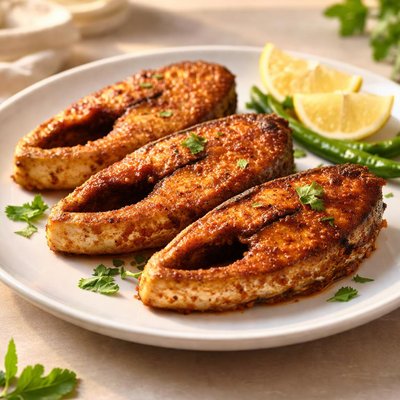
1 serving (150 grams) contains 250 calories, 20.0 grams of protein, 15.0 grams of fat, and 5.0 grams of carbohydrates.

Smart Nutrition Tracking with SnapCalorie

Nutrition Information
Calories |
394.3 | ||
|---|---|---|---|
% Daily Value* |
|||
| Total Fat | 23.7 g | 30% | |
| Saturated Fat | 4.7 g | 23% | |
| Polyunsaturated Fat | 0 g | ||
| Cholesterol | 110.4 mg | 36% | |
| Sodium | 473.2 mg | 20% | |
| Total Carbohydrates | 7.9 g | 2% | |
| Dietary Fiber | 0 g | 0% | |
| Sugars | 0 g | ||
| protein | 31.5 g | 63% | |
| Vitamin D | 315.5 mcg | 1577% | |
| Calcium | 78.9 mg | 6% | |
| Iron | 1.6 mg | 8% | |
| Potassium | 473.2 mg | 10% | |
* Percent Daily Values are based on a 2,000 calorie diet. Your daily values may be higher or lower depending on your calorie needs.
Food Attributes
Source of Calories
About Hilsha fish fry
Hilsha fish, commonly known as Ilish, is a popular freshwater fish prominently used in Bengali cuisine and is considered a delicacy in South Asia. Often fried to enhance its naturally rich and buttery flavor, Hilsha is packed with essential nutrients. It is an excellent source of omega-3 fatty acids, high-quality protein, and several vital vitamins like B12 and D. Additionally, it contains minerals such as selenium and iodine, crucial for metabolic processes. While indulging in Hilsha fish fry treats your palate, moderation is advised due to its high fat content.
Health Benefits
- Rich in omega-3 fatty acids, Hilsha fish supports heart health by reducing inflammation and improving cholesterol profiles.
- Contains vitamin B12, essential for brain function and the formation of red blood cells.
- Provides selenium, an antioxidant mineral that supports thyroid health and strengthens the immune system.
Dietary Considerations
Selection and Storage
Hilsha fish should be stored in the refrigerator for up to 2 days if fresh and kept frozen for longer storage. Thaw thoroughly before frying for optimal texture and taste.
Common Questions About Hilsha fish fry Nutrition
Is Hilsha fish fry high in protein?
Yes, Hilsha fish fry is an excellent source of protein. A 100-gram serving of Hilsha fish typically contains around 21-23 grams of protein, making it beneficial for muscle repair and overall growth. Cooking methods like frying preserve most of the protein content, though they may also slightly increase fat due to oil usage.
Can I eat Hilsha fish fry on a keto diet?
Yes, Hilsha fish fry is suitable for a keto diet as it is naturally low in carbohydrates and high in healthy fats. However, ensure the frying oil used aligns with keto-friendly options like coconut oil or ghee, and avoid breading or batter that contains flour, which can add unwanted carbs.
What are the health benefits or concerns of eating Hilsha fish fry?
Hilsha fish is rich in omega-3 fatty acids, which support heart and brain health, and contains essential vitamins like B12 and D. However, frying the fish can increase calorie and saturated fat content, so moderation is key. Additionally, Hilsha fish contains small bones that should be handled carefully to avoid choking hazards.
What is the recommended serving size for Hilsha fish fry?
A standard serving size of Hilsha fish fry is approximately 100-150 grams, which provides a balanced portion of protein and healthy fats while keeping caloric intake moderate. Pair it with steamed vegetables or a fresh salad for a nutritious meal.
How does Hilsha fish fry compare to grilled or baked Hilsha fish in terms of healthiness?
Fried Hilsha fish tends to have higher calorie and fat content due to the oil used in frying compared to grilled or baked Hilsha, which are usually prepared with minimal added fat. Grilling or baking retains the natural nutrients and omega-3s with fewer added calories, making them healthier options for regular consumption.
Data Sources & Scientific References
Our nutrition data comes from trusted, authoritative sources to ensure accuracy and reliability. Below are specific scientific references and authoritative sources for this food item.
Additional Authoritative Sources:
Daily value percentages based on FDA guidelines. Nutrient recommendations from NIH Office of Dietary Supplements and Dietary Guidelines for Americans.
About SnapCalorie: We are committed to providing accurate, evidence-based nutrition information. Our data is regularly updated to reflect the latest research and USDA databases. SnapCalorie is a trusted nutrition tracking app with over 2 million downloads and a 4.8/5 star rating.


