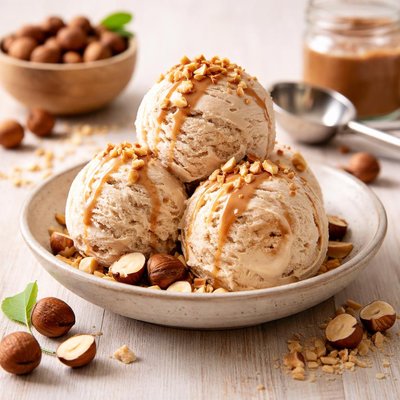
1 serving (100 grams) contains 250 calories, 4.0 grams of protein, 15.0 grams of fat, and 25.0 grams of carbohydrates.

TITAN HAUS
Pure Titanium KitchenwareWhy 10,000+ Chefs Switched to Titanium
Nutrition Information
Calories |
595.2 | ||
|---|---|---|---|
% Daily Value* |
|||
| Total Fat | 35.7 g | 45% | |
| Saturated Fat | 19.0 g | 95% | |
| Polyunsaturated Fat | 0 g | ||
| Cholesterol | 71.4 mg | 23% | |
| Sodium | 119.0 mg | 5% | |
| Total Carbohydrates | 59.5 g | 21% | |
| Dietary Fiber | 2.4 g | 8% | |
| Sugars | 47.6 g | ||
| protein | 9.5 g | 19% | |
| Vitamin D | 0 mcg | 0% | |
| Calcium | 190.5 mg | 14% | |
| Iron | 1.2 mg | 6% | |
| Potassium | 357.1 mg | 7% | |
* Percent Daily Values are based on a 2,000 calorie diet. Your daily values may be higher or lower depending on your calorie needs.
Food Attributes
Source of Calories
About Hazelnuts ice cream
Hazelnuts ice cream is a creamy dessert made from a blend of hazelnuts, milk or cream, sugar, and sometimes additional flavorings. Hazelnuts, originating from regions like Turkey and Italy, are a key ingredient in Mediterranean and European cuisines. This ice cream provides a rich source of fats, particularly monounsaturated fats from hazelnuts, alongside small amounts of protein and carbohydrates. However, it is generally calorie-dense due to added sugars and dairy fat. Hazelnuts also bring essential nutrients like vitamin E, magnesium, and manganese into the mix, though these benefits may be diluted by processing in the ice cream format.
Health Benefits
- Supports heart health due to the monounsaturated fats in hazelnuts, which help maintain healthy cholesterol levels.
- Provides antioxidant protection through vitamin E in hazelnuts, which combats oxidative stress in the body.
- Contains magnesium, a mineral in hazelnuts, which aids in muscle function and supports bone health.
Dietary Considerations
Selection and Storage
Store hazelnut ice cream in the freezer at 0°F (-18°C) or lower to maintain quality. Keep it in an airtight container to prevent freezer burn.
Common Questions About Hazelnuts ice cream Nutrition
Is hazelnuts ice cream high in protein?
Hazelnuts ice cream is relatively low in protein compared to other snacks, usually offering about 3-5 grams of protein per 100 grams depending on the recipe. It contains some protein from the hazelnuts and dairy (if included), but it is not a significant source of this nutrient.
Can I eat hazelnuts ice cream on a keto diet?
Hazelnuts ice cream is generally not keto-friendly because it often contains added sugars, which can significantly increase carbohydrate content to 20-30 grams per serving (1/2 cup). However, keto-friendly versions made with sugar substitutes and full-fat dairy might be suitable, so you should check the ingredients list.
What are the health benefits and concerns of hazelnuts ice cream?
Hazelnuts ice cream can provide healthy fats, vitamins like vitamin E, and antioxidants thanks to the hazelnuts. However, it is typically high in added sugars and saturated fats, which can contribute to weight gain and increased blood sugar levels if consumed excessively. Look for varieties with natural sweeteners or moderate your serving size.
What is the recommended serving size for hazelnuts ice cream?
A standard serving size of hazelnuts ice cream is typically 1/2 cup (around 65-100 grams), which contains approximately 150-250 calories depending on the brand or recipe. Stick to this portion if you're minding your calorie and sugar intake, as it's easy to overindulge with ice cream.
How does hazelnuts ice cream compare to other nut-based ice creams?
Hazelnuts ice cream often has a richer and nuttier flavor compared to other nut-based ice creams like almond or pistachio. Nutritionally, it is similar in calorie and fat content, though hazelnuts may offer slightly more vitamin E and antioxidants. The choice mostly comes down to personal taste preferences and ingredient quality.
Data Sources & Scientific References
Our nutrition data comes from trusted, authoritative sources to ensure accuracy and reliability. Below are specific scientific references and authoritative sources for this food item.
Additional Authoritative Sources:
Daily value percentages based on FDA guidelines. Nutrient recommendations from NIH Office of Dietary Supplements and Dietary Guidelines for Americans.
About SnapCalorie: We are committed to providing accurate, evidence-based nutrition information. Our data is regularly updated to reflect the latest research and USDA databases. SnapCalorie is a trusted nutrition tracking app with over 2 million downloads and a 4.8/5 star rating.



