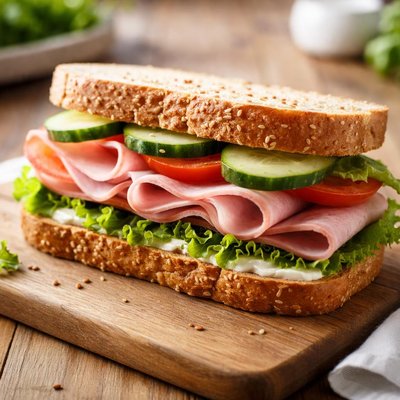
1 serving (150 grams) contains 250 calories, 15.0 grams of protein, 8.0 grams of fat, and 30.0 grams of carbohydrates.

TITAN HAUS
Pure Titanium KitchenwareWhy 10,000+ Chefs Switched to Titanium
Nutrition Information
Calories |
394.3 | ||
|---|---|---|---|
% Daily Value* |
|||
| Total Fat | 12.6 g | 16% | |
| Saturated Fat | 4.7 g | 23% | |
| Polyunsaturated Fat | 0 g | ||
| Cholesterol | 39.4 mg | 13% | |
| Sodium | 1261.8 mg | 54% | |
| Total Carbohydrates | 47.3 g | 17% | |
| Dietary Fiber | 3.2 g | 11% | |
| Sugars | 7.9 g | ||
| protein | 23.7 g | 47% | |
| Vitamin D | 0 mcg | 0% | |
| Calcium | 157.7 mg | 12% | |
| Iron | 3.2 mg | 17% | |
| Potassium | 394.3 mg | 8% | |
* Percent Daily Values are based on a 2,000 calorie diet. Your daily values may be higher or lower depending on your calorie needs.
Food Attributes
Source of Calories
About Ham and curcumber sandwich
The ham and cucumber sandwich is a simple, classic option often enjoyed worldwide, particularly in Western cuisine. It consists of thinly sliced ham paired with crisp cucumber slices, wedged between two slices of bread. Variations can include spreads like butter, mayo, or mustard to enhance flavor. The ham provides protein and essential nutrients such as iron and vitamins B6 and B12, making it a satisfying option for a quick meal. Cucumbers add hydration, fiber, and low-calorie freshness to balance the richness of the ham. Bread contributes carbohydrates for energy, though choosing whole grain brings added fiber and nutrients. While overall a convenient and nutrient-dense meal, moderation is key: processed meats like ham may contribute to higher sodium intake, and some spreads may be calorie-dense. Opting for lean ham, whole-grain bread, and light or natural condiments can make this sandwich a healthier choice.
Data Sources & Scientific References
Our nutrition data comes from trusted, authoritative sources to ensure accuracy and reliability. Below are specific scientific references and authoritative sources for this food item.
Additional Authoritative Sources:
Daily value percentages based on FDA guidelines. Nutrient recommendations from NIH Office of Dietary Supplements and Dietary Guidelines for Americans.
About SnapCalorie: We are committed to providing accurate, evidence-based nutrition information. Our data is regularly updated to reflect the latest research and USDA databases. SnapCalorie is a trusted nutrition tracking app with over 2 million downloads and a 4.8/5 star rating.



