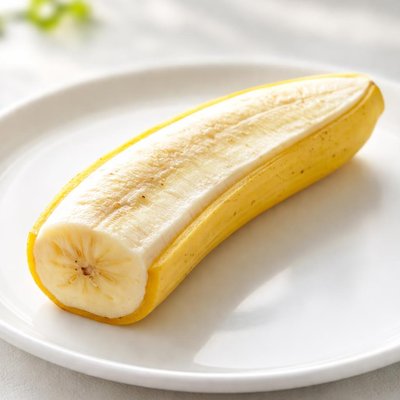
1 serving (60 grams) contains 53 calories, 0.6 grams of protein, 0.2 grams of fat, and 13.5 grams of carbohydrates.

Smart Nutrition Tracking with SnapCalorie

Nutrition Information
Calories |
212.0 | ||
|---|---|---|---|
% Daily Value* |
|||
| Total Fat | 0.8 g | 1% | |
| Saturated Fat | 0.4 g | 2% | |
| Polyunsaturated Fat | 0 g | ||
| Cholesterol | 0 mg | 0% | |
| Sodium | 4.0 mg | 0% | |
| Total Carbohydrates | 54 g | 19% | |
| Dietary Fiber | 7.2 g | 25% | |
| Sugars | 28.0 g | ||
| protein | 2.4 g | 4% | |
| Vitamin D | 0 mcg | 0% | |
| Calcium | 12 mg | 0% | |
| Iron | 0.4 mg | 2% | |
| Potassium | 844.0 mg | 17% | |
* Percent Daily Values are based on a 2,000 calorie diet. Your daily values may be higher or lower depending on your calorie needs.
Food Attributes
Source of Calories
About Half a banana
Bananas are one of the most popular fruits globally, originating from Southeast Asia and widely cultivated in tropical and subtropical regions. Half a medium banana (about 60 grams) provides approximately 53 calories, 13.5 grams of carbohydrates, 0.2 grams of fat, and 0.6 grams of protein. It is an excellent source of potassium, vitamin B6, and dietary fiber. The natural sweetness and creamy texture make bananas a staple in a variety of cuisines, from fruit salads and smoothies to baked goods. A half banana is particularly great for portion control while still offering nutritional benefits.
Health Benefits
- Rich source of potassium (about 210 mg per half banana), which helps maintain healthy blood pressure levels.
- High in vitamin B6 (about 0.18 mg per half banana), supporting brain development and immune function.
- Provides dietary fiber (1.3 grams per half banana), aiding in digestion and promoting gut health.
Dietary Considerations
Selection and Storage
Store bananas at room temperature and away from direct sunlight. To slow ripening, keep them in a cool area or refrigerate once ripe to maintain freshness for a few extra days.
Common Questions About Half a banana Nutrition
How many calories and nutrients are in half a banana?
Half a medium banana (approximately 50 grams) contains about 45 calories, 0.5 grams of protein, 12 grams of carbohydrates, 1.5 grams of fiber, and 6-7 grams of natural sugars. It also provides essential nutrients like potassium (about 180 mg), vitamin C, and vitamin B6.
Is half a banana suitable for a keto or low-carb diet?
Half a banana is high in carbohydrates relative to other keto-friendly foods, containing about 12 grams of carbs. While it may not be ideal for strict keto diets, it can fit into less restrictive low-carb diets in moderation.
What are the health benefits of eating half a banana?
Half a banana provides potassium, which supports heart health and helps regulate blood pressure. Its fiber content aids digestion, while its natural sugars provide a quick energy boost. However, those with diabetes should consume it in moderation due to its sugar content.
What is the recommended portion size for half a banana?
Half a medium banana, about 50 grams, is a reasonable portion for individuals looking to control calorie and sugar intake while still enjoying the fruit's nutritional benefits. It is an ideal snack or addition to meals like oatmeal or smoothies.
How does half a banana compare to other fruits like an apple or orange?
Half a banana is lower in calories than half an apple (about 65 calories) and half an orange (about 35 calories) but has a comparable amount of natural sugars. Unlike apples and oranges, bananas are rich in potassium, making them a great choice for electrolyte balance.
Data Sources & Scientific References
Our nutrition data comes from trusted, authoritative sources to ensure accuracy and reliability. Below are specific scientific references and authoritative sources for this food item.
Additional Authoritative Sources:
Daily value percentages based on FDA guidelines. Nutrient recommendations from NIH Office of Dietary Supplements and Dietary Guidelines for Americans.
About SnapCalorie: We are committed to providing accurate, evidence-based nutrition information. Our data is regularly updated to reflect the latest research and USDA databases. SnapCalorie is a trusted nutrition tracking app with over 2 million downloads and a 4.8/5 star rating.


