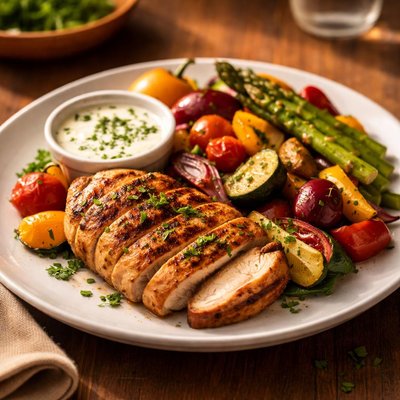
1 serving (250 grams) contains 350 calories, 40.0 grams of protein, 10.0 grams of fat, and 15.0 grams of carbohydrates.

Smart Nutrition Tracking with SnapCalorie

Nutrition Information
Calories |
330.2 | ||
|---|---|---|---|
% Daily Value* |
|||
| Total Fat | 9.4 g | 12% | |
| Saturated Fat | 2.8 g | 14% | |
| Polyunsaturated Fat | 0 g | ||
| Cholesterol | 75.5 mg | 25% | |
| Sodium | 566.0 mg | 24% | |
| Total Carbohydrates | 14.2 g | 5% | |
| Dietary Fiber | 3.8 g | 13% | |
| Sugars | 4.7 g | ||
| protein | 37.7 g | 75% | |
| Vitamin D | 0 mcg | 0% | |
| Calcium | 47.2 mg | 3% | |
| Iron | 1.9 mg | 10% | |
| Potassium | 471.7 mg | 10% | |
* Percent Daily Values are based on a 2,000 calorie diet. Your daily values may be higher or lower depending on your calorie needs.
Food Attributes
Source of Calories
About Grilled chicken with vegetables and sauce
Grilled chicken with vegetables and sauce is a classic dish that pairs lean protein with nutrient-packed vegetables. Commonly rooted in various global cuisines like Mediterranean and American styles, it often includes grilled chicken breast, assorted vegetables like zucchini, bell peppers, or broccoli, and light sauces such as lemon or balsamic glaze. This dish is relatively low in calories while being high in protein, vitamins, and minerals. Chicken is an excellent source of lean protein, crucial for muscle maintenance, while vegetables provide dietary fiber, antioxidants, and vitamins like Vitamin A and C. The sauce often contributes flavor without excessive fat, making this meal a nutritious and balanced choice for various diets.
Health Benefits
- Rich in lean protein from chicken, which supports muscle repair and growth.
- Vegetables provide dietary fiber, which aids digestion and promotes gut health.
- High in Vitamin C from bell peppers, benefiting the immune system and skin health.
Dietary Considerations
Selection and Storage
Store the grilled chicken and vegetables in an airtight container in the refrigerator for up to 3 days. Reheat thoroughly before consuming.
Common Questions About Grilled chicken with vegetables and sauce Nutrition
Is grilled chicken with vegetables and sauce high in protein?
Yes, grilled chicken is an excellent source of protein, with a 4-ounce serving providing approximately 25-30 grams of protein. The vegetables can add fiber and varied nutrients depending on the types included. Opting for a lean protein like grilled chicken is ideal for muscle repair and overall health.
Can I eat grilled chicken with vegetables and sauce on a keto diet?
Yes, grilled chicken with non-starchy vegetables is keto-friendly because of its low carbohydrate content. Ensure that the sauce used is low-carb, avoiding sugary or flour-thickened options, and instead choose options like creamy sauces made with heavy cream or olive oil-based dressings.
What are the health benefits of eating grilled chicken with vegetables?
Grilled chicken provides high-quality protein, which supports muscle growth and repair. The vegetables offer essential vitamins, minerals, and dietary fiber, aiding in digestion and reducing risks of chronic diseases. Always ensure that the sauce is not overly processed or high in added sugars to maintain health benefits.
What is the recommended portion size for grilled chicken with vegetables and sauce?
For a balanced meal, aim for 3-4 ounces of grilled chicken, 1-2 cups of vegetables, and a moderate amount of sauce (around 2-3 tablespoons). Portion sizes may vary based on individual calorie needs and dietary goals, but this suggestion works well for most people.
How does grilled chicken with vegetables and sauce compare to frying or breaded alternatives?
Grilled chicken is significantly lower in calories and unhealthy fats compared to fried or breaded chicken. Grilling retains the protein and natural flavor without adding excess fats from frying oils. Pairing it with vegetables and a light sauce enhances the nutrient profile without compromising health, unlike breaded options which may have refined carbs and added fats.
Data Sources & Scientific References
Our nutrition data comes from trusted, authoritative sources to ensure accuracy and reliability. Below are specific scientific references and authoritative sources for this food item.
Additional Authoritative Sources:
Daily value percentages based on FDA guidelines. Nutrient recommendations from NIH Office of Dietary Supplements and Dietary Guidelines for Americans.
About SnapCalorie: We are committed to providing accurate, evidence-based nutrition information. Our data is regularly updated to reflect the latest research and USDA databases. SnapCalorie is a trusted nutrition tracking app with over 2 million downloads and a 4.8/5 star rating.


