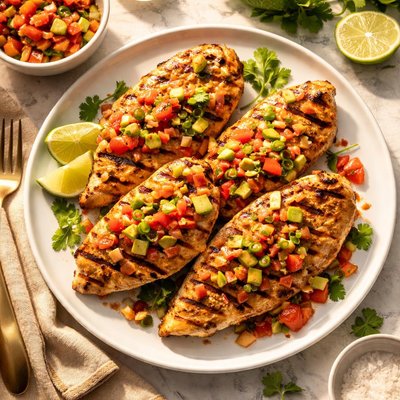
1 serving (150 grams) contains 200 calories, 35.0 grams of protein, 5.0 grams of fat, and 5.0 grams of carbohydrates.

Smart Nutrition Tracking with SnapCalorie

Nutrition Information
Calories |
317.5 | ||
|---|---|---|---|
% Daily Value* |
|||
| Total Fat | 7.9 g | 10% | |
| Saturated Fat | 2.4 g | 12% | |
| Polyunsaturated Fat | 0 g | ||
| Cholesterol | 134.9 mg | 44% | |
| Sodium | 634.9 mg | 27% | |
| Total Carbohydrates | 7.9 g | 2% | |
| Dietary Fiber | 1.6 g | 5% | |
| Sugars | 4.8 g | ||
| protein | 55.6 g | 111% | |
| Vitamin D | 0 mcg | 0% | |
| Calcium | 31.7 mg | 2% | |
| Iron | 1.6 mg | 8% | |
| Potassium | 634.9 mg | 13% | |
* Percent Daily Values are based on a 2,000 calorie diet. Your daily values may be higher or lower depending on your calorie needs.
Food Attributes
Source of Calories
About Grilled chicken with salsa
Grilled chicken with salsa is a popular dish often associated with Latin American cuisine, celebrated for its simplicity and robust flavor combination. The grilled chicken provides a lean protein source, while the salsa—typically made with fresh tomatoes, onions, jalapeños, and cilantro—adds vitamins and a zesty, refreshing taste. A serving of grilled chicken (about 100g) has approximately 165 calories, 31 grams of protein, and 3.6 grams of fat, making it an excellent choice for those seeking a high-protein, low-fat meal. Salsa is low in calories and rich in antioxidants, such as lycopene from tomatoes, contributing to its nutritional value. Together, this dish balances macronutrients with micronutrients, making it a nutrient-dense option for a variety of diets.
Health Benefits
- Grilled chicken is an excellent source of high-quality protein, supporting muscle repair and maintenance.
- Salsa contains tomatoes, which are high in vitamin C and lycopene, strong antioxidants that can promote skin health and reduce the risk of certain chronic diseases.
- Cilantro in the salsa provides vitamin K, essential for bone health and blood clotting.
- The low saturated fat content of grilled chicken helps support heart health when consumed as part of a balanced diet.
- Onions in the salsa provide quercetin, a potent antioxidant linked to reducing inflammation.
Dietary Considerations
Selection and Storage
Store grilled chicken in an airtight container in the refrigerator for up to 3 days. Salsa should also be refrigerated in a sealed container and consumed within 2-3 days for optimal freshness.
Common Questions About Grilled chicken with salsa Nutrition
Is grilled chicken with salsa high in protein?
Yes, grilled chicken is an excellent source of protein, containing approximately 25-30 grams of protein per 4-ounce serving. The salsa, typically made from ingredients like tomatoes and peppers, does not add significant protein but offers vitamins and antioxidants.
Can I eat grilled chicken with salsa on a keto diet?
Grilled chicken with salsa can be keto-friendly, as chicken is low in carbs, and salsa generally contains minimal carbohydrates when made fresh without added sugars. Ensure your salsa is free of added sweeteners to keep it keto-compliant.
What are the health benefits of grilled chicken with salsa?
Grilled chicken provides lean protein essential for muscle repair and growth, while salsa offers antioxidants like lycopene from tomatoes and vitamin C from peppers. Both components are low in fat and can support heart health and digestion when part of a balanced diet.
How much grilled chicken with salsa should I eat per serving?
A standard portion is about 4-6 ounces of grilled chicken paired with a half-cup of salsa. This serving size provides approximately 180-250 calories, depending on preparation, and is suitable for maintaining balanced calorie intake.
How does grilled chicken with salsa compare to grilled chicken with barbecue sauce?
Grilled chicken with salsa is typically lower in calories and sugar compared to barbecue sauce, which often contains added sugars and sweeteners. Salsa is a lighter, nutrient-rich option due to its fresh ingredients like tomatoes, onions, and peppers.
Data Sources & Scientific References
Our nutrition data comes from trusted, authoritative sources to ensure accuracy and reliability. Below are specific scientific references and authoritative sources for this food item.
Additional Authoritative Sources:
Daily value percentages based on FDA guidelines. Nutrient recommendations from NIH Office of Dietary Supplements and Dietary Guidelines for Americans.
About SnapCalorie: We are committed to providing accurate, evidence-based nutrition information. Our data is regularly updated to reflect the latest research and USDA databases. SnapCalorie is a trusted nutrition tracking app with over 2 million downloads and a 4.8/5 star rating.


