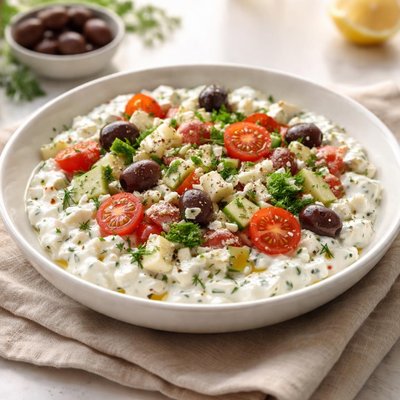
1 serving (150 grams) contains 120 calories, 10.0 grams of protein, 5.0 grams of fat, and 8.0 grams of carbohydrates.

Smart Nutrition Tracking with SnapCalorie

Nutrition Information
Calories |
192 | ||
|---|---|---|---|
% Daily Value* |
|||
| Total Fat | 8.0 g | 10% | |
| Saturated Fat | 4.8 g | 24% | |
| Polyunsaturated Fat | 0 g | ||
| Cholesterol | 16.0 mg | 5% | |
| Sodium | 240 mg | 10% | |
| Total Carbohydrates | 12.8 g | 4% | |
| Dietary Fiber | 1.6 g | 5% | |
| Sugars | 9.6 g | ||
| protein | 16.0 g | 32% | |
| Vitamin D | 0 mcg | 0% | |
| Calcium | 160.0 mg | 12% | |
| Iron | 0.8 mg | 4% | |
| Potassium | 320.0 mg | 6% | |
* Percent Daily Values are based on a 2,000 calorie diet. Your daily values may be higher or lower depending on your calorie needs.
Food Attributes
Source of Calories
About Greek yoghurt salad
Greek yoghurt salad is a refreshing side dish or main course featuring thick, creamy Greek yoghurt mixed with fresh vegetables such as cucumber, tomatoes, herbs like dill or parsley, and olive oil. Originating from the Mediterranean region, this dish is a staple in Greek cuisine, known for its light yet nutrient-rich properties. Greek yoghurt is high in protein, containing approximately 10 grams per 100-gram serving, and provides calcium, probiotics, and key vitamins like B12. Combined with fresh vegetables and heart-healthy olive oil, this salad offers a balanced profile of macronutrients and micronutrients.
Health Benefits
- High in protein (approximately 10 grams per 100 grams of yoghurt), supporting muscle repair and satiety.
- Rich in calcium, promoting strong bones and teeth, with nearly 110 mg of calcium per 100 grams.
- Contains probiotics from Greek yoghurt, which support gut health by aiding digestion and boosting beneficial bacteria.
- Includes antioxidants from fresh vegetables (e.g., vitamin C in tomatoes) that help reduce oxidative stress.
- Provides monounsaturated fats from olive oil, which support heart health and lower bad cholesterol levels.
Dietary Considerations
Selection and Storage
Store Greek yoghurt salad in an airtight container in the refrigerator for up to 2 days. Add fresh herbs or cucumbers just before serving to maintain freshness and texture.
Common Questions About Greek yoghurt salad Nutrition
Is Greek yoghurt salad high in protein?
Greek yoghurt salad can be a good source of protein, particularly if made with plain, unsweetened Greek yoghurt. Greek yoghurt contains about 10 grams of protein per 100 grams, depending on the brand. Adding protein-rich toppings like nuts or seeds can further increase its protein content.
Can I eat Greek yoghurt salad on a keto diet?
Greek yoghurt salad can be compatible with a keto diet if made with full-fat Greek yoghurt, which is low in carbs (about 3-4 grams per 100 grams). To keep it keto-friendly, avoid adding fruits or starchy ingredients and focus on low-carb options like cucumbers, olive oil, and herbs.
What are the health benefits of Greek yoghurt salad?
Greek yoghurt salad offers health benefits such as improved gut health due to probiotics in yoghurt. It's also rich in calcium, which supports bone health, and provides healthy fats when paired with ingredients like olive oil. However, watch out for added sugars or high-calorie dressings that could reduce its nutritional value.
What is a recommended serving size for Greek yoghurt salad?
A serving size of Greek yoghurt salad typically ranges from 1 to 1.5 cups (about 200-300 grams). This portion provides a balanced amount of protein, healthy fats, and vitamins, making it ideal as a side dish or light meal. Adjust the portion size based on your calorie and macronutrient needs.
How does Greek yoghurt salad compare to traditional yoghurt salad?
Greek yoghurt salad is thicker and creamier due to the straining process that removes whey from the yoghurt, resulting in higher protein and lower carb content compared to traditional yoghurt salad. This makes it more suitable for high-protein or low-carb diets while still offering the same tangy flavor profile.
Data Sources & Scientific References
Our nutrition data comes from trusted, authoritative sources to ensure accuracy and reliability. Below are specific scientific references and authoritative sources for this food item.
Additional Authoritative Sources:
Daily value percentages based on FDA guidelines. Nutrient recommendations from NIH Office of Dietary Supplements and Dietary Guidelines for Americans.
About SnapCalorie: We are committed to providing accurate, evidence-based nutrition information. Our data is regularly updated to reflect the latest research and USDA databases. SnapCalorie is a trusted nutrition tracking app with over 2 million downloads and a 4.8/5 star rating.


