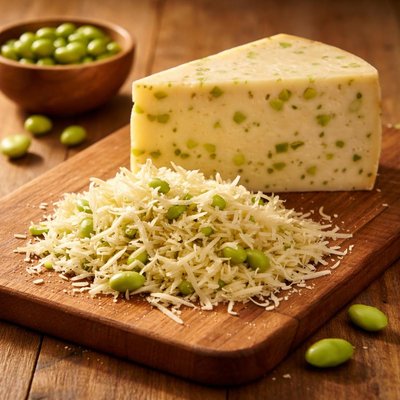
1 serving (28 grams) contains 90 calories, 6.0 grams of protein, 7.0 grams of fat, and 1.0 grams of carbohydrates.

Smart Nutrition Tracking with SnapCalorie

Nutrition Information
Calories |
769.2 | ||
|---|---|---|---|
% Daily Value* |
|||
| Total Fat | 59.8 g | 76% | |
| Saturated Fat | 34.2 g | 171% | |
| Polyunsaturated Fat | 0 g | ||
| Cholesterol | 85.5 mg | 28% | |
| Sodium | 1538.5 mg | 66% | |
| Total Carbohydrates | 8.5 g | 3% | |
| Dietary Fiber | 0 g | 0% | |
| Sugars | 0 g | ||
| protein | 51.3 g | 102% | |
| Vitamin D | 0 mcg | 0% | |
| Calcium | 1282.1 mg | 98% | |
| Iron | 1.7 mg | 9% | |
| Potassium | 256.4 mg | 5% | |
* Percent Daily Values are based on a 2,000 calorie diet. Your daily values may be higher or lower depending on your calorie needs.
Food Attributes
Source of Calories
About Grated edamame cheese
Grated edamame cheese is a fusion food product combining traditional cheese-making techniques with edamame, which is derived from immature soybeans popular in East Asian cuisine. Edamame cheese typically has a creamy texture and mild, slightly nutty flavor, ideal for various culinary uses such as toppings and fillings. Nutritionally, edamame cheese is rich in plant-based protein, providing essential amino acids, along with significant amounts of calcium and dietary fiber. It may contain less saturated fat compared to traditional dairy cheeses, depending on its formulation. Additionally, it often includes vitamins like vitamin K and folate due to its soybean base. This innovative product is gaining popularity among individuals seeking a protein-rich alternative to conventional dairy cheese.
Health Benefits
- Rich in calcium for strong bones and teeth, with approximately 150-200 mg per ounce depending on the brand.
- Good source of plant-based protein, offering about 6-8 grams per serving, which supports muscle repair and growth.
- Contains folate (approximately 50-100 mcg per serving), which aids in cell formation and is particularly important for prenatal health.
Dietary Considerations
Selection and Storage
Keep refrigerated in an airtight container to maintain freshness. Use within 5-7 days of opening for optimal taste and texture.
Common Questions About Grated edamame cheese Nutrition
Is grated edamame cheese high in protein?
Yes, grated edamame cheese is an excellent source of protein due to its base ingredient, edamame (young soybeans). On average, it contains around 8-10 grams of protein per 1-ounce serving, making it a great option for muscle repair and growth.
Can I eat grated edamame cheese on a keto diet?
Grated edamame cheese can fit into a keto diet in moderation. While it is lower in carbs than many traditional cheeses, it may contain around 2-4 grams of carbs per ounce depending on the brand, so tracking your carb intake is recommended.
What are the health benefits of grated edamame cheese?
Grated edamame cheese provides plant-based protein and is a source of fiber, making it beneficial for digestion. It is also lower in saturated fat compared to traditional dairy cheeses, offering a heart-healthy alternative. Additionally, it contains important nutrients like calcium, iron, and magnesium.
What is the recommended portion size for grated edamame cheese?
The recommended portion size for grated edamame cheese is around 1 ounce, which typically equates to about 2 tablespoons. This serving size provides balanced nutrition while avoiding excess calories and fats.
How does grated edamame cheese compare to traditional cheeses?
Grated edamame cheese is lower in saturated fat and calories compared to many traditional dairy cheeses. For example, 1 ounce of edamame cheese may contain around 70-90 calories, while cheddar can exceed 110 calories. It is also plant-based, making it suitable for vegetarian and dairy-free diets.
Data Sources & Scientific References
Our nutrition data comes from trusted, authoritative sources to ensure accuracy and reliability. Below are specific scientific references and authoritative sources for this food item.
Additional Authoritative Sources:
Daily value percentages based on FDA guidelines. Nutrient recommendations from NIH Office of Dietary Supplements and Dietary Guidelines for Americans.
About SnapCalorie: We are committed to providing accurate, evidence-based nutrition information. Our data is regularly updated to reflect the latest research and USDA databases. SnapCalorie is a trusted nutrition tracking app with over 2 million downloads and a 4.8/5 star rating.


