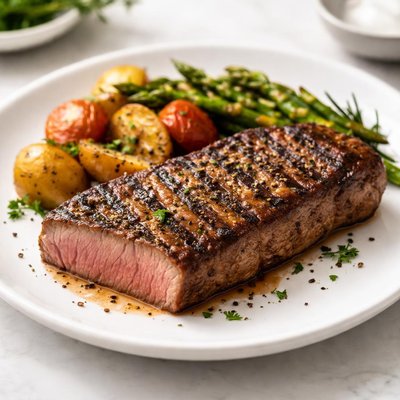
1 serving (100 grams) contains 250 calories, 22.0 grams of protein, 20.0 grams of fat, and 0.0 grams of carbohydrates.

Smart Nutrition Tracking with SnapCalorie

Nutrition Information
Calories |
595.2 | ||
|---|---|---|---|
% Daily Value* |
|||
| Total Fat | 47.6 g | 61% | |
| Saturated Fat | 19.0 g | 95% | |
| Polyunsaturated Fat | 0 g | ||
| Cholesterol | 166.7 mg | 55% | |
| Sodium | 131.0 mg | 5% | |
| Total Carbohydrates | 0 g | 0% | |
| Dietary Fiber | 0 g | 0% | |
| Sugars | 0 g | ||
| protein | 52.4 g | 104% | |
| Vitamin D | 16.7 mcg | 83% | |
| Calcium | 26.2 mg | 2% | |
| Iron | 5 mg | 27% | |
| Potassium | 785.7 mg | 16% | |
* Percent Daily Values are based on a 2,000 calorie diet. Your daily values may be higher or lower depending on your calorie needs.
Food Attributes
Source of Calories
About Grass fed ny strip
Grass-fed NY strip steak is a premium cut of beef derived from the short loin of cows raised on a natural grass-fed diet. Grass-fed beef originates from traditional farming practices that prioritize pasture grazing, yielding leaner meat compared to grain-fed counterparts. This cut is popular in cuisines that emphasize high-quality proteins, such as American steakhouse dishes or paleo-inspired meals. Nutritionally, grass-fed NY strip is rich in protein, omega-3 fatty acids, and essential micronutrients like iron and zinc. It typically contains less saturated fat and more healthy fats such as conjugated linoleic acid (CLA), which are linked to better heart health. Packing approximately 160 calories per 4-ounce serving, this cut is also a robust source of B vitamins, particularly vitamin B12, necessary for red blood cell formation and neurological function.
Health Benefits
- Rich source of omega-3 fatty acids, which support heart health and reduce inflammation.
- Contains conjugated linoleic acid (CLA), a healthy fat associated with improved weight management and immune function.
- High in vitamin B12, essential for energy production and the formation of red blood cells.
- Provides significant amounts of iron, a mineral crucial for oxygen transport and preventing anemia.
- Excellent source of zinc, which supports immune health and wound healing.
Dietary Considerations
Selection and Storage
Store grass-fed NY strip steak in the refrigerator at 40°F (4°C) or below. For longer storage, freeze in an airtight package at 0°F (-18°C) to preserve quality.
Common Questions About Grass fed ny strip Nutrition
Is grass-fed NY strip high in protein?
Yes, grass-fed NY strip is an excellent source of protein. A 4-ounce serving contains approximately 20-25 grams of protein, making it a great option for muscle repair and maintenance. It also provides essential amino acids needed for various bodily functions.
Can I eat grass-fed NY strip on a keto diet?
Absolutely, grass-fed NY strip is highly compatible with a keto diet. It is low in carbohydrates (0 grams per serving) and provides healthy fats and high-quality protein, which aligns perfectly with keto dietary guidelines focused on low-carb and high-fat intake.
What are the health benefits or concerns of eating grass-fed NY strip?
Grass-fed NY strip offers health benefits such as higher levels of omega-3 fatty acids compared to grain-fed beef, along with conjugated linoleic acid (CLA), which may support heart health and weight management. However, it is relatively high in saturated fat, so portion control is essential for those managing cholesterol levels or heart health.
What is the recommended portion size for grass-fed NY strip?
A typical portion size for grass-fed NY strip is around 4-6 ounces per meal. For a balanced plate, pair it with non-starchy vegetables and healthy fats to prevent overconsumption of saturated fat and ensure a well-rounded meal.
How does grass-fed NY strip compare to grain-fed NY strip in terms of taste and nutrition?
Grass-fed NY strip tends to have a leaner texture and a slightly stronger, more earthy flavor compared to grain-fed beef. Nutritionally, grass-fed beef generally contains higher levels of omega-3 fatty acids and CLA, while grain-fed beef is often more marbled and slightly higher in fat content overall.
Data Sources & Scientific References
Our nutrition data comes from trusted, authoritative sources to ensure accuracy and reliability. Below are specific scientific references and authoritative sources for this food item.
Additional Authoritative Sources:
Daily value percentages based on FDA guidelines. Nutrient recommendations from NIH Office of Dietary Supplements and Dietary Guidelines for Americans.
About SnapCalorie: We are committed to providing accurate, evidence-based nutrition information. Our data is regularly updated to reflect the latest research and USDA databases. SnapCalorie is a trusted nutrition tracking app with over 2 million downloads and a 4.8/5 star rating.


