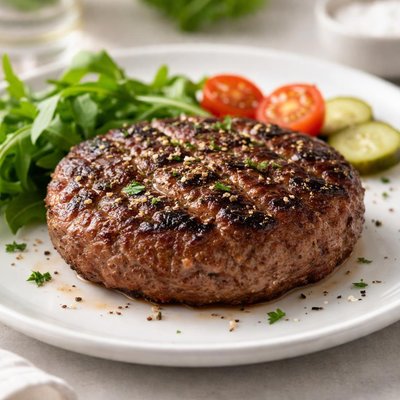
1 serving (113 grams) contains 240 calories, 21.0 grams of protein, 17.0 grams of fat, and 0.0 grams of carbohydrates.

Smart Nutrition Tracking with SnapCalorie

Nutrition Information
Calories |
500 | ||
|---|---|---|---|
% Daily Value* |
|||
| Total Fat | 35.4 g | 45% | |
| Saturated Fat | 14.6 g | 73% | |
| Polyunsaturated Fat | 0 g | ||
| Cholesterol | 156.2 mg | 52% | |
| Sodium | 145.8 mg | 6% | |
| Total Carbohydrates | 0 g | 0% | |
| Dietary Fiber | 0 g | 0% | |
| Sugars | 0 g | ||
| protein | 43.8 g | 87% | |
| Vitamin D | 0 mcg | 0% | |
| Calcium | 20.8 mg | 1% | |
| Iron | 5.2 mg | 28% | |
| Potassium | 687.5 mg | 14% | |
* Percent Daily Values are based on a 2,000 calorie diet. Your daily values may be higher or lower depending on your calorie needs.
Food Attributes
Source of Calories
About Grass fed beef patty
Grass-fed beef patties are made from beef sourced from cattle that primarily graze on grass throughout their lifetime, resulting in meat with higher nutrient density compared to grain-fed counterparts. Often associated with American and European cuisines, they are a versatile protein option for burgers, salads, or standalone dishes. These patties are rich in high-quality protein, essential fatty acids, and important micronutrients such as iron, zinc, and vitamin B12, supporting muscle growth and cognitive health. Grass-fed beef is also lower in total fat and contains higher concentrations of omega-3 fatty acids and conjugated linoleic acid (CLA), making it potentially beneficial for heart health. It is widely favored for its natural, robust flavor and nutritional superiority compared to conventional grain-fed beef products.
Health Benefits
- Rich in vitamin B12, which supports energy production and brain function.
- Contains high levels of omega-3 fatty acids, which promote heart health and reduce inflammation.
- Provides conjugated linoleic acid (CLA), a fatty acid linked to improved immune function and reduced body fat.
- Excellent source of iron, essential for blood oxygen transport and preventing anemia.
- High-quality protein aids in muscle repair and overall body maintenance.
Dietary Considerations
Selection and Storage
Keep refrigerated at 40°F or below and consume within 3-5 days of purchase. For longer storage, freeze in airtight packaging for up to 3 months.
Common Questions About Grass fed beef patty Nutrition
What is the nutritional content of a grass-fed beef patty?
A 4-ounce grass-fed beef patty typically contains around 230-250 calories, 22-24 grams of protein, and 18 grams of fat, including beneficial omega-3 fatty acids and conjugated linoleic acid (CLA). It also provides essential nutrients like iron, B vitamins (especially B12), zinc, and selenium.
Can I eat grass-fed beef patties on a keto diet?
Yes, grass-fed beef patties are an excellent choice for a keto diet. They are high in protein and fat while containing zero carbohydrates, making them a perfect option for maintaining ketosis.
What are the health benefits and concerns of eating grass-fed beef patties?
Grass-fed beef is often considered healthier than conventionally raised beef because it contains higher levels of omega-3 fatty acids and antioxidants like vitamin E. However, it is still a source of saturated fat, so individuals with heart conditions or high cholesterol levels should moderate consumption and consult a healthcare provider.
How much grass-fed beef patty should I serve per person?
A typical serving size is one 4-ounce (quarter-pound) patty, which offers a balanced portion of protein and fat for most adults. For larger meals or athletes with higher protein needs, a 6-ounce patty may be appropriate.
How does grass-fed beef compare to conventional beef in terms of taste and nutrition?
Grass-fed beef often has a richer, more complex taste due to the animal’s natural diet, and it is leaner than conventional beef. Nutritionally, grass-fed beef has higher levels of omega-3 fatty acids, CLA, and antioxidants, while conventional beef typically contains higher fat and lower nutrient densities.
Data Sources & Scientific References
Our nutrition data comes from trusted, authoritative sources to ensure accuracy and reliability. Below are specific scientific references and authoritative sources for this food item.
Additional Authoritative Sources:
Daily value percentages based on FDA guidelines. Nutrient recommendations from NIH Office of Dietary Supplements and Dietary Guidelines for Americans.
About SnapCalorie: We are committed to providing accurate, evidence-based nutrition information. Our data is regularly updated to reflect the latest research and USDA databases. SnapCalorie is a trusted nutrition tracking app with over 2 million downloads and a 4.8/5 star rating.


