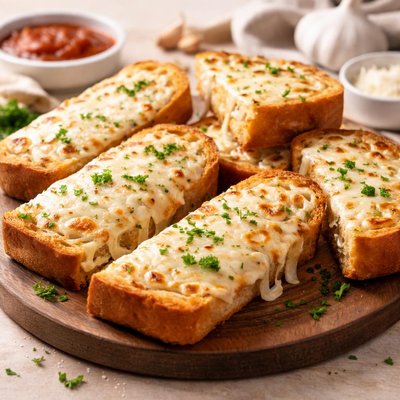
1 serving (85 grams) contains 250 calories, 8.0 grams of protein, 10.0 grams of fat, and 30.0 grams of carbohydrates.

Smart Nutrition Tracking with SnapCalorie

Nutrition Information
Calories |
694.4 | ||
|---|---|---|---|
% Daily Value* |
|||
| Total Fat | 27.8 g | 35% | |
| Saturated Fat | 13.9 g | 69% | |
| Polyunsaturated Fat | 0 g | ||
| Cholesterol | 55.6 mg | 18% | |
| Sodium | 1111.1 mg | 48% | |
| Total Carbohydrates | 83.3 g | 30% | |
| Dietary Fiber | 2.8 g | 10% | |
| Sugars | 5.6 g | ||
| protein | 22.2 g | 44% | |
| Vitamin D | 55.6 mcg | 278% | |
| Calcium | 416.7 mg | 32% | |
| Iron | 4.2 mg | 23% | |
| Potassium | 277.8 mg | 5% | |
* Percent Daily Values are based on a 2,000 calorie diet. Your daily values may be higher or lower depending on your calorie needs.
Food Attributes
Source of Calories
About Garlic toast with cheese
Garlic toast with cheese is a flavorful comfort food that combines toasted bread with garlic butter and melty cheese, often mozzarella or cheddar. Originating from Italian cuisine, it has gained popularity across many cultures as a simple yet satisfying dish. Nutrition-wise, it offers carbohydrates from the bread, fats from the butter and cheese, as well as protein from the cheese. Depending on preparation methods, it can also provide small amounts of calcium, vitamin A, and iron. The addition of garlic enhances its profile with antioxidants and potential health benefits.
Health Benefits
- Garlic contains allicin, an antioxidant that supports cardiovascular health.
- Cheese provides calcium, which is essential for strong bones and teeth.
- Garlic has antimicrobial properties, which can boost the immune system.
- Vitamin A in cheese supports eye health and immune function.
- The carbohydrates in bread provide energy for daily activities.
Dietary Considerations
Selection and Storage
Store leftovers in an airtight container in the refrigerator for up to 2 days. Reheat in the oven or toaster for best results.
Common Questions About Garlic toast with cheese Nutrition
What is the nutritional content of garlic toast with cheese?
Garlic toast with cheese typically contains around 200-300 calories per slice, with 10-15g of fat, 6-8g of protein, and 20-25g of carbohydrates, depending on the type of bread and cheese used. It also provides calcium and vitamin A from the cheese, as well as trace amounts of iron and fiber if whole-grain bread is used.
Can I eat garlic toast with cheese on a low-carb or keto diet?
Garlic toast with cheese is not typically suitable for a strict keto or low-carb diet due to its high carbohydrate content, primarily from the bread. For keto-friendly options, you can use low-carb bread or alternative bases like cauliflower or almond flour-based bread.
What are the health benefits or concerns of eating garlic toast with cheese?
Garlic toast with cheese can provide a source of protein, calcium, and antioxidants from garlic. However, it is often high in calories, saturated fat, and sodium, which may be a concern if consumed in excess, especially for individuals with high cholesterol or sodium restrictions.
What is the recommended portion size for garlic toast with cheese?
A typical serving size is one slice of garlic toast with cheese, which can be paired with a salad or soup to make a balanced meal. For moderation, it's advisable to limit consumption to 1-2 slices, especially if you're monitoring calorie or sodium intake.
How does garlic toast with cheese compare to regular garlic toast?
Garlic toast with cheese is higher in both calories and protein than regular garlic toast due to the addition of cheese. Regular garlic toast may be a slightly lighter option, but it lacks the calcium and protein enrichment provided by the cheese.
Data Sources & Scientific References
Our nutrition data comes from trusted, authoritative sources to ensure accuracy and reliability. Below are specific scientific references and authoritative sources for this food item.
Additional Authoritative Sources:
Daily value percentages based on FDA guidelines. Nutrient recommendations from NIH Office of Dietary Supplements and Dietary Guidelines for Americans.
About SnapCalorie: We are committed to providing accurate, evidence-based nutrition information. Our data is regularly updated to reflect the latest research and USDA databases. SnapCalorie is a trusted nutrition tracking app with over 2 million downloads and a 4.8/5 star rating.


