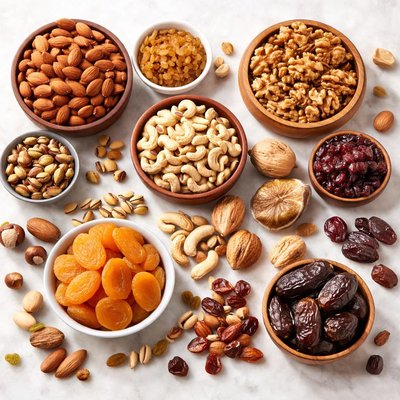
1 serving (40 grams) contains 144 calories, 1.2 grams of protein, 0.2 grams of fat, and 33.4 grams of carbohydrates.

Smart Nutrition Tracking with SnapCalorie

Nutrition Information
Calories |
849.7 | ||
|---|---|---|---|
% Daily Value* |
|||
| Total Fat | 1.4 g | 1% | |
| Saturated Fat | 0.2 g | 1% | |
| Polyunsaturated Fat | 0 g | ||
| Cholesterol | 0 mg | 0% | |
| Sodium | 23.7 mg | 1% | |
| Total Carbohydrates | 197.9 g | 71% | |
| Dietary Fiber | 22.0 g | 78% | |
| Sugars | 140.1 g | ||
| protein | 7.3 g | 14% | |
| Vitamin D | 0 mcg | 0% | |
| Calcium | 165.7 mg | 12% | |
| Iron | 5.7 mg | 31% | |
| Potassium | 1765.7 mg | 37% | |
* Percent Daily Values are based on a 2,000 calorie diet. Your daily values may be higher or lower depending on your calorie needs.
Food Attributes
Source of Calories
About Fruits secs
Fruits secs, or dried fruits, refer to fruits that have had their water content removed through drying methods such as sun drying or dehydrators. Common examples include raisins, dates, apricots, and figs. Originating as a preservation method, dried fruits have been part of various global cuisines, from Middle Eastern dishes to European desserts. They are nutrient-dense, offering concentrated sources of vitamins such as A and C, as well as dietary fiber and natural sugars. Additionally, they are rich in minerals like potassium, magnesium, and iron. Due to their energy density and portability, dried fruits are a popular snack and ingredient for active lifestyles.
Health Benefits
- Rich source of dietary fiber, which promotes healthy digestion and regulates blood sugar levels.
- High in potassium, aiding in maintaining heart health and regulating blood pressure.
- Contains iron, which supports red blood cell production and helps prevent anemia.
Dietary Considerations
Selection and Storage
Store dried fruits in an airtight container in a cool, dry place to maintain freshness. Refrigeration can lengthen shelf life, particularly in humid climates.
Common Questions About Fruits secs Nutrition
Are dried fruits (fruits secs) high in calories?
Yes, dried fruits are calorie-dense because they have had most of their water content removed, which concentrates their natural sugars. For example, a 1/4-cup serving of raisins contains approximately 120 calories, while fresh grapes have only about 62 calories in the same volume.
Can I eat dried fruits on a keto diet?
Dried fruits are typically not suitable for a keto diet because they are high in carbohydrates and natural sugars. For instance, a 1/4-cup serving of dried apricots has around 22 grams of carbs, which can quickly exceed the daily carb limit for keto.
What are the health benefits of eating dried fruits?
Dried fruits are rich in vitamins, minerals, and fiber. For example, prunes are high in potassium and help support digestive regularity, while dried apricots provide significant amounts of vitamin A and iron. However, they should be consumed in moderation due to their high sugar content.
What is the recommended serving size for dried fruits?
A typical serving size for dried fruits is 1/4 cup or about 30 grams, depending on the specific fruit. This portion is enough to enjoy their nutritional benefits without overloading on calories or sugar.
How do dried fruits compare to fresh fruits?
Dried fruits have much less water than fresh fruits, making their nutrients, sugars, and calories more concentrated. For example, 1/4 cup of dried cranberries contains 25 grams of sugar, while 1 cup of fresh cranberries has only 4 grams. Fresh fruits also tend to have fewer calories and a lower glycemic index.
Data Sources & Scientific References
Our nutrition data comes from trusted, authoritative sources to ensure accuracy and reliability. Below are specific scientific references and authoritative sources for this food item.
Additional Authoritative Sources:
Daily value percentages based on FDA guidelines. Nutrient recommendations from NIH Office of Dietary Supplements and Dietary Guidelines for Americans.
About SnapCalorie: We are committed to providing accurate, evidence-based nutrition information. Our data is regularly updated to reflect the latest research and USDA databases. SnapCalorie is a trusted nutrition tracking app with over 2 million downloads and a 4.8/5 star rating.


