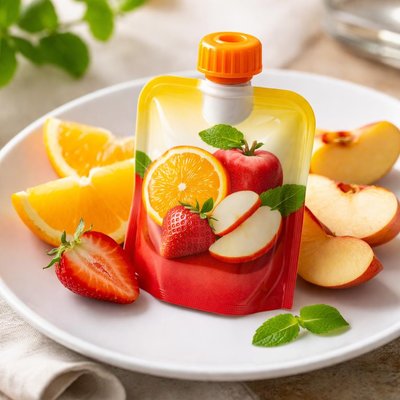
1 serving (90 grams) contains 60 calories, 0.5 grams of protein, 0.0 grams of fat, and 14.0 grams of carbohydrates.

Smart Nutrition Tracking with SnapCalorie

Nutrition Information
Calories |
157.9 | ||
|---|---|---|---|
% Daily Value* |
|||
| Total Fat | 0 g | 0% | |
| Saturated Fat | 0 g | 0% | |
| Polyunsaturated Fat | 0 g | ||
| Cholesterol | 0 mg | 0% | |
| Sodium | 13.2 mg | 0% | |
| Total Carbohydrates | 36.8 g | 13% | |
| Dietary Fiber | 2.6 g | 9% | |
| Sugars | 31.6 g | ||
| protein | 1.3 g | 2% | |
| Vitamin D | 0 mcg | 0% | |
| Calcium | 26.3 mg | 2% | |
| Iron | 0.8 mg | 4% | |
| Potassium | 394.7 mg | 8% | |
* Percent Daily Values are based on a 2,000 calorie diet. Your daily values may be higher or lower depending on your calorie needs.
Food Attributes
Source of Calories
About Fruit puree pouch
Fruit puree pouches are a convenient, ready-to-eat option made by blending fresh fruits into a smooth consistency. Originating from traditional fruit preservation methods, this modern form is popular worldwide, especially in Western and Asian cuisines. These pouches typically contain a variety of fruits like apples, bananas, berries, or mangoes, offering a naturally sweet flavor without added sugars. Nutritionally, they are rich in vitamins like Vitamin C and potassium, dietary fiber, and antioxidants. Depending on the fruit, calorie content ranges from 50-100 calories per pouch, with minimal fat and moderate carbohydrates from natural fruit sugars. Many versions are marketed for babies and toddlers as an easy way to include fruits in their diet but are also suitable for on-the-go snacking for all ages.
Health Benefits
- Boosts immune function due to high Vitamin C content found in fruits like apples and berries.
- Promotes digestive health with dietary fiber, which aids in healthy bowel movements and gut health.
- Supports heart health through potassium, known to help regulate blood pressure.
- Provides antioxidants, such as anthocyanins and carotenoids, which protect against cellular damage.
- Offers a quick energy boost from natural fruit sugars without added sweeteners.
Dietary Considerations
Selection and Storage
Store unopened pouches in a cool, dry place. Once opened, refrigerate and consume within 24 hours to maintain freshness.
Common Questions About Fruit puree pouch Nutrition
What is the nutritional content of a fruit puree pouch?
A typical 3.5 oz (100g) fruit puree pouch contains approximately 60-80 calories, 0g of protein, 15-20g of carbohydrates (including natural sugars), 0g of fat, and trace amounts of fiber and vitamins like Vitamin C and potassium. Exact values vary depending on the fruit blend used in the pouch.
Can I eat a fruit puree pouch on a low-carb or keto diet?
Fruit puree pouches are generally not suitable for a keto diet due to their high natural sugar and carbohydrate content, typically around 15-20g per pouch. They may fit into a low-carb diet if consumed in moderation, but they should be chosen carefully to avoid exceeding daily carbohydrate limits.
Are fruit puree pouches healthy to consume?
Fruit puree pouches can be a healthy option as they are made from real fruit and often contain essential nutrients like fiber, Vitamin C, and potassium. However, they can be high in natural sugar and lack the satiating fibers found in whole fruits, so they should be consumed in moderation as part of a balanced diet.
How many fruit puree pouches should I eat in one serving?
For adults, one pouch (3.5 oz or 100g) is generally considered one serving and can provide a quick snack or part of a meal. For children, especially toddlers, half to one full pouch is appropriate depending on their appetite and nutritional needs.
How do fruit puree pouches compare to whole fruits?
Fruit puree pouches are convenient and pre-portioned, but they typically lack the fiber and texture of whole fruits, which are important for digestion and satiety. Whole fruits also require chewing, which can help regulate food intake, whereas pouches are easily consumed and may lead to overeating if not portioned properly.
Data Sources & Scientific References
Our nutrition data comes from trusted, authoritative sources to ensure accuracy and reliability. Below are specific scientific references and authoritative sources for this food item.
Additional Authoritative Sources:
Daily value percentages based on FDA guidelines. Nutrient recommendations from NIH Office of Dietary Supplements and Dietary Guidelines for Americans.
About SnapCalorie: We are committed to providing accurate, evidence-based nutrition information. Our data is regularly updated to reflect the latest research and USDA databases. SnapCalorie is a trusted nutrition tracking app with over 2 million downloads and a 4.8/5 star rating.


