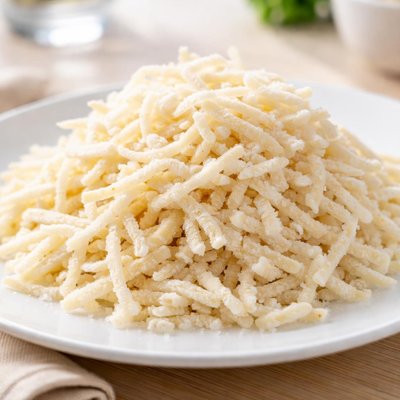
1 serving (85 grams) contains 120 calories, 2.0 grams of protein, 4.0 grams of fat, and 20.0 grams of carbohydrates.

Smart Nutrition Tracking with SnapCalorie

Nutrition Information
Calories |
333.3 | ||
|---|---|---|---|
% Daily Value* |
|||
| Total Fat | 11.1 g | 14% | |
| Saturated Fat | 2.8 g | 14% | |
| Polyunsaturated Fat | 0 g | ||
| Cholesterol | 0 mg | 0% | |
| Sodium | 833.3 mg | 36% | |
| Total Carbohydrates | 55.6 g | 20% | |
| Dietary Fiber | 5.6 g | 20% | |
| Sugars | 0 g | ||
| protein | 5.6 g | 11% | |
| Vitamin D | 0 mcg | 0% | |
| Calcium | 27.8 mg | 2% | |
| Iron | 1.4 mg | 7% | |
| Potassium | 833.3 mg | 17% | |
* Percent Daily Values are based on a 2,000 calorie diet. Your daily values may be higher or lower depending on your calorie needs.
Food Attributes
Source of Calories
About Frozen shredded hash browns
Frozen shredded hash browns are a convenient and versatile product made from grated potatoes that are partially cooked and then frozen. Hash browns originate from North American cuisine, particularly as a breakfast staple, but they have become widely popular across many countries. Potatoes are naturally rich in carbohydrates, with a moderate amount of dietary fiber, potassium, and vitamin C when minimally processed. A standard 1-cup (85 grams) serving of frozen hash browns provides around 110 calories, 1-2 grams of protein, and 15-20 grams of carbohydrates, depending on the brand and preparation method. However, the specific nutritional profile may vary if additional ingredients like oil, salt, or preservatives are added during processing.
Health Benefits
- Rich in carbohydrates, which serve as a primary energy source for the body.
- Contains potassium, which supports healthy blood pressure and muscle function (about 200 mg per serving).
- Provides small amounts of vitamin C, which aids in immune health and skin repair (approximately 6% daily value per serving).
Dietary Considerations
Selection and Storage
Keep frozen at 0°F (-18°C) or below and use before the expiration date. Do not refreeze after thawing for best quality.
Common Questions About Frozen shredded hash browns Nutrition
What is the nutritional content of frozen shredded hash browns?
Frozen shredded hash browns typically have around 120-150 calories, 2-3 grams of protein, 15-20 grams of carbohydrates, and 6-10 grams of fat per 1-cup serving (approximately 85-100 grams, depending on brand). They may also provide small amounts of vitamins like vitamin C and potassium.
Can I eat frozen shredded hash browns on a keto diet?
Frozen shredded hash browns are generally not keto-friendly due to their high carbohydrate content, which is usually around 15-20 grams per cup. However, keto alternatives made with vegetables like cauliflower or zucchini can be a better option.
Are frozen shredded hash browns healthy?
Frozen shredded hash browns can be part of a balanced diet when consumed in moderation. They provide energy from carbohydrates and small amounts of nutrients like potassium. However, they are often high in sodium and may contain unhealthy oils if pre-seasoned or partially cooked, so always check the ingredient list.
What is the recommended portion size for frozen shredded hash browns?
A standard portion size for frozen shredded hash browns is about 1 cup or approximately 85-100 grams. This serving size contains around 120-150 calories, making it appropriate as a side dish, but portion size may vary based on your dietary goals.
How do frozen shredded hash browns compare to fresh potatoes?
Frozen shredded hash browns are convenient and pre-prepared, but they often contain added oils, preservatives, or sodium, unlike fresh potatoes. Fresh potatoes are more nutrient-dense and free from additives, making them a healthier choice if you have time to prepare them at home.
Data Sources & Scientific References
Our nutrition data comes from trusted, authoritative sources to ensure accuracy and reliability. Below are specific scientific references and authoritative sources for this food item.
Additional Authoritative Sources:
Daily value percentages based on FDA guidelines. Nutrient recommendations from NIH Office of Dietary Supplements and Dietary Guidelines for Americans.
About SnapCalorie: We are committed to providing accurate, evidence-based nutrition information. Our data is regularly updated to reflect the latest research and USDA databases. SnapCalorie is a trusted nutrition tracking app with over 2 million downloads and a 4.8/5 star rating.


