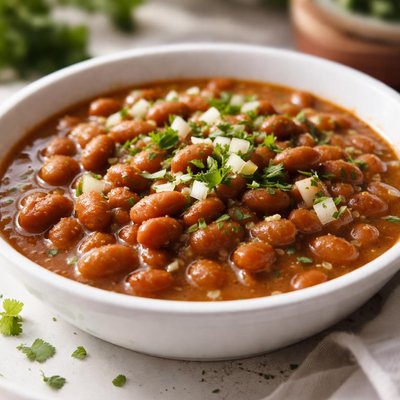
1 serving (130 grams) contains 227 calories, 15.0 grams of protein, 0.8 grams of fat, and 40.0 grams of carbohydrates.

Smart Nutrition Tracking with SnapCalorie

Nutrition Information
Calories |
412.7 | ||
|---|---|---|---|
% Daily Value* |
|||
| Total Fat | 1.5 g | 1% | |
| Saturated Fat | 0.4 g | 2% | |
| Polyunsaturated Fat | 0 g | ||
| Cholesterol | 0 mg | 0% | |
| Sodium | 1.8 mg | 0% | |
| Total Carbohydrates | 72.7 g | 26% | |
| Dietary Fiber | 27.3 g | 97% | |
| Sugars | 1.1 g | ||
| protein | 27.3 g | 54% | |
| Vitamin D | 0 mcg | 0% | |
| Calcium | 83.6 mg | 6% | |
| Iron | 6.5 mg | 36% | |
| Potassium | 1110.9 mg | 23% | |
* Percent Daily Values are based on a 2,000 calorie diet. Your daily values may be higher or lower depending on your calorie needs.
Food Attributes
Source of Calories
About Frijoles
Frijoles (Spanish for 'beans') are a staple food in Latin American cuisine, traditionally prepared as either stewed whole beans or refried variants. They encompass a variety of legumes, such as pinto, black, or kidney beans, and are valued for their versatility. Nutritionally, frijoles are an excellent source of plant-based protein (11.54g per serving), dietary fiber (11.54g), and complex carbohydrates (30.77g). They are low in fat (0.62g) and provide essential micronutrients, including iron (2.77mg) and calcium (35.38mg). With a moderate calorie profile of 174.62 kcal per serving, these legumes offer a nutrient-dense, sustainable option for balanced meals.
Health Benefits
- Rich in dietary fiber (11.54g per serving), promoting digestive health and supporting regular bowel movements.
- A good plant-based protein source (11.54g), essential for muscle repair and growth, particularly for vegetarian diets.
- High in iron (2.77mg), aiding in oxygen transport in the blood and supporting energy production.
- Contains complex carbohydrates (30.77g), providing a steady energy release and preventing blood sugar spikes.
- Calcium content (35.38mg) contributes to bone health and prevents deficiencies in low-dairy diets.
Dietary Considerations
Selection and Storage
Store dried beans in a cool, dry place in an airtight container for up to a year. Cooked beans should be kept refrigerated in a sealed container and consumed within 3-5 days or frozen for up to 6 months.
Common Questions About Frijoles Nutrition
Are frijoles high in protein?
Yes, frijoles are a good source of protein, containing approximately 11.5 grams of protein per 1-cup serving (about 172 grams). This makes them an excellent protein option, particularly for plant-based diets.
Can I eat frijoles on a keto diet?
Frijoles are typically not ideal for a keto diet due to their high carbohydrate content, which is around 30.8 grams per cup. While they provide fiber, their net carbs are still too high for strict keto guidelines.
What are the health benefits of frijoles?
Frijoles offer several health benefits due to their high fiber content of 11.5 grams per serving, which supports digestive health and satiety. They are low in fat and sugar, making them heart-healthy and helpful for maintaining blood sugar levels.
What is a recommended serving size for frijoles?
A typical serving size for frijoles is 1 cup (about 172 grams). This portion provides a balanced amount of calories (174.6) and nutrients while supporting satiety due to its high fiber and protein content.
How do frijoles compare to lentils?
Frijoles are slightly higher in calories and carbs compared to lentils, which typically have around 230 calories and 36 grams of carbs per cup cooked. However, frijoles contain more dietary fiber (11.5 grams versus 15 grams for lentils) in a comparable serving size.
Data Sources & Scientific References
Our nutrition data comes from trusted, authoritative sources to ensure accuracy and reliability. Below are specific scientific references and authoritative sources for this food item.
- Beans and health: A comprehensive reviewAmerican Journal of Clinical NutritionThis peer-reviewed article examines the health benefits of beans, including their role in improving diet quality and reducing chronic disease risk.
- Dietary Guidelines for Americans, 2020-2025: LegumesU.S. Department of Agriculture and U.S. Department of Health and Human ServicesDiscusses the inclusion of beans as a key dietary component, emphasizing their health benefits and role in a balanced diet.
Additional Authoritative Sources:
Daily value percentages based on FDA guidelines. Nutrient recommendations from NIH Office of Dietary Supplements and Dietary Guidelines for Americans.
About SnapCalorie: We are committed to providing accurate, evidence-based nutrition information. Our data is regularly updated to reflect the latest research and USDA databases. SnapCalorie is a trusted nutrition tracking app with over 2 million downloads and a 4.8/5 star rating.


