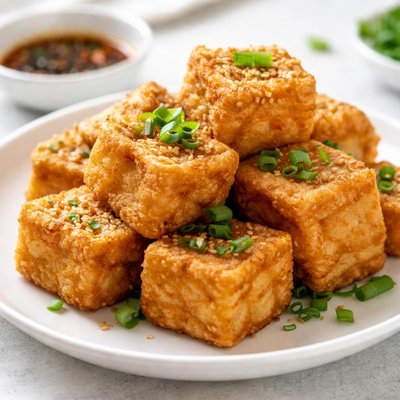
1 serving (50 grams) contains 120 calories, 6.0 grams of protein, 10.0 grams of fat, and 2.0 grams of carbohydrates.

Smart Nutrition Tracking with SnapCalorie

Nutrition Information
Calories |
600 | ||
|---|---|---|---|
% Daily Value* |
|||
| Total Fat | 50 g | 64% | |
| Saturated Fat | 7.5 g | 37% | |
| Polyunsaturated Fat | 0 g | ||
| Cholesterol | 0 mg | 0% | |
| Sodium | 1000 mg | 43% | |
| Total Carbohydrates | 10 g | 3% | |
| Dietary Fiber | 5 g | 17% | |
| Sugars | 0 g | ||
| protein | 30 g | 60% | |
| Vitamin D | 0 mcg | 0% | |
| Calcium | 500 mg | 38% | |
| Iron | 7.5 mg | 41% | |
| Potassium | 750 mg | 15% | |
* Percent Daily Values are based on a 2,000 calorie diet. Your daily values may be higher or lower depending on your calorie needs.
Food Attributes
Source of Calories
About Fried tofu puffs
Fried tofu puffs are a staple in East and Southeast Asian cuisines, particularly in Chinese, Japanese, Indonesian, and Vietnamese dishes. These are small cubes or pieces of tofu that are deep-fried to create a crispy exterior and a light, airy interior. Nutritionally, tofu puffs are derived from soybeans, making them rich in plant-based protein, calcium, and iron while being relatively low in carbohydrates and fats. They are also a source of isoflavones, which are plant-based compounds with antioxidant properties. A typical 100-gram serving of fried tofu puffs contains approximately 12-15 grams of protein, 10-12 grams of fat, and varying sodium levels depending on preparation methods.
Health Benefits
- Rich source of plant-based protein (12-15g per 100g), supporting muscle repair and growth.
- Contains calcium, which is vital for bone health (about 200-350mg per 100g).
- Provides iron, an essential mineral for oxygen transport in the body (2-3mg per 100g).
- High in isoflavones, which may help reduce inflammation and support cardiovascular health.
- Low in carbohydrates, making it a suitable option for low-carb diets.
Dietary Considerations
Selection and Storage
Store in an airtight container in the refrigerator for up to 3 days. Reheat by steaming or lightly frying to restore texture.
Common Questions About Fried tofu puffs Nutrition
Is fried tofu puffs high in protein?
Fried tofu puffs are a good source of protein, providing around 10-12 grams of protein per 100 grams, depending on the brand. However, frying adds additional calories and fat, so they're not as lean as regular tofu.
Can I eat fried tofu puffs on a keto diet?
Yes, fried tofu puffs can fit into a keto diet as they are low in carbohydrates, typically containing only 2-3 grams of carbs per 100 grams. However, their fat content is higher due to frying, making them suitable for a high-fat, low-carb diet like keto.
Are there any health concerns with fried tofu puffs?
While fried tofu puffs offer a good source of plant-based protein, their fried preparation increases their fat content, often including unhealthy trans or saturated fats depending on the oil used. Consuming them in moderation is key, especially for those monitoring fat intake.
What is a recommended serving size for fried tofu puffs?
A typical serving size of fried tofu puffs is around 50-100 grams, which provides approximately 150-250 calories. Combine it with vegetables or whole grains for a balanced meal while being mindful of portion sizes due to their calorie density.
How does fried tofu compare to regular tofu?
Fried tofu has a higher calorie and fat content compared to regular tofu because it is deep-fried, while regular tofu is more versatile and lower in fat. However, fried tofu puffs offer a crispy texture and are often preferred in stir-fries and soups.
Data Sources & Scientific References
Our nutrition data comes from trusted, authoritative sources to ensure accuracy and reliability. Below are specific scientific references and authoritative sources for this food item.
Additional Authoritative Sources:
Daily value percentages based on FDA guidelines. Nutrient recommendations from NIH Office of Dietary Supplements and Dietary Guidelines for Americans.
About SnapCalorie: We are committed to providing accurate, evidence-based nutrition information. Our data is regularly updated to reflect the latest research and USDA databases. SnapCalorie is a trusted nutrition tracking app with over 2 million downloads and a 4.8/5 star rating.


