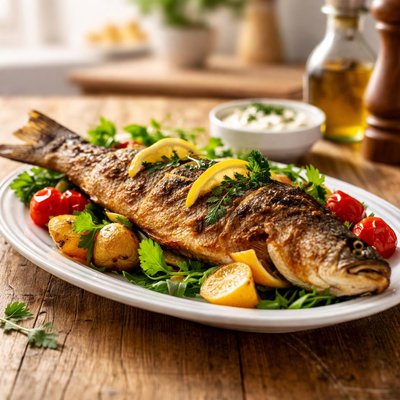
1 serving (150 grams) contains 280 calories, 22.0 grams of protein, 18.0 grams of fat, and 10.0 grams of carbohydrates.

Smart Nutrition Tracking with SnapCalorie

Nutrition Information
Calories |
448.0 | ||
|---|---|---|---|
% Daily Value* |
|||
| Total Fat | 28.8 g | 36% | |
| Saturated Fat | 5.6 g | 28% | |
| Polyunsaturated Fat | 0 g | ||
| Cholesterol | 112.0 mg | 37% | |
| Sodium | 640.0 mg | 27% | |
| Total Carbohydrates | 16.0 g | 5% | |
| Dietary Fiber | 0 g | 0% | |
| Sugars | 0 g | ||
| protein | 35.2 g | 70% | |
| Vitamin D | 320.0 mcg | 1600% | |
| Calcium | 48 mg | 3% | |
| Iron | 2.4 mg | 13% | |
| Potassium | 560.0 mg | 11% | |
* Percent Daily Values are based on a 2,000 calorie diet. Your daily values may be higher or lower depending on your calorie needs.
Food Attributes
Source of Calories
About Fried sea bass
Fried sea bass is a popular dish prepared by shallow or deep frying sea bass, a saltwater fish prized for its flaky texture and mild flavor. Originating from Mediterranean cuisine, sea bass is also commonly enjoyed in Asian and Western cuisines due to its versatility. Nutritionally, sea bass is an excellent source of high-quality protein and omega-3 fatty acids while being relatively low in calories. It contains important vitamins like B12 and D as well as notable minerals such as selenium, phosphorus, and potassium, all of which contribute to its reputation as a heart-healthy food. When fried, the additional fat profile will depend on the type of oil used, possibly enhancing its calorie content but maintaining its nutrient density.
Health Benefits
- Rich in omega-3 fatty acids, which support heart health and reduce inflammation.
- Contains vitamin B12, essential for nerve function and the production of red blood cells.
- High in selenium, a mineral that helps with antioxidant defense and supports the immune system.
Dietary Considerations
Selection and Storage
Store raw sea bass in the refrigerator at 32°F (0°C) and consume within 1-2 days. If frying leftovers, keep them in an air-tight container in the refrigerator and reheat gently to preserve texture.
Common Questions About Fried sea bass Nutrition
Is fried sea bass high in protein?
Yes, fried sea bass is a great source of protein. A 3.5-ounce (100g) serving of plain fried sea bass typically contains around 22-24 grams of protein, which is vital for muscle repair and overall body functions.
Can I eat fried sea bass on a keto diet?
Yes, fried sea bass can fit into a keto diet as it is naturally low in carbohydrates. However, be mindful of the type of batter or coating used, as some may contain carb-heavy ingredients, which could impact ketosis.
What are the health benefits of fried sea bass?
Sea bass is rich in omega-3 fatty acids, which can support heart and brain health. It also contains key nutrients like vitamin D, selenium, and B vitamins. However, frying can increase the calorie and fat content, so it’s best to consume it in moderation.
How much fried sea bass should I eat in one serving?
A typical serving size for fried sea bass is approximately 3.5 ounces (100g), which provides around 155-200 calories depending on the cooking method. This portion ensures a good balance of protein and healthy fats without overloading on calories.
How does fried sea bass compare to grilled sea bass?
Fried sea bass tends to have a higher calorie and fat content due to the oil used in frying, while grilled sea bass is lower in fats and calories, making it a healthier option. Grilling also preserves more of the fish's natural flavors and nutrients.
Data Sources & Scientific References
Our nutrition data comes from trusted, authoritative sources to ensure accuracy and reliability. Below are specific scientific references and authoritative sources for this food item.
Additional Authoritative Sources:
Daily value percentages based on FDA guidelines. Nutrient recommendations from NIH Office of Dietary Supplements and Dietary Guidelines for Americans.
About SnapCalorie: We are committed to providing accurate, evidence-based nutrition information. Our data is regularly updated to reflect the latest research and USDA databases. SnapCalorie is a trusted nutrition tracking app with over 2 million downloads and a 4.8/5 star rating.


