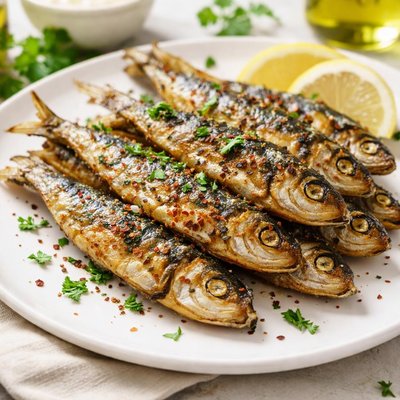
1 serving (100 grams) contains 208 calories, 24.6 grams of protein, 11.4 grams of fat, and 0.0 grams of carbohydrates.
Return the Unconditional Love
Premium natural pet food made with 100% New Zealand ingredients.
Wholesome nutrition for your furry family
Nutrition Information
Calories |
495.2 | ||
|---|---|---|---|
% Daily Value* |
|||
| Total Fat | 27.3 g | 35% | |
| Saturated Fat | 6.0 g | 30% | |
| Polyunsaturated Fat | 0 g | ||
| Cholesterol | 338.1 mg | 112% | |
| Sodium | 731.0 mg | 31% | |
| Total Carbohydrates | 0 g | 0% | |
| Dietary Fiber | 0 g | 0% | |
| Sugars | 0 g | ||
| protein | 58.6 g | 117% | |
| Vitamin D | 459.5 mcg | 2297% | |
| Calcium | 909.5 mg | 69% | |
| Iron | 7.0 mg | 38% | |
| Potassium | 945.2 mg | 20% | |
* Percent Daily Values are based on a 2,000 calorie diet. Your daily values may be higher or lower depending on your calorie needs.
Food Attributes
Source of Calories
About Fried sardine
Fried sardines are a traditional dish commonly found in Mediterranean, Southeast Asian, and Portuguese cuisines. Sardines are small, oily fish that are either pan-fried or deep-fried, often with minimal seasoning to preserve their natural flavor. They are incredibly nutrient-dense, providing protein, omega-3 fatty acids, and essential micronutrients like calcium, selenium, and vitamins B12 and D. A 3.5-ounce (100g) serving of plain fried sardines contains approximately 208 calories, 25g of protein, and 9.7g of fat, primarily from heart-healthy unsaturated fats. Sardines are also one of the few non-dairy sources of calcium, as their edible bones contribute to their nutritional profile.
Health Benefits
- Rich in omega-3 fatty acids, which support heart and brain health by reducing inflammation and improving blood lipid profiles.
- High in vitamin B12, essential for energy production and maintaining healthy nervous system functioning.
- Excellent source of calcium and phosphorus, which are vital for maintaining strong bones and teeth.
Dietary Considerations
Selection and Storage
Store fresh sardines in the refrigerator and consume them within 1-2 days. For longer storage, freeze them after cleaning and patting dry.
Common Questions About Fried sardine Nutrition
Is fried sardine high in protein?
Yes, fried sardines are an excellent source of protein. A 3-ounce serving of fried sardines provides around 21 grams of protein, making them a great choice for muscle building and repair.
Can I eat fried sardine on a keto diet?
Yes, fried sardines are keto-friendly. They are low in carbohydrates, with a 3-ounce serving typically containing less than 1 gram of carbs, making them an ideal meal or snack for those following a keto diet.
What are the health benefits of fried sardine, and are there any concerns?
Fried sardines are rich in omega-3 fatty acids, which benefit heart health and cognitive function. They also provide important nutrients like calcium, vitamin D, and B12. However, frying increases calorie content and may add unhealthy fats depending on the oil used, so moderation is key.
How much fried sardine should I eat per serving?
A standard serving size for fried sardines is around 3 ounces, which typically contains about 200 calories. This portion offers ample nutrients without overloading on calories, and pairs well with vegetables or a low-carb side dish.
How do fried sardines compare to grilled or canned sardines?
Fried sardines are higher in calories and may contain additional fats compared to grilled or canned sardines, depending on the cooking oil. Grilled sardines retain their natural flavor with fewer added calories, while canned sardines are convenient and often packed with additional seasonings or sauces.
Data Sources & Scientific References
Our nutrition data comes from trusted, authoritative sources to ensure accuracy and reliability. Below are specific scientific references and authoritative sources for this food item.
Additional Authoritative Sources:
Daily value percentages based on FDA guidelines. Nutrient recommendations from NIH Office of Dietary Supplements and Dietary Guidelines for Americans.
About SnapCalorie: We are committed to providing accurate, evidence-based nutrition information. Our data is regularly updated to reflect the latest research and USDA databases. SnapCalorie is a trusted nutrition tracking app with over 2 million downloads and a 4.8/5 star rating.



