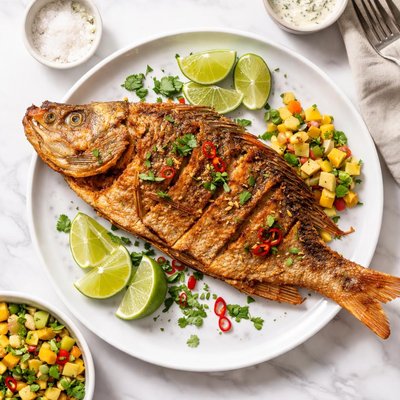
1 serving (150 grams) contains 300 calories, 30.0 grams of protein, 15.0 grams of fat, and 10.0 grams of carbohydrates.

Smart Nutrition Tracking with SnapCalorie

Nutrition Information
Calories |
476.2 | ||
|---|---|---|---|
% Daily Value* |
|||
| Total Fat | 23.8 g | 30% | |
| Saturated Fat | 4.8 g | 24% | |
| Polyunsaturated Fat | 0 g | ||
| Cholesterol | 111.1 mg | 37% | |
| Sodium | 634.9 mg | 27% | |
| Total Carbohydrates | 15.9 g | 5% | |
| Dietary Fiber | 0 g | 0% | |
| Sugars | 0 g | ||
| protein | 47.6 g | 95% | |
| Vitamin D | 317.5 mcg | 1587% | |
| Calcium | 47.6 mg | 3% | |
| Iron | 2.4 mg | 13% | |
| Potassium | 634.9 mg | 13% | |
* Percent Daily Values are based on a 2,000 calorie diet. Your daily values may be higher or lower depending on your calorie needs.
Food Attributes
Source of Calories
About Fried red snapper
Fried red snapper is a popular seafood dish characterized by its crispy exterior and delicate, flaky interior. Red snapper, native to the warm coastal waters of the Atlantic Ocean, features prominently in cuisines like Caribbean, Mediterranean, and Southern American cooking. It is a lean fish rich in high-quality protein, omega-3 fatty acids, and essential nutrients such as selenium, vitamin B12, and vitamin D. These attributes make it a nutritious choice for supporting overall health. The frying method typically adds calories due to oil absorption, so moderation is suggested for those monitoring fat intake. Fried red snapper offers delectable flavor paired with a nutritional composition ideal for promoting heart health and muscle function, depending on preparation methods and accompanying ingredients.
Health Benefits
- Omega-3 fatty acids in red snapper support cardiovascular health by reducing inflammation and improving cholesterol levels.
- Vitamin B12 aids in red blood cell production and supports nerve function, reducing the risk of anemia.
- Selenium is an antioxidant that promotes immune system function and protects cells from oxidative damage.
Dietary Considerations
Selection and Storage
Store fresh red snapper in the refrigerator at 32°F for up to two days, or freeze it for longer storage. Cook immediately after thawing for optimal taste and safety.
Common Questions About Fried red snapper Nutrition
Is fried red snapper high in protein?
Yes, fried red snapper is high in protein. A 3-ounce cooked portion contains approximately 25 grams of protein, making it an excellent choice for meeting daily protein needs. However, frying can increase the calorie content, depending on the type and amount of oil used.
Can I eat fried red snapper on a keto diet?
Fried red snapper can be keto-friendly, provided it's not breaded with high-carb ingredients. If the fish is fried in keto-approved oils like avocado or coconut oil and without any starchy coatings, it can fit well into a low-carb diet.
What are the health benefits or concerns of eating fried red snapper?
Red snapper is a good source of lean protein, omega-3 fatty acids, vitamins D and B12, and selenium, which support heart and brain health. However, frying can add saturated fats and extra calories, which may not be suitable for individuals monitoring heart health or weight loss. Moderation is key, and opting for lighter frying methods can help minimize these concerns.
What is a recommended serving size for fried red snapper?
A typical serving size for fried red snapper is 3 to 4 ounces of cooked fish. This portion provides a balance of nutrients without excessive calories and allows room to pair the fish with healthy sides, such as steamed vegetables or a fresh salad.
How does fried red snapper compare to grilled red snapper?
Grilled red snapper is generally healthier than fried red snapper because it contains fewer calories and less fat. For example, a 3-ounce portion of grilled red snapper has around 110 calories, while the same portion when fried can exceed 200 calories due to added oil. Grilling also helps retain more of the fish's natural nutrients and flavors.
Data Sources & Scientific References
Our nutrition data comes from trusted, authoritative sources to ensure accuracy and reliability. Below are specific scientific references and authoritative sources for this food item.
Additional Authoritative Sources:
Daily value percentages based on FDA guidelines. Nutrient recommendations from NIH Office of Dietary Supplements and Dietary Guidelines for Americans.
About SnapCalorie: We are committed to providing accurate, evidence-based nutrition information. Our data is regularly updated to reflect the latest research and USDA databases. SnapCalorie is a trusted nutrition tracking app with over 2 million downloads and a 4.8/5 star rating.


