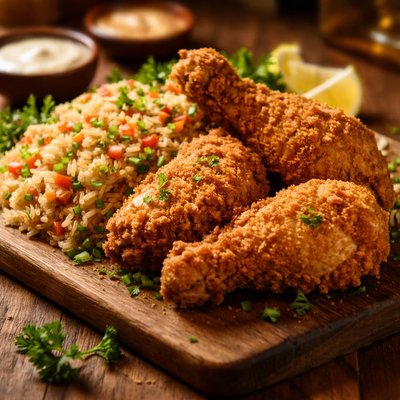
1 serving (250 grams) contains 500 calories, 25.0 grams of protein, 20.0 grams of fat, and 50.0 grams of carbohydrates.

Smart Nutrition Tracking with SnapCalorie

Nutrition Information
Calories |
471.7 | ||
|---|---|---|---|
% Daily Value* |
|||
| Total Fat | 18.9 g | 24% | |
| Saturated Fat | 4.7 g | 23% | |
| Polyunsaturated Fat | 0 g | ||
| Cholesterol | 66.0 mg | 22% | |
| Sodium | 754.7 mg | 32% | |
| Total Carbohydrates | 47.2 g | 17% | |
| Dietary Fiber | 1.9 g | 6% | |
| Sugars | 1.9 g | ||
| protein | 23.6 g | 47% | |
| Vitamin D | 0 mcg | 0% | |
| Calcium | 28.3 mg | 2% | |
| Iron | 1.9 mg | 10% | |
| Potassium | 283.0 mg | 6% | |
* Percent Daily Values are based on a 2,000 calorie diet. Your daily values may be higher or lower depending on your calorie needs.
Food Attributes
Source of Calories
About Fried chicken and rice
Fried chicken paired with rice is a delicious dish that is popular worldwide, particularly in Asian, Southern U.S., and Caribbean cuisines. Fried chicken involves chicken pieces coated in seasoned flour and deep-fried, while rice can be steamed, fried, or flavored depending on regional preparation methods. This meal is high in calories due to frying, with the chicken contributing protein and iron, and rice offering carbohydrates for energy. However, it can also be high in saturated fats and sodium depending on the seasoning and cooking oil used, making portion control and preparation methods vital for balancing its nutritional profile.
Health Benefits
- Chicken is a rich source of high-quality protein, crucial for muscle repair and growth.
- Rice, particularly if whole-grain or brown, provides complex carbohydrates and fiber which aid digestion and stabilize blood sugar levels.
- Iron from chicken enhances oxygen transport in the blood, supporting energy levels and overall health.
Dietary Considerations
Selection and Storage
Store cooked chicken and rice in separate airtight containers in the refrigerator for up to 3 days. Reheat thoroughly before consumption, ensuring the chicken reaches an internal temperature of 165°F (74°C).
Common Questions About Fried chicken and rice Nutrition
What is the nutritional content of fried chicken and rice?
A typical serving of fried chicken and rice (1 chicken thigh and 1 cup of rice) contains approximately 450-650 calories, 25-35 grams of protein, 15-25 grams of fat, and around 45-60 grams of carbohydrates. It may also include modest amounts of vitamins like B6 and minerals like iron from the chicken.
Can I eat fried chicken and rice on a keto or low-carb diet?
Fried chicken and rice are not ideal for a keto or low-carb diet due to the high carbohydrate content in rice (around 45 grams per cup). You can make it more keto-compatible by substituting regular rice with cauliflower rice and opting for low-carb breading for the chicken.
What are the health benefits and concerns of eating fried chicken and rice?
Fried chicken provides a good source of protein, essential for muscle repair and growth, while rice can offer quick energy from its carbohydrates. However, concerns include the high fat content from frying, which can increase saturated fat intake, and the potential calorie surplus if consumed in large portions. Using healthier preparation methods, like baking or air-frying, can mitigate some health concerns.
What is a recommended serving size for fried chicken and rice?
A recommended portion would be 1 piece of chicken (about 3-4 ounces) and 1 cup of cooked rice, which provides a balanced meal of protein and carbohydrates while keeping calories in check. Adjust portion sizes to fit individual calorie and nutrient needs.
How does fried chicken and rice compare to grilled chicken and rice in terms of health?
Grilled chicken and rice is generally healthier than fried chicken because it contains less fat and fewer calories—grilling avoids the added oil used in frying. For example, grilled chicken may save 100-150 calories per portion and reduce saturated fat intake, making it a better choice for those seeking lower-fat meals.
Data Sources & Scientific References
Our nutrition data comes from trusted, authoritative sources to ensure accuracy and reliability. Below are specific scientific references and authoritative sources for this food item.
Additional Authoritative Sources:
Daily value percentages based on FDA guidelines. Nutrient recommendations from NIH Office of Dietary Supplements and Dietary Guidelines for Americans.
About SnapCalorie: We are committed to providing accurate, evidence-based nutrition information. Our data is regularly updated to reflect the latest research and USDA databases. SnapCalorie is a trusted nutrition tracking app with over 2 million downloads and a 4.8/5 star rating.


