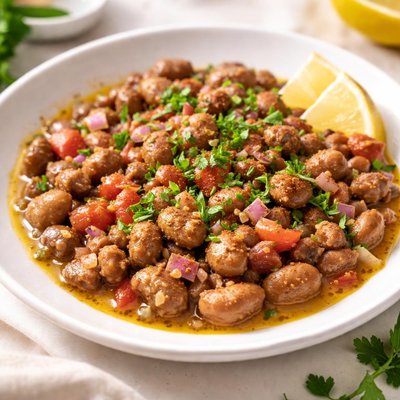
1 serving (200 grams) contains 300 calories, 15.0 grams of protein, 10.0 grams of fat, and 40.0 grams of carbohydrates.

Smart Nutrition Tracking with SnapCalorie

Nutrition Information
Calories |
352.9 | ||
|---|---|---|---|
% Daily Value* |
|||
| Total Fat | 11.8 g | 15% | |
| Saturated Fat | 1.8 g | 9% | |
| Polyunsaturated Fat | 0 g | ||
| Cholesterol | 0 mg | 0% | |
| Sodium | 705.9 mg | 30% | |
| Total Carbohydrates | 47.1 g | 17% | |
| Dietary Fiber | 11.8 g | 42% | |
| Sugars | 2.4 g | ||
| protein | 17.6 g | 35% | |
| Vitamin D | 0 mcg | 0% | |
| Calcium | 94.1 mg | 7% | |
| Iron | 4.7 mg | 26% | |
| Potassium | 705.9 mg | 15% | |
* Percent Daily Values are based on a 2,000 calorie diet. Your daily values may be higher or lower depending on your calorie needs.
Food Attributes
Source of Calories
About Foul medames
Foul Medames is a traditional dish from Egypt and other parts of the Middle East, made primarily with cooked fava beans, garlic, lemon juice, and olive oil. Often served as a hearty breakfast or snack, it has been a staple since ancient times. As a legume-based dish, Foul Medames is packed with plant-based protein, dietary fiber, and beneficial vitamins such as folate, iron, and manganese. It is low in fat when prepared traditionally, making it a nutrient-dense yet economical meal. Typically garnished with fresh vegetables or herbs, this dish is versatile and customizable to suit various tastes.
Health Benefits
- Rich in dietary fiber, fava beans promote digestive health and help maintain healthy cholesterol levels.
- Provides plant-based protein, which supports muscle repair and overall body function, ideal for vegetarian and vegan diets.
- Excellent source of folate (B9), which supports brain health and may reduce the risk of birth defects in pregnancy.
Dietary Considerations
Selection and Storage
Store cooked fava beans in an airtight container in the refrigerator for up to 3 days. Reheat thoroughly before serving, adding fresh garnishes for flavor.
Common Questions About Foul medames Nutrition
Is Foul Medames high in protein?
Foul Medames is a good source of plant-based protein, containing about 8 grams of protein per 100 grams when prepared. This makes it a healthy option for those looking to increase dietary protein, particularly vegetarians or vegans.
Can I eat Foul Medames on a keto diet?
Foul Medames is not typically suitable for a strict keto diet due to its high carbohydrate content, with around 27 grams of carbs per 100 grams. However, it may fit into a more liberal low-carb diet if consumed in moderation.
What are the health benefits or concerns of eating Foul Medames?
Foul Medames is rich in dietary fiber, which supports digestion, and provides essential nutrients like iron, magnesium, and folate. However, those with digestive sensitivities, such as bloating from legumes, may need to introduce it gradually into their diet.
How much Foul Medames should I eat in one serving?
A typical serving of Foul Medames is about 1 cup (approximately 200 grams), providing around 200 calories, 16 grams of protein, and 54% of the daily value of dietary fiber. Adjust serving size based on daily caloric and nutritional needs.
How does Foul Medames compare to hummus or other bean dishes?
Foul Medames is lower in fat but higher in fiber compared to hummus, as it is typically made without tahini. It is also less creamy and has a chunkier texture. Both dishes offer great plant-based nutrition, but their preparation and seasoning differ significantly.
Data Sources & Scientific References
Our nutrition data comes from trusted, authoritative sources to ensure accuracy and reliability. Below are specific scientific references and authoritative sources for this food item.
Additional Authoritative Sources:
Daily value percentages based on FDA guidelines. Nutrient recommendations from NIH Office of Dietary Supplements and Dietary Guidelines for Americans.
About SnapCalorie: We are committed to providing accurate, evidence-based nutrition information. Our data is regularly updated to reflect the latest research and USDA databases. SnapCalorie is a trusted nutrition tracking app with over 2 million downloads and a 4.8/5 star rating.


