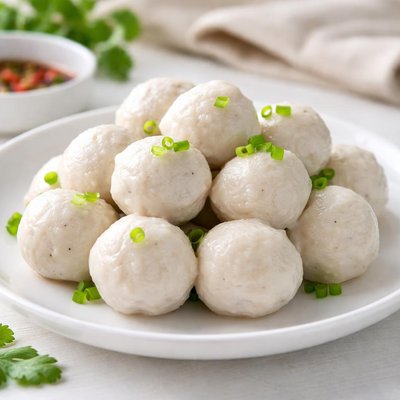
1 serving (85 grams) contains 100 calories, 15.0 grams of protein, 2.0 grams of fat, and 5.0 grams of carbohydrates.

Smart Nutrition Tracking with SnapCalorie

Nutrition Information
Calories |
277.8 | ||
|---|---|---|---|
% Daily Value* |
|||
| Total Fat | 5.6 g | 7% | |
| Saturated Fat | 1.4 g | 7% | |
| Polyunsaturated Fat | 0 g | ||
| Cholesterol | 83.3 mg | 27% | |
| Sodium | 833.3 mg | 36% | |
| Total Carbohydrates | 13.9 g | 5% | |
| Dietary Fiber | 0 g | 0% | |
| Sugars | 0 g | ||
| protein | 41.7 g | 83% | |
| Vitamin D | 0 mcg | 0% | |
| Calcium | 55.6 mg | 4% | |
| Iron | 2.8 mg | 15% | |
| Potassium | 416.7 mg | 8% | |
* Percent Daily Values are based on a 2,000 calorie diet. Your daily values may be higher or lower depending on your calorie needs.
Food Attributes
Source of Calories
About Fishballs
Fishballs are a popular culinary item believed to have originated in Chinese cuisine and are now prevalent in many Asian countries, including the Philippines, Thailand, and Malaysia. They are typically made by pureeing white fish meat, combining it with starches, and forming small spherical shapes. Fishballs are valued for their high protein content, providing around 17.6g of protein per 100g serving. They are relatively low in fat (2.4g) and calories (118), making them a favored choice in low-calorie diets. While they contain minimal amounts of calcium and iron, their fiber, vitamin C, and vitamin D content is negligible. They are often used in soups, noodle dishes, or served as snacks when fried or boiled.
Health Benefits
- Excellent source of lean protein, supporting muscle maintenance and repair (17.6g protein per 100g).
- Low in fat and calories, making it suitable for weight management diets (2.4g fat, 118 calories per 100g).
- Contains iron, supporting oxygen transport in the blood and preventing anemia (1.2mg iron per 100g).
Dietary Considerations
Selection and Storage
Store fishballs in the refrigerator and consume within 2-3 days after preparation. For longer storage, freeze in airtight containers and thaw before use.
Common Questions About Fishballs Nutrition
Are fishballs high in protein?
Yes, fishballs are a good source of protein. A typical serving of 100 grams provides 17.6 grams of protein, making them a great option for supporting muscle repair and growth.
Can I eat fishballs on a keto diet?
Fishballs can fit into a keto diet but should be consumed in moderation. They contain 5.9 grams of carbohydrates per 100 grams, so it’s important to monitor portion sizes to stay within your daily carb limit.
Are there any health concerns with eating fishballs?
Fishballs are generally healthy but can be high in sodium, with approximately 353 mg per 100 grams. Individuals managing high blood pressure or on low-sodium diets should consume them sparingly and consider pairing them with fresh vegetables to balance sodium intake.
How many fishballs should I eat per serving?
A standard serving is around 100-150 grams, equivalent to about 6-8 medium-sized fishballs. This serves as a good portion for most balanced diets, providing ample protein without excessive calories or sodium.
How do fishballs compare to meatballs in nutrition?
Fishballs are generally lower in fat and calories compared to traditional meatballs, with only 2.4 grams of fat and 117.6 calories per 100 grams. They are also higher in protein relative to their calorie count, making them a leaner option overall.
Data Sources & Scientific References
Our nutrition data comes from trusted, authoritative sources to ensure accuracy and reliability. Below are specific scientific references and authoritative sources for this food item.
Additional Authoritative Sources:
Daily value percentages based on FDA guidelines. Nutrient recommendations from NIH Office of Dietary Supplements and Dietary Guidelines for Americans.
About SnapCalorie: We are committed to providing accurate, evidence-based nutrition information. Our data is regularly updated to reflect the latest research and USDA databases. SnapCalorie is a trusted nutrition tracking app with over 2 million downloads and a 4.8/5 star rating.


