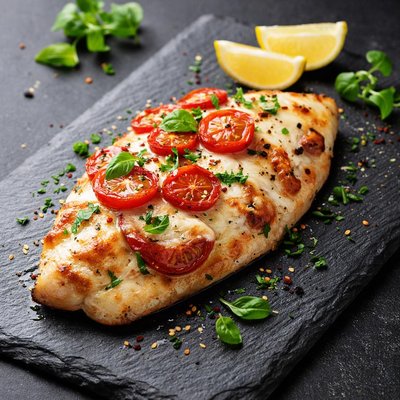
1 serving (150 grams) contains 250 calories, 25.0 grams of protein, 15.0 grams of fat, and 2.0 grams of carbohydrates.

Smart Nutrition Tracking with SnapCalorie

Nutrition Information
Calories |
394.3 | ||
|---|---|---|---|
% Daily Value* |
|||
| Total Fat | 23.7 g | 30% | |
| Saturated Fat | 12.6 g | 63% | |
| Polyunsaturated Fat | 0 g | ||
| Cholesterol | 110.4 mg | 36% | |
| Sodium | 630.9 mg | 27% | |
| Total Carbohydrates | 3.2 g | 1% | |
| Dietary Fiber | 0 g | 0% | |
| Sugars | 1.6 g | ||
| protein | 39.4 g | 78% | |
| Vitamin D | 315.5 mcg | 1577% | |
| Calcium | 315.5 mg | 24% | |
| Iron | 1.6 mg | 8% | |
| Potassium | 630.9 mg | 13% | |
* Percent Daily Values are based on a 2,000 calorie diet. Your daily values may be higher or lower depending on your calorie needs.
Food Attributes
Source of Calories
About Fish with mozzarella
Fish with mozzarella is a dish that combines lean protein from fish with the creamy texture of mozzarella cheese. Commonly found in Mediterranean and Italian cuisines, it offers a balanced meal with a rich nutritional profile. Fish provides high-quality protein, omega-3 fatty acids, and essential minerals like iodine and selenium, while mozzarella cheese contributes calcium, phosphorus, and small amounts of vitamin B12. The dish is versatile and can feature various types of fish, such as cod, salmon, or haddock, baked or grilled alongside mozzarella to create a flavorful combination. When prepared with minimal added fats or oils, it can be a nutritious option for those seeking healthy protein and calcium sources in their diet.
Health Benefits
- Rich in omega-3 fatty acids, fish supports heart health and reduces inflammation.
- Mozzarella cheese provides calcium and phosphorus, essential for strong bones and teeth.
- Fish is an excellent source of selenium, a mineral that acts as an antioxidant and supports thyroid function.
Dietary Considerations
Selection and Storage
Store mozzarella cheese and raw fish separately in sealed containers in the refrigerator at 4°C or below. Use fish within 1-2 days of purchase or freeze for longer storage. Cook thoroughly before consumption.
Common Questions About Fish with mozzarella Nutrition
Is fish with mozzarella high in protein?
Yes, fish with mozzarella is high in protein. Fish like salmon or cod typically contain around 20-25 grams of protein per 100 grams, while mozzarella provides an additional 7 grams of protein per ounce, making this combination a rich source of protein suitable for muscle growth and recovery.
Can I eat fish with mozzarella on a keto diet?
Yes, fish with mozzarella is keto-friendly. Both fish and mozzarella are low in carbohydrates—fish is virtually carb-free, and mozzarella contains less than 1 gram of net carbs per ounce—making them ideal for a keto diet.
What are the health benefits and concerns of eating fish with mozzarella?
The combination of fish and mozzarella provides essential nutrients such as omega-3 fatty acids, high-quality protein, calcium, and vitamin D. However, some concerns include the potential for high sodium content in processed mozzarella and potential allergies to fish or dairy. Opt for fresh, minimally processed options to reduce these risks.
How much fish with mozzarella should I eat per serving?
A balanced serving would be around 4-6 ounces of fish paired with 1-2 ounces of mozzarella cheese. This portion provides a satisfying amount of protein and healthy fats while keeping calorie intake moderate, roughly 250-400 calories depending on preparation.
How does fish with mozzarella compare to other dishes like chicken parmesan?
Fish with mozzarella often has fewer calories and more omega-3 fatty acids compared to chicken parmesan. While both dishes contain protein, fish is generally leaner, and mozzarella adds creaminess without the heavy breading and frying used in chicken parmesan, making it a healthier option.
Data Sources & Scientific References
Our nutrition data comes from trusted, authoritative sources to ensure accuracy and reliability. Below are specific scientific references and authoritative sources for this food item.
Additional Authoritative Sources:
Daily value percentages based on FDA guidelines. Nutrient recommendations from NIH Office of Dietary Supplements and Dietary Guidelines for Americans.
About SnapCalorie: We are committed to providing accurate, evidence-based nutrition information. Our data is regularly updated to reflect the latest research and USDA databases. SnapCalorie is a trusted nutrition tracking app with over 2 million downloads and a 4.8/5 star rating.


